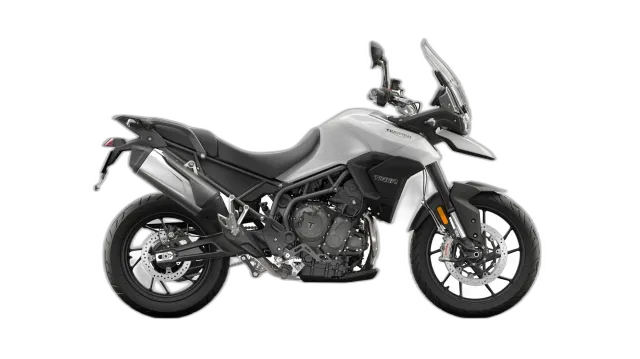
Triumph Tiger 900 (C701-GTLow) — Adventure
Triumph press archive

2020–2022 · Adventure · A variant of the Tiger 900

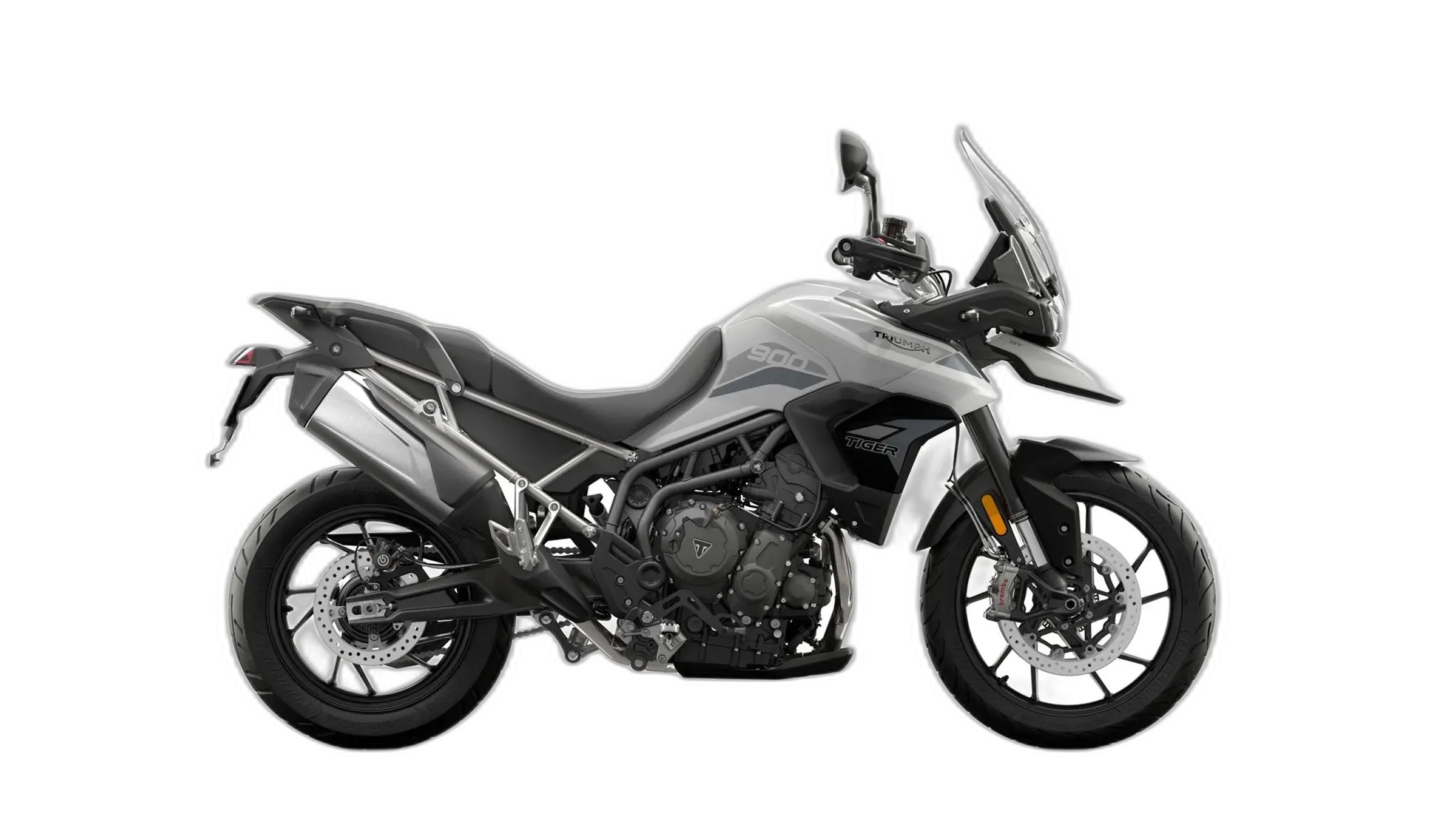
Tiger 900 GT Low (C701-GTLow)

Differences between the standard Tiger 900 and the GT Low

4 / 5 NastyNils Rating · against its class

The Triple Built to Reach

The Machine's Character

The Tiger 900 GT Low is the most accessible bike in the Tiger 900 line-up, and the seat tells the story: 29.9 in (760 mm), reached by shortening the suspension travel. The engine isn't downsized. You get the 888 cc inline-three with 94 hp and 64 lb-ft in a steel trellis frame. Triumph says the T-plane crank, with its 90°-90°-180° layout, delivers a twin-cylinder-like punch low down and a broad spread of torque. Cornering ABS, traction control, ride modes and a TFT display are standard, and this trim builds on the standard bike's equipment with heated grips. Small seat, grown-up bike.

On paper this is a road-first adventure bike. The 19-inch front wheel keeps it honest in the category, but 5.9 in (151 mm) of rear travel points to gravel and broken back roads rather than serious terrain. What the hardware is built for is distance: a 5.3 gal (20 L) tank, an adjustable windscreen, adjustable suspension at both ends, a slipper clutch and LED lighting. That points to you if you want a mid-size triple for long days and mountain passes, and you'd rather have both feet planted at every stop than extra suspension travel. Shorter riders, take note!

Hard Numbers

Spec sheets don't ride bikes, but they set the baseline.

Show full specs & equipment Hide specs & equipment
Key specifications
Power 94 hp (70 kW)
Torque 64 lb-ft (87 Nm)
Displacement 888 cc
Engine Inline-three
Cooling Liquid-cooled
Gearbox 6-speed
Final drive Chain
Front tire 100/90-19
Rear tire 150/70-17
Rear travel 5.9 in (151 mm)
Seat height 29.9 in (760 mm)
Fuel capacity 5.3 gal (20 L)

Equipment check

Chassis

  • Front Suspension Adjustable Standard
  • Rear Suspension Adjustable Standard
  • Cruise Control Standard

Comfort

  • Heated Grips Standard
  • Adjustable Windscreen Standard
  • Adjustable Seat Height Standard
  • Luggage System Optional

Connectivity

  • TFT Display Standard
  • Smartphone Connectivity Optional
  • Navigation Optional
  • USB Charging Port Standard
  • Tire Pressure Monitoring (TPMS) Optional

Drivetrain

  • Quickshifter Optional
  • Slipper Clutch Standard

Lighting

  • LED Headlight Standard

Safety

  • ABS Standard
  • Cornering ABS Standard
  • Traction Control Standard
  • Ride Modes Standard

What the Tiger 900 GT Low Adds — Differences vs the Standard Tiger 900

The Tiger 900 GT Low (C701-GTLow) builds on the standard Tiger 900: the upgraded hardware, the key spec changes and where its character shifts. The full ride, specs, scoring and verdict are all right here on this page.

Equipment the GT Low adds vs the standard Tiger 900

Now standard
Heated Grips

Hard spec differences

SpecStandard Tiger 900GT LowΔ
Seat height 31.9 in 29.9 in -2.0 in
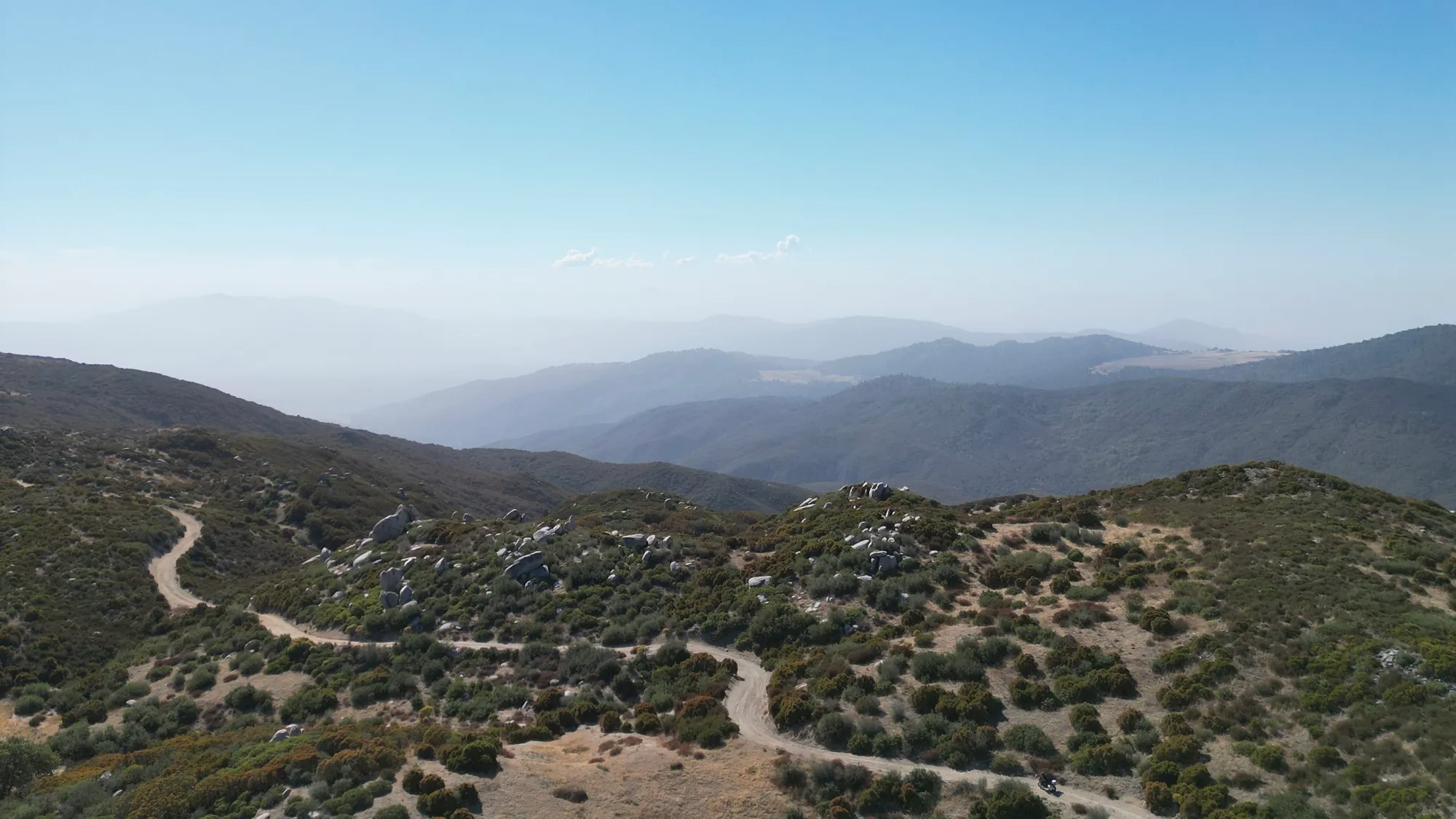
Aerial drone view of Palomar Divide Road winding through chaparral-covered mountain ridges in San Diego County. Multiple S-curve sections descend through sparse vegetation with distant valley views visible in the haze. Gravel and packed-earth surface.

The Truth on the Street

I've spent years listening to people who live with their bikes: paddock talk, owner chats, club nights, and the emails and messages that land in my inbox. For this generation of the Tiger 900, the pattern is clear. Riders praise the engine, the handling and the front brake, and they grumble about comfort details, a pricey service item and a few electrical niggles.

The engine everyone brings up first

Ask owners what sets this generation apart and the answer comes back almost in unison: the engine. In their eyes it's the most distinctive feature of the bike, with low-end torque they compare to a twin and the top-end power of a three-cylinder. Handling comes next. Riders describe nimble steering at low speeds and rock-solid stability on the highway, and they say the low seat doesn't cost the bike its agility. The front brake earns steady praise too: strong, progressive, with good feel, and a step up from the Tiger 800 in owners' judgment. One dissenting voice calls the brakes wooden and short on initial bite, but that's a lone remark. Riders also stress that the 19-inch GT family and the 21-inch Rally family really do behave differently, and Rally owners like their tubeless spoked wheels for simpler puncture handling on the trail. Not a styling exercise!

All-day tourer, with some buts

On distance, riders tell two stories at once. The riding position gets described as spacious and the wind protection as effective, and many call the bike a capable all-day tourer. Then come the buts. Helmet buffeting at highway speed is a recurring complaint, especially from tall riders, who say the manually adjustable screen doesn't fully cure it. Aftermarket screens are a common fix. The standard seat and a tingle in the bars at sustained highway speed come up just as often, and a comfort seat is a frequent purchase. One owner puts the seat's limit at about 45 minutes. Some also found the 7-inch TFT too busy to read at a glance on early firmware. The Pro variants get credit for an electronics package that held its own in the class at launch. Riders tune the rest to fit.

Sockets, wet shifters and service bills

The loudest complaint about money is the valve-clearance check. Riders consistently call the 12,000-mile (20,000 km) interval expensive next to what competitors ask for, and they note that the 2024 facelift addressed it. Reliability gripes are fewer but specific. Several owners report the front and underseat accessory sockets quitting, often traced to blown fuses or bad connections. Where the optional quickshifter is fitted, some say it stops working when it gets very wet, which they see as a liability on an adventure bike. A smaller number feel that fit and finish fall short of the older Tiger 800. It's a minority view.

Known issues

  • Rear reflex reflector may detach (NHTSA Recall 20V-451)

    bodywork rare Recall

    The rear reflex reflector can become loose and detach from the motorcycle due to insufficient mounting, reducing rearward visibility. Safety recall NHTSA 20V-451 (Triumph SRAN 582) was issued to replace the reflector kit with an updated mounting arrangement (NHTSA campaign 20V451000).

  • Engine vibration at higher revs

    engine common

    The T-plane crank arrangement induces noticeable vibration through the chassis at higher RPMs, which some riders find tiring on long highway stretches.

  • Quickshifter failure when wet

    drivetrain occasional

    Water ingress into the quickshifter sensor connector causes intermittent operation or complete failure, particularly after riding in rain or washing the bike.

  • Electrical accessory outlet failures

    electrics occasional

    The front and rear electrical sockets (including the USB port under the seat) can stop working due to blown fuses, loose terminals, or faulty wiring connections.

  • Hard, uncomfortable stock seat

    bodywork common

    The standard seat foam is dense and lacks long-haul support, leading to discomfort after a couple of hours; many owners replace it with the accessory comfort seat.

  • Engine stalling on 3rd-to-2nd downshift or low-rpm clutch-up, particularly in Rain mode

    engine occasional

    Stalling reported on closed-throttle downshifts and at low-rpm clutch-up, more frequently in Rain ride mode (different fuel map). Anti-stall logic occasionally fails to intervene; some cases require dealer ECU reflash.

  • Front brake disc warping with judder under braking

    brakes common

    Pulsing / judder felt through the front brake lever and bars under braking. Some owners measure runout exceeding the factory limit, with one detailed report citing a significant amount at 7,500 mi (12,000 km). The judder can return after disc machining, suggesting heat-cycle sensitivity rather than mounting issues. Multiple fleet operators report all bikes returning under warranty for warped discs.

  • Rear brake caliper sticks; pads and disc overheat

    brakes occasional

    Rear caliper sticks; disc and pads overheat after relatively short rides; weak pad-spreader spring identified as a recurring cause; pads wear quickly. Resolved by caliper rebuild and spring replacement.

  • Intermittent no-start due to faulty right-side switch block

    electrics occasional

    Pressing the start button does not prime the fuel pump or initiate cranking. Right-side switch block recognised by Triumph dealers as a known faulty assembly; full switchblock replaced under warranty.

  • TFT display corruption or failure after water exposure

    electrics occasional

    TFT shows blue or hexadecimal corruption in heavy rain; in some cases the dash becomes loose due to faulty mounting screws. Recovery after drying is possible but not consistent — replacement under warranty is common. Affects the 7-inch TFT fitted to all marketed variants.

  • Front fork seal leaks at relatively low mileage

    suspension occasional

    Left fork seal leaks reported at relatively low mileage; Triumph treats as a wear item rather than warranty. Dust/sand ingress accelerates the failure; aftermarket fork-leg protectors can in some cases trap debris and worsen the problem.

  • Heated grips heat briefly then shut off; switch unresponsive

    electrics occasional

    Grips heat for a few seconds then shut off; control switch becomes unresponsive. Common cause is a chafed positive wire at the bar exit; fuse #4 (10A) protects the circuit.

  • Oil seep at alternator-cover wire-harness exit

    engine occasional

    Engine oil seeps from the alternator/stator cover at the point where the wire harness exits, travelling down the cable and pooling at the connector. Triumph has issued a redesigned cover as a service replacement. Generally addressed under warranty as a good-will repair. Cross-platform Triumph issue but documented for the Tiger 900 specifically.

  • Water condensation builds inside indicator lenses

    electrics common

    Condensation accumulates inside all four indicator lenses after rain or pressure-washing; lens seal weak with no weep hole. Cosmetic but consistently reported; some dealers replace under warranty.

The Expert Benchmark

Where this Triumph Tiger 900 pulls ahead of — or falls behind — its rivals on the numbers, and the typical bike in its class on character.

What kind of bike this is — character vs. the class

This bike Class average

The shape of the Triumph Tiger 900 — numbers and character vs. the average Adventure

Head-to-head: Triumph Tiger 900 vs. its rivals

The Long-Haul Verdict

Forget spec-sheet bragging. Here's who the Tiger 900 is actually built for.

Aerial view of a winding asphalt road cutting through volcanic terrain on La Gomera, Canary Islands. The road curves through sparse green vegetation with rocky volcanic peaks visible in the background and a settled valley to the left. Clear lane markings, dry climate, partly cloudy sky.

Best touring motorcycle for long distance?

Of the three riders here, you're the closest fit: 5.3 gal (20 L) tank, adjustable screen, heated grips and a 29.9 in (760 mm) seat. Cruise control is standard too, so your highway days are covered.

Made for Beartooth Highway · Blue Ridge Parkway · Going-to-the-Sun Road

Best motorcycle for Highway 1?

A solid match on paper: 94 hp triple, adjustable suspension and cornering ABS for full days on winding roads. The low seat is a bonus if you want both feet down.

Made for Highway 1 / Big Sur · Black Hills · Blue Ridge Parkway

Alternatives to the Triumph Tiger 900

If this one isn't quite the fit, these are the bikes worth riding back-to-back against it.

Any price note compares both bikes at the same age — the youngest age both have on the used market — against this Triumph Tiger 900. “cheaper/pricier” is what that bike costs second-hand, not how worn it is.