
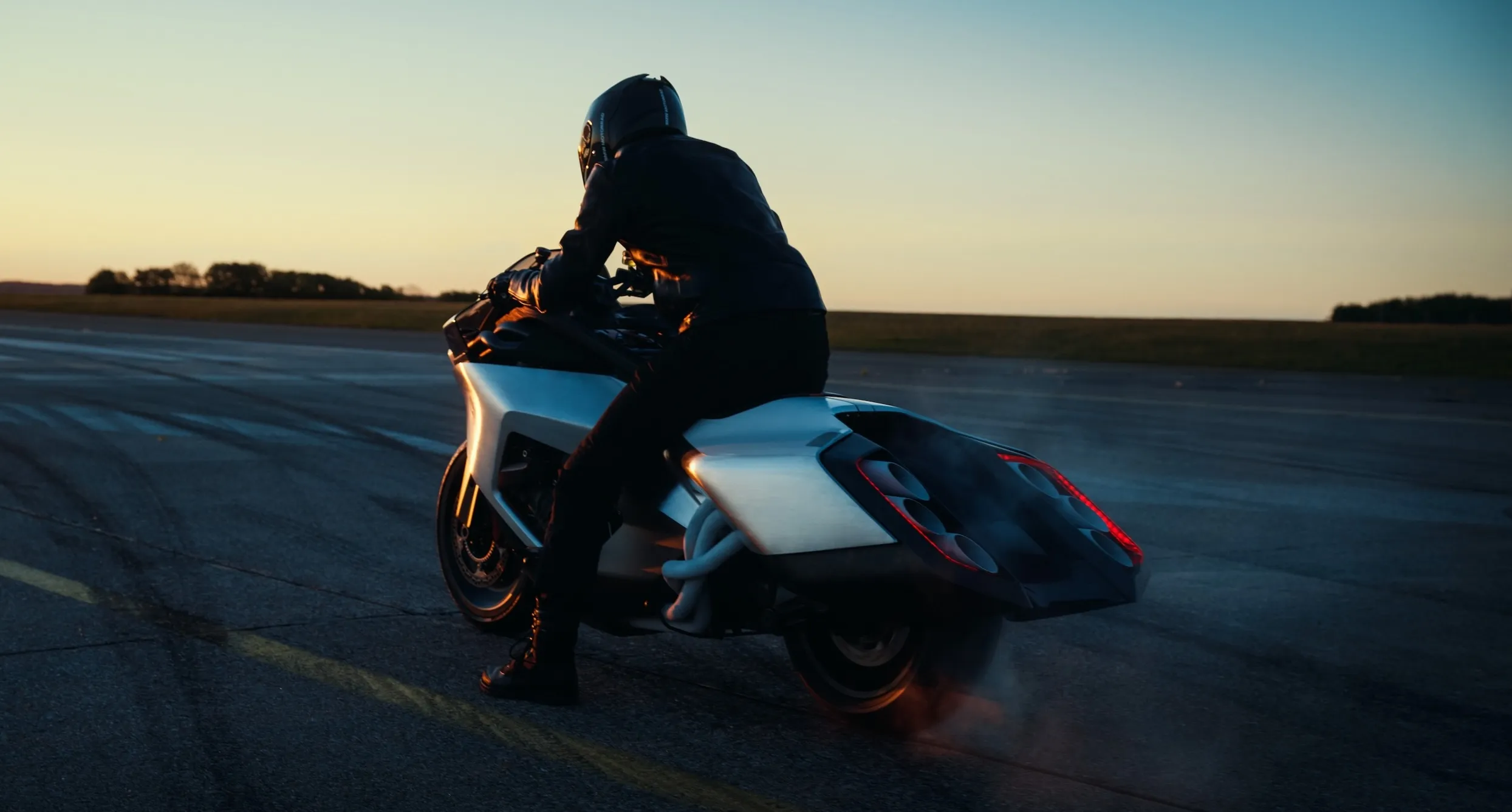
Lake Como was doing its usual thing last weekend — mirror-flat water, that soft northern Italian light, the hills behind Cernobbio holding the morning haze a little longer than they should. And then BMW rolled a motorcycle onto the lawn at Villa d’Este that made everyone forget the scenery. The K 18 Vision sits long, flat, and stretched out, looking like it’s accelerating while parked. The first design brief inside Munich was apparently three words long — Concorde on wheels — and that explains almost everything you need to know.
This isn’t a concept built to win design awards in a magazine. It’s a concept built to make you stand still in front of it for five minutes before you remember to breathe. The more time you spend walking around it, the more you notice that BMW isn’t just showing off here. They’re telling us something specific about where they think the luxury long-distance motorcycle is heading next. Spoiler — it’s not where the RT lives. It’s somewhere a lot more theatrical, more emotional, and frankly more interesting.
An Inline-Six That Refuses To Hide
At the heart of the K 18 sits a 1,800 cc inline six-cylinder engine, and calling it the heart isn’t a cliché here — it’s literally the architectural starting point of the entire motorcycle. Everything else on this bike was designed around that engine, framing it, celebrating it, refusing to hide it. Markus Flasch, who runs BMW Motorrad, put it simply when he said the inline-six is more than a motor for BMW — it’s a statement. And you feel that statement before you even hear it run.
The six cylinders sit there in a row like the pipes of a cathedral organ, the velocity stacks exposed, the exhausts arranged in a careful six-pipe choreography. The number six runs through the whole design like a heartbeat. Six cylinders, six headlights, six intake trumpets, six exhaust pipes. That’s not decoration — that’s BMW writing a thesis in aluminum. If you’ve ever ridden a K 1600, you know what a smooth six feels like. The K 18 takes that smoothness and dresses it up in a tuxedo.
The Coolest Detail Is The One You’ll Never See In A Brochure
Here’s the part that genuinely stopped me in my tracks. On almost every modern motorcycle, the interesting engineering is buried under plastic. You spend serious money on serious horsepower and then spend your riding life staring at injection-molded fairings. The K 18 flips that script completely. The intake system is exposed, the exhaust is on full display, and the engine architecture sits there like mechanical sculpture.
But here’s the clever bit — BMW designed the intake stacks so that the rider, sitting in the saddle, looks down and sees them. Not the bystander at the gas station. The rider. Every time you grab the bars, your eyes drop and you’re looking at the insignia of performance. That, to me, is a love letter from the engineers to the people who actually buy the thing. You don’t experience this bike second-hand through other people’s reactions. You experience it directly, from the cockpit, every second you’re rolling.
Hand-Hammered In Graz, Because Of Course It Is
The aluminum bodywork on the K 18 Vision wasn’t pressed out of a stamping machine. It was hand-hammered in Graz, Austria — the same kind of old-world coachbuilding craft that used to dress prewar Bugattis and one-off Bentleys. That detail tells you everything about the ambition here. BMW didn’t want this bike to look like every other concept rendered in CAD and printed on a 3D machine. They wanted it to have the surface tension, the subtle imperfections, and the depth of light reflection that only comes when a human being beats metal with a mallet for weeks.
Big sweeping panels meet surgical cutouts that expose the technical guts underneath, and the whole thing reads less like a vehicle and more like a piece of industrial art. It’s the kind of finish that photographs beautifully but rewards you ten times more in person. You can see the hours in it. You can see the hands.
What Actually Makes It To Production
Now, the honest question. Is BMW going to build this thing? Not exactly. BMW has been refreshingly upfront — the K 18 Vision is not a one-to-one preview of a production model. The overall sculpture will change, the hand-hammered bodywork won’t survive a production line, and the radical proportions will get reined in for the real world.
But — and this is the part that matters — BMW says the production bike will still hit hard. The exposed technology stays. The mechanical theatre stays. The visible intake, the sculpted engine, the in-your-face stance — that DNA is making it to the showroom floor. They’ve even thought about luggage, designed to flow into the lines of the bike rather than getting bolted on as an afterthought. So this is still ultimately a long-distance machine. You just won’t ride it the way you ride an RT. You’ll ride it the way you’d fly a private jet.
The Stage Was Half The Story
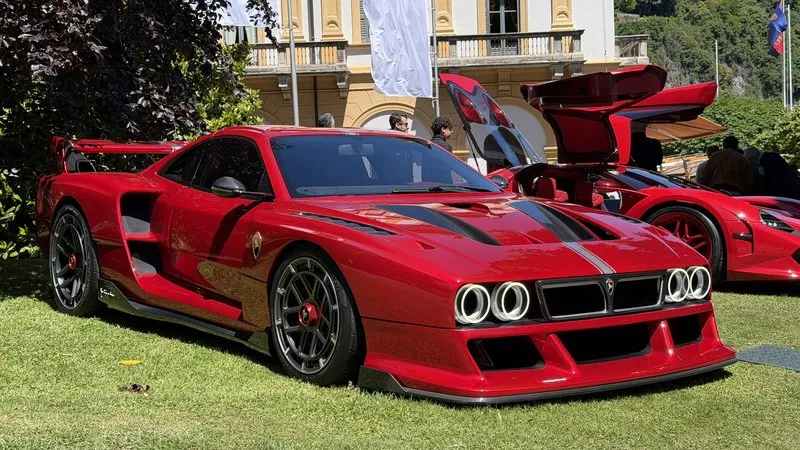
BMW didn’t pick the venue by accident. The Concorso d’Eleganza Villa d’Este, held every year on the grounds of the Grand Hotel Villa d’Este on Lake Como, has been running since 1929 and is one of the most exclusive concours events on the planet. It’s the kind of place where you walk past million-dollar classics with no velvet ropes, no barriers — just you, the grass, and the machines.
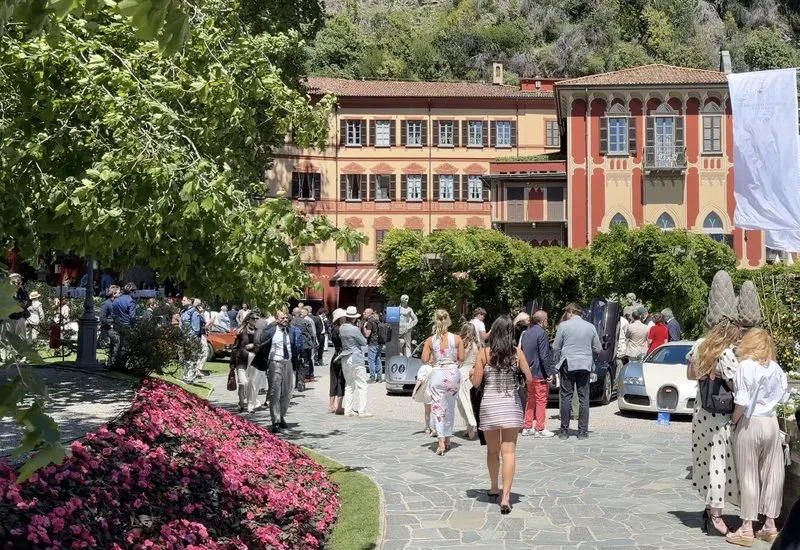
Organized by BMW Group Classic, the Concorso isn’t only about looking backwards, though. Every year, right next to the historic masterpieces, BMW rolls out the future — concept cars, vision bikes, the radical stuff. That tension between glorious history on one lawn and audacious tomorrow on the next is exactly why this event is the perfect stage for a debut like the K 18. Choosing Villa d’Este wasn’t just BMW finding a pretty backdrop. It was BMW placing this motorcycle in the same conversation as the legends parked thirty feet away. That’s a statement before anyone even fires the engine.
The Real Question Isn’t Whether It’s Radical
The question isn’t whether the K 18 Vision is radical. Of course it’s radical. You can see that with your eyes closed. The real question — and the one that’s going to keep me curious for the next year or two — is how much of this radical DNA BMW actually rescues and puts into the production version. Because if they pull it off, if they keep the exposed mechanical theatre, the inline-six soul, and the Concorde-on-wheels stance even at half intensity, then BMW just opened a brand new category. Not a tourer. Not a cruiser. Not a power cruiser. Something else entirely — luxury long-distance riding with the attitude of a fighter jet.
I want to see that bike in a showroom. I want to swing a leg over it. I want to look down at six velocity stacks and feel that engine wake up underneath me. The K 18 Vision isn’t a finished answer. It’s a beautifully posed question. And right now, that’s exactly the kind of question motorcycling needs more of.