By NastyNils·
Motorcycle comparison · Tourer
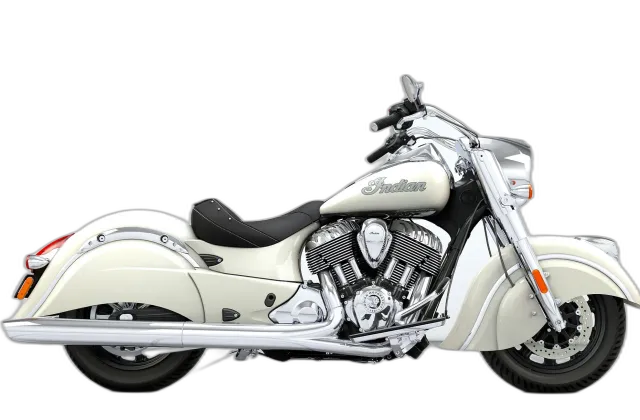
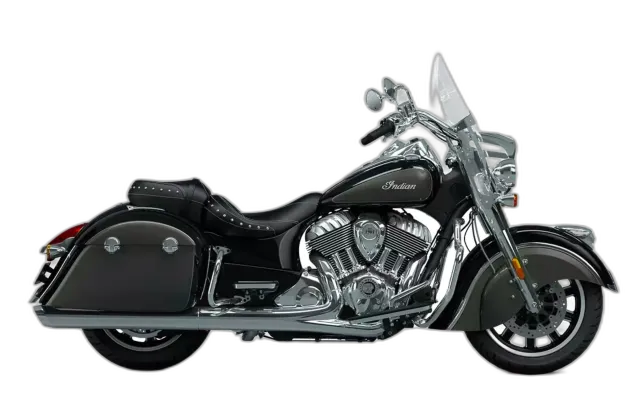
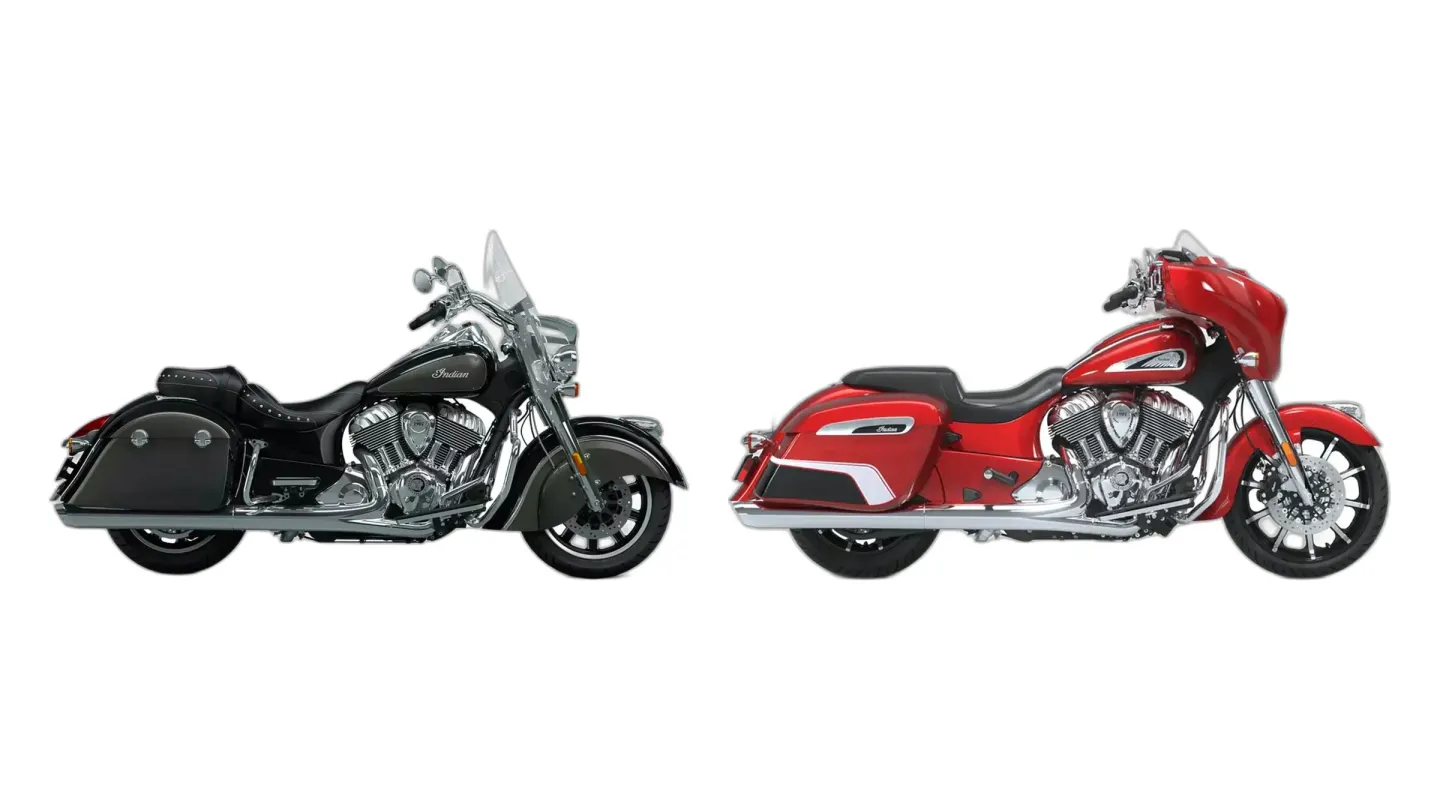
Indian Springfield (MY2016) vs Chieftain (MY2014)
Indian Springfield vs Chieftain: which one's easier to live with on a long trip.
Deep in a fast sweeper, the Indian Springfield doesn't argue with your line, and you can read the traction clearly. The Indian Chieftain sits steady, its fairing breaking the wind.
So which one do you buy?
The Springfield has the edge if…
Sporty riding on twisty roads
Slight edge: Springfield
In the twisties, the Springfield asks a bit less of you to go quickly. The difference is more feel through the bars. Call it a modest edge.
Which one's the smarter buy
No clear advantage
Neither bike is the clear better buy at these used prices. The Springfield costs less, but that doesn't make it the smarter spend.
What makes each one tick
Springfield
Down low, the Springfield's Thunder Stroke won't kick you in the teeth: its pull stays clean, and you can set the pace with grip or gears. At corner entry, the chassis steers with real agility for a big twin. There's proper lean clearance for switchbacks. A snapped throttle wakes the exhaust's V-twin thunder.
Nils rode the Springfield in 2019 (NastyNils Testride).
Chieftain
The Chieftain's Thunder Stroke hauls past traffic on strong torque, and there's no vibration in the pull. A bump at speed goes into the suspension while the chassis stays put. The plush seat lasts all day.
The Voice of Experience

What actually separates them
- Smartphone Connectivity: standard on the Chieftain, not offered on the Springfield.
- USB Charging Port: standard on the Springfield, not offered on the Chieftain.
- Adjustable Windscreen: standard on the Chieftain, not offered on the Springfield.
Which one for the way you ride
Daily commuting & city riding
Both fall short
Commuting isn't the strong suit of either bike. If it's your main use, that matters more than which of these wins.
A confidence-building first motorcycle
Both miss here
Learning on either of these is the hard way. A gentler bike will make you a better rider sooner.
On long days and running costs, these two are a wash. That's where your budget and your inseam get the final say.
Who each one is built for
What's good, and what you'll live with
Springfield
From Nils' own saddle time
Strengths
- Thunder Worth Hearing
- Torque Without the Kick
- Rock-Steady at Speed
- More Lean Than It Looks
- A Seat Built for Miles
Trade-offs
- Buffeting Above Cruising Pace
- Narrow Saddlebag Openings
- Hot-Day Engine Cut-Outs
- Three Recalls to Verify
Chieftain
What owners say
Strengths
- Composed handling and stability
- Strong, smooth V-twin engine
- Excellent wind protection and rider comfort
- Feature-rich technology package
- Premium fit and finish
Known problems to check before you buy
Springfield
- Fuel rail abrasion may cause fuel leak (recall 16V877) Recall 16V877000 Insufficient clearance between the fuel rail and engine can cause abrasion, leading to a potential fuel leak. Dealers will install a bracket to limit movement.
- Gear position switch false neutral indication (NHTSA Recall 19V-776) Recall 19V776000 Oxidation on gear position switch contacts may cause incorrect gear display, potentially indicating neutral when in gear, increasing risk of unintended movement. Recall/stop-sale issued (I-19-02).
- Loss of forward lighting due to VCM connector failure (recall 22V635) Recall 22V635000 The electrical connection for the Vehicle Control Module (VCM) may fail, cutting forward lighting. The high beam indicator will flash if this occurs. Dealers will inspect the connector and update software.
Chieftain
- Gear position switch defect The gear position sensor can fail, causing intermittent starting issues and dashboard warnings.
What they cost used
These prices compare a 5-year-old Springfield with a 5-year-old Chieftain.
- Springfield
- $15,300
- Chieftain
- $18,000
At five years old, the Springfield sits around $15,300 while the Chieftain runs about $18,000. That's a $2,700 gap in the Springfield's favor. These are recorded figures from the used market, not live listings.
What they share
- Seat height
- 26.0 in (660 mm)
- Displacement
- 1811 cc
- Engine
- 49° V-twin
- Cooling
- Air-cooled
- Torque
- 119 lb-ft (162 Nm)
- Fuel capacity
- 5.5 US gal (20.8 L)
- Gearbox
- 6-speed
- Fork
- Telescopic
- Front tire
- 130/90-16
Where the spec sheets split
| Springfield | Chieftain | |
|---|---|---|
| Wet weight | 855 lb (388 kg) | 847 lb (384 kg) |
| Springfield | Chieftain | |
|---|---|---|
| Power | 73 hp (55 kW) | 73 hp (54 kW) |
| Springfield | Chieftain | |
|---|---|---|
| Rear tire | 180/60-16 | 180/65-16 |
| Wheelbase | 67.0 in (1701 mm) | 65.7 in (1669 mm) |
What comes fitted, what costs extra
| Springfield | Chieftain | |
|---|---|---|
| Smartphone Connectivity | Not offered | Standard |
| USB Charging Port | Standard | Not offered |
| Adjustable Windscreen | Not offered | Standard |
| Electrically Adjustable Windscreen | Not offered | Standard |
Head to head, area by area
Both bikes on the same scale, one area at a time.