By NastyNils·
Motorcycle comparison · Tourer vs Cruiser
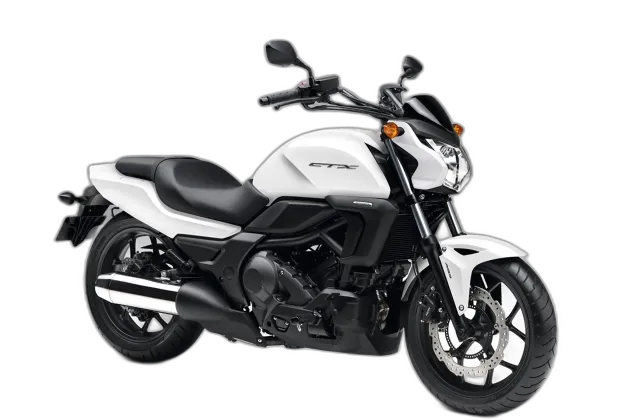
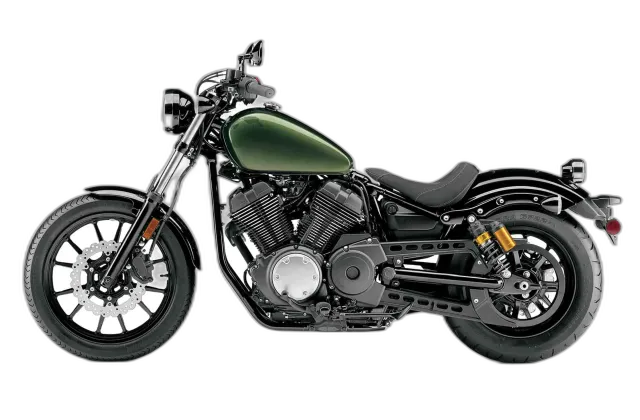
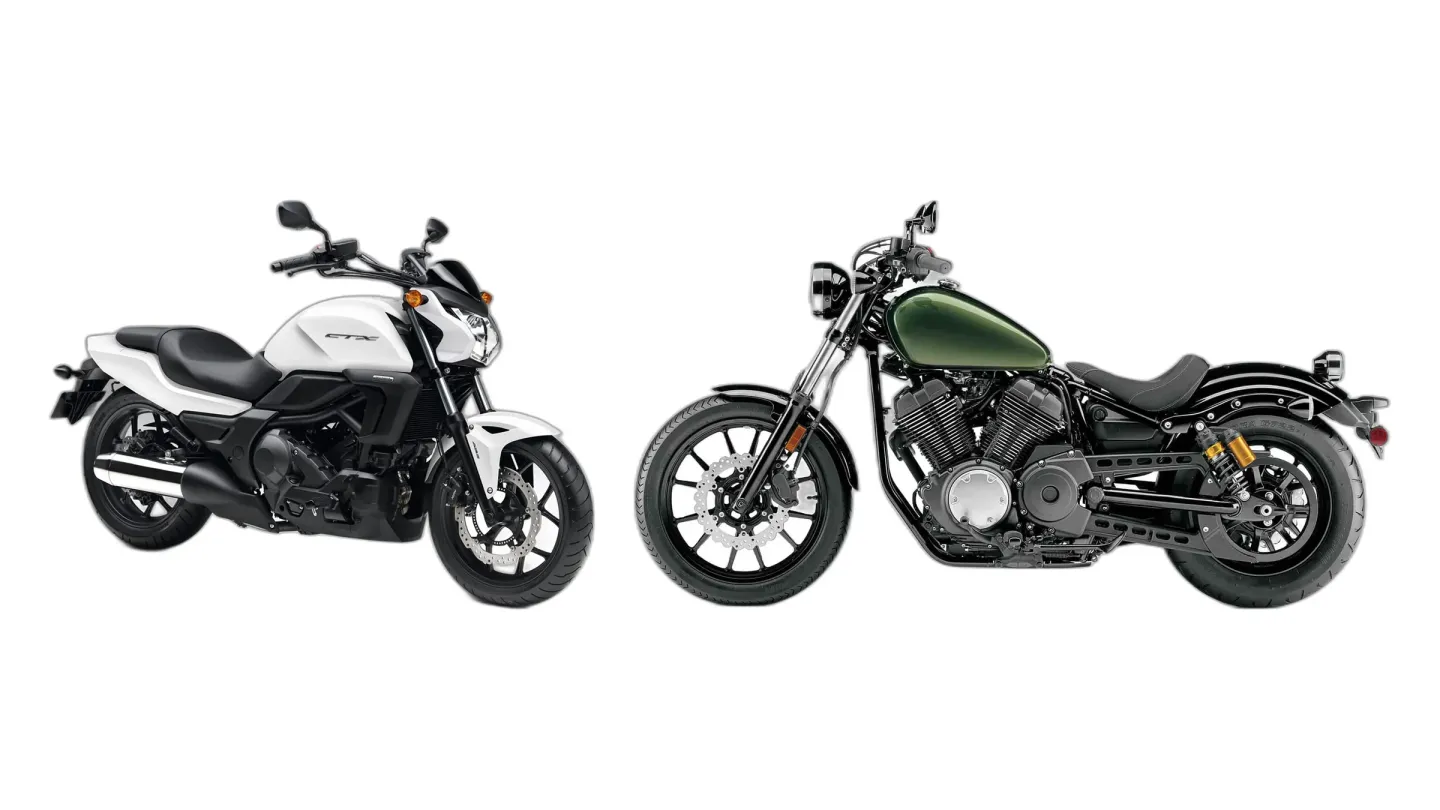
Honda CTX 700 N (CTX700N) vs Yamaha Bolt R-Spec (XVS950CU)
Honda CTX 700 N vs Yamaha Bolt R-Spec: two kinds of bike, and who each one is for.
Stop-and-go traffic downtown, and the Honda CTX 700 N's low-slung weight doesn't fight you as it threads around a stalled delivery van. The Yamaha Bolt R-Spec's wide bars swing its nose past that van at a walking pace, and it's light on the steering. Its V-twin's already pulling clear on low revs.
So which one do you buy?
Buy the Bolt R-Spec if…
Keeping running costs low
Clearly ahead: Bolt R-Spec
If you'd rather spend your money on gas and gear than at the shop, the Bolt R-Spec makes far more sense.
The CTX 700 N has the edge if…
Sporty riding on twisty roads
A touch ahead: CTX 700 N
The CTX 700 N nudges ahead once the pavement starts to wiggle. That comes from lighter steering and stronger brakes. Don't expect a night-and-day difference.
Which one's the smarter buy
Two different jobs
These bikes sit in different classes, so there's no clear better buy for the money. The CTX 700 N costs less, but that doesn't make it the value winner over the Bolt R-Spec.
What makes each one tick
CTX 700 N
With forward-set pegs and a well-padded seat, you're sitting upright on the CTX 700 N for a full day of commuting and light touring. There's torque from low rpm in the parallel twin, and it snaps into quick roll-ons around town. The brake lever reins it in cleanly. The bike tips into a tight bend with barely a nudge.
Bolt R-Spec
Low in the rev range, the Bolt R-Spec's air-cooled V-twin thumps out its torque and won't need you to wring it out in town. The compact double-cradle frame doesn't argue as it turns the bike into a corner on a predictable line. The right peg scrapes early. Mid-mount pegs take the strain off your lower back.
The Voice of Experience

What actually separates them
- The Bolt R-Spec has the lower seat: 27.2 in (690 mm) vs 28.3 in (719 mm).
- The CTX 700 N has the lower wet weight: 483 lb (219 kg) vs 540 lb (245 kg).
- The Bolt R-Spec makes more peak power: 52 hp (38 kW) vs 48 hp (35 kW).
Which one for the way you ride
Comfortable long-distance riding
Not suited: Bolt R-Spec
Leave the Bolt R-Spec out of any touring plans. Big miles aren't what it's made for.
A confidence-building first motorcycle
Look elsewhere
As first bikes, both are a stretch. Starting smaller isn't a step down.
Count commuting as a draw. The deal on the table and the condition of the bike matter more here.
Who each one is built for
What's good, and what you'll live with
CTX 700 N
What owners say
Strengths
- Comfortable, upright ergonomics ideal for commuting
- Excellent fuel economy
- Lightweight and agile handling
- Torquey, responsive engine
Trade-offs
- Limited passing power at highway speeds
Bolt R-Spec
What owners say
Strengths
- Strong low-end torque
- Smooth, vibration-free engine
Trade-offs
- Hard-to-read instrument display
- Limited ground clearance
Known problems to check before you buy
CTX 700 N
- Starter relay switch sealant defect (Recall 15V-439) Recall 15V439000 Faulty sealant on the starter relay switch can cause increased resistance at the main fuse, leading to engine stalling or fire risk. Affected 2014-2015 models. Honda issued a recall to replace the relay.
- Loose shift drum star bolt in DCT models The star bolt securing the shift drum inside the DCT transmission can loosen, causing erratic shifting or false neutrals. Requires disassembly to retighten with threadlocker.
- Front fork pitting The chrome on the fork stanchions can develop pits, leading to oil leaks and compromised damping. Most common on bikes used in wet or salty conditions. Aftermarket re-chroming or replacement is the fix.
Bolt R-Spec
- Instrument cluster readability issues The digital LCD speedometer is difficult to read in bright sunlight or when wearing polarized sunglasses due to poor contrast and glare. Yamaha has not addressed this throughout the Bolt’s run.
What they cost used
These prices compare an 11-year-old CTX 700 N with an 11-year-old Bolt R-Spec.
- CTX 700 N
- about $3,300
- Bolt R-Spec
- about $5,000
At 11 years old, the Honda CTX 700 N sits around $3,300 while the Yamaha Bolt R-Spec runs about $5,000. That's a $1,700 gap in the CTX 700 N's favor. These are estimates from the used market, not live listings.
Where the spec sheets split
| CTX 700 N | Bolt R-Spec | |
|---|---|---|
| Seat height | 28.3 in (719 mm) | 27.2 in (690 mm) |
| Wet weight | 483 lb (219 kg) | 540 lb (245 kg) |
| CTX 700 N | Bolt R-Spec | |
|---|---|---|
| Displacement | 670 cc | 942 cc |
| Engine | Parallel twin | 60° V-twin |
| Cooling | Liquid-cooled | Air-cooled |
| Power | 48 hp (35 kW) | 52 hp (38 kW) |
| Torque | 44 lb-ft (60 Nm) | 59 lb-ft (80 Nm) |
| CTX 700 N | Bolt R-Spec | |
|---|---|---|
| Fuel economy | 62 mpg (US) / 3.8 L/100 km | 50 mpg (US) / 4.72 L/100 km |
| Fuel capacity | 3.3 US gal (12.5 L) | 3.2 US gal (12 L) |
| CTX 700 N | Bolt R-Spec | |
|---|---|---|
| Gearbox | 6-speed | 5-speed |
| Final drive | Chain | Belt |
| Front tire | 120/70-17 | 100/90-19 |
| Rear tire | 160/60-17 | 150/80-16 |
| Wheelbase | 60.2 in (1529 mm) | 61.8 in (1570 mm) |
What comes fitted, what costs extra
| CTX 700 N | Bolt R-Spec | |
|---|---|---|
| ABS | Option | Not offered |
| Automatic Shift (DCT / ASA / AMT) | Option | Not offered |
| Heated Grips | Option | Not offered |
| Luggage System | Option | Not offered |
Head to head, area by area
Both bikes on the same scale, one area at a time.