By NastyNils·
Motorcycle comparison · Supersport
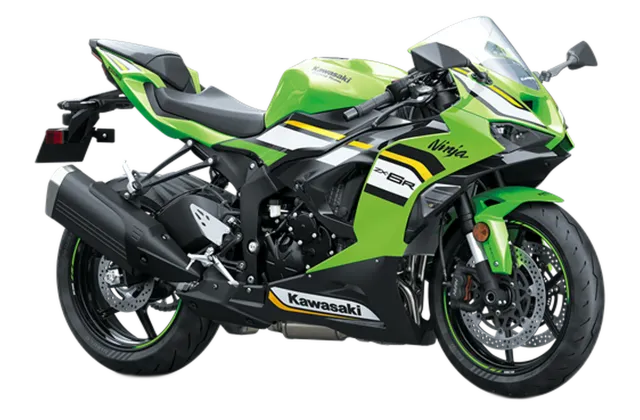
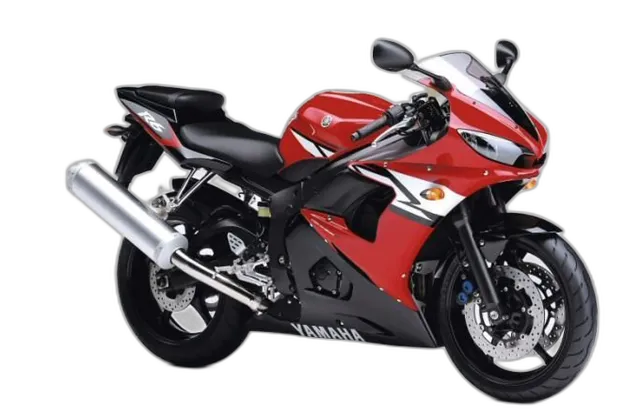
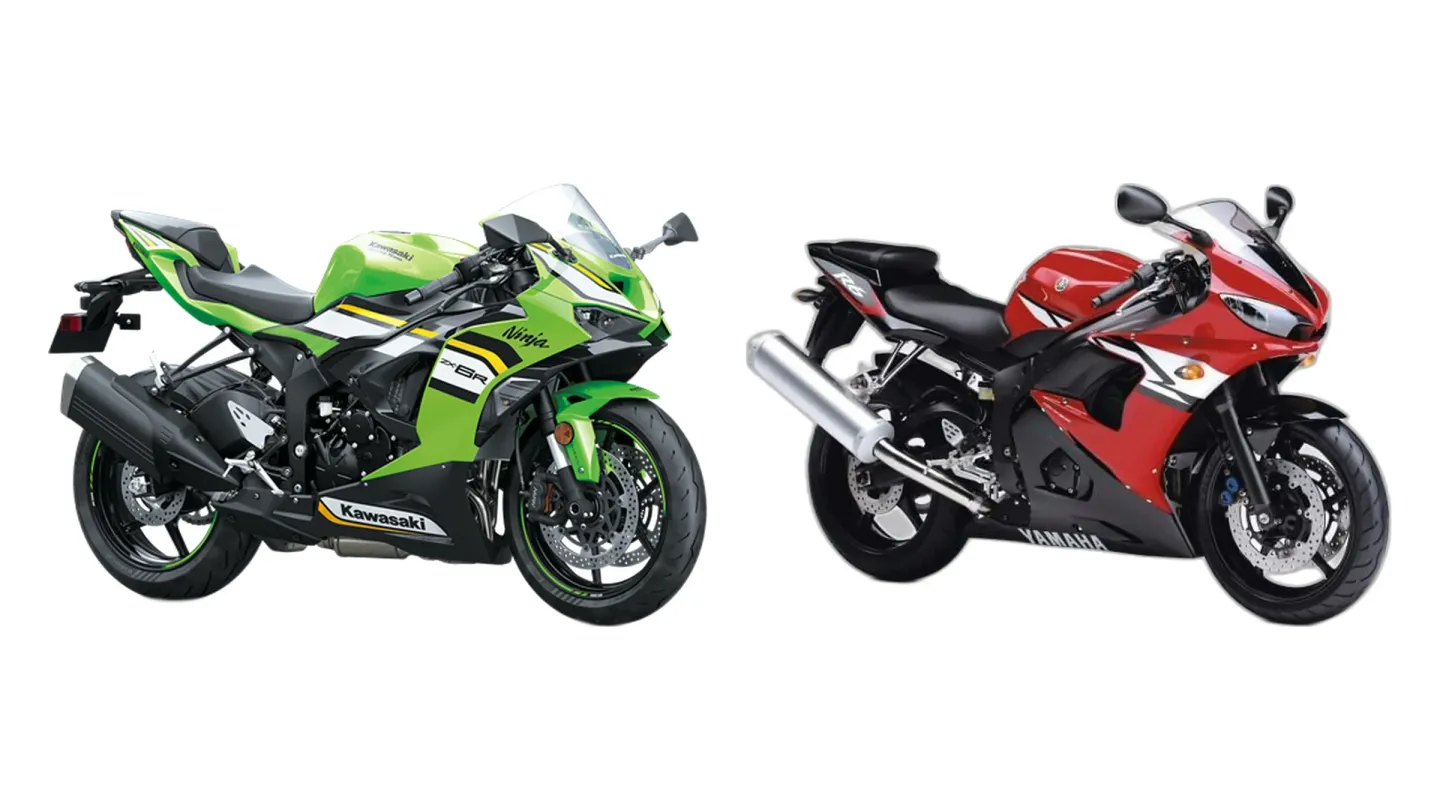
Kawasaki Ninja ZX-6R (ZX636B) vs Yamaha YZF-R6 (RJ 05)
Kawasaki Ninja ZX-6R vs Yamaha YZF-R6: fast is a given. What sets them apart isn't.
Brake late for a hairpin and you'll feel the Kawasaki Ninja ZX-6R's radial calipers haul it down hard. Off the lever, the Yamaha YZF-R6's light frame doesn't hesitate and tips it into the turn on a precise arc. It's talking back through the front the whole way round.
So which one do you buy?
The YZF-R6 has the edge if…
Racetrack use
By a nose: YZF-R6
On a circuit, the YZF-R6 feels a little sharper. Credit a sportier chassis. The margin is thin, and setup can close it.
Sporty riding on twisty roads
Inches ahead: YZF-R6
In the twisties, the YZF-R6 asks a bit less of you to go quickly. Call it a modest edge.
What makes each one tick
Ninja ZX-6R
The extra cubes give the Ninja ZX-6R more low-down pull than you'll find in a standard-size middleweight. There's a real answer at the throttle from the middle revs, and the engine still screams toward the top. The stiff suspension won't soak up a rough street; every patch climbs straight into the seat. The 636 motor's pull gets addictive.
Nils rode the Ninja ZX-6R in Austria, Hungary, Salzburg State, and the Czech Republic in 2003, and in Hungary in 2004 (NastyNils Testride).
YZF-R6
High on the tach, the YZF-R6's inline-four wakes up and doesn't let go until redline. The lever's working a 298 mm stopper that reins the bike in. It isn't easy on the street. The bars answer the smallest nudge with sublime agility.
The Voice of Experience

What actually separates them
- The YZF-R6 has the lower wet weight: 408 lb (185 kg) vs 428 lb (194 kg).
- The YZF-R6 makes more peak power: 125 hp (92 kW) vs 114 hp (84 kW).
- The Ninja ZX-6R has the larger engine: 636 cc vs 599 cc.
Which one for the way you ride
Comfortable long-distance riding
Not their thing
Neither one is built for long-haul comfort. For big miles, look at a proper tourer or sport tourer.
Count commuting and running costs as a draw. The deal on the table and the condition of the bike matter more here.
Who each one is built for
What's good, and what you'll live with
Ninja ZX-6R
What owners say
Strengths
- Enhanced midrange torque
- Durable and reliable engine
- Powerful radial brakes
Trade-offs
- Harsh suspension on rough roads
YZF-R6
What owners say
Strengths
- Exhilarating top-end power delivery
- Razor-sharp, agile handling
- Excellent value on the used market
Known problems to check before you buy
Ninja ZX-6R
- Headshake / tank-slap tendency The front end can wobble violently under hard acceleration out of corners or over bumps, leading to loss of control.
- Notchy gearbox and potential gear wear Difficult shifting, especially 1st-2nd, and in some cases gearbox internals can wear prematurely with aggressive clutchless upshifts.
YZF-R6
No confirmed faults on file yet. That's not the same as fault-free.
What they share
- Engine
- Inline-four
- Cooling
- Liquid-cooled
- Gearbox
- 6-speed
- Final drive
- Chain
- Fork
- Telescopic
- Rear tire
- 180/55-17
Where the spec sheets split
| Ninja ZX-6R | YZF-R6 | |
|---|---|---|
| Seat height | 32.5 in (825 mm) | 32.3 in (820 mm) |
| Wet weight | 428 lb (194 kg) | 408 lb (185 kg) |
| Ninja ZX-6R | YZF-R6 | |
|---|---|---|
| Displacement | 636 cc | 599 cc |
| Power | 114 hp (84 kW) | 125 hp (92 kW) |
| Peak torque at | 11,000 rpm | 12,000 rpm |
| Top speed | 162 mph (261 km/h) | 160 mph (257 km/h) |
| Ninja ZX-6R | YZF-R6 | |
|---|---|---|
| Fuel economy | 32 mpg (US) / 7.43 L/100 km | 36 mpg (US) / 6.6 L/100 km |
| Fuel capacity | 4.8 US gal (18 L) | 4.5 US gal (17 L) |
| Ninja ZX-6R | YZF-R6 | |
|---|---|---|
| Front brake | 280 mm | 298 mm |
| Front tire | 120/65-17 | 120/60-17 |
| Wheelbase | 55.1 in (1400 mm) | 54.5 in (1385 mm) |
Head to head, area by area
Both bikes on the same scale, one area at a time.