By NastyNils·
Motorcycle comparison · Supersport
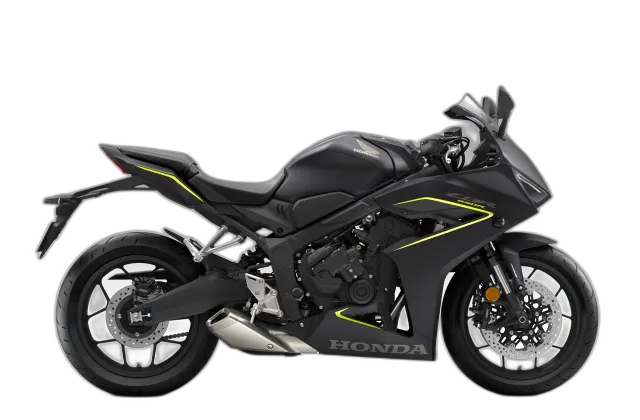
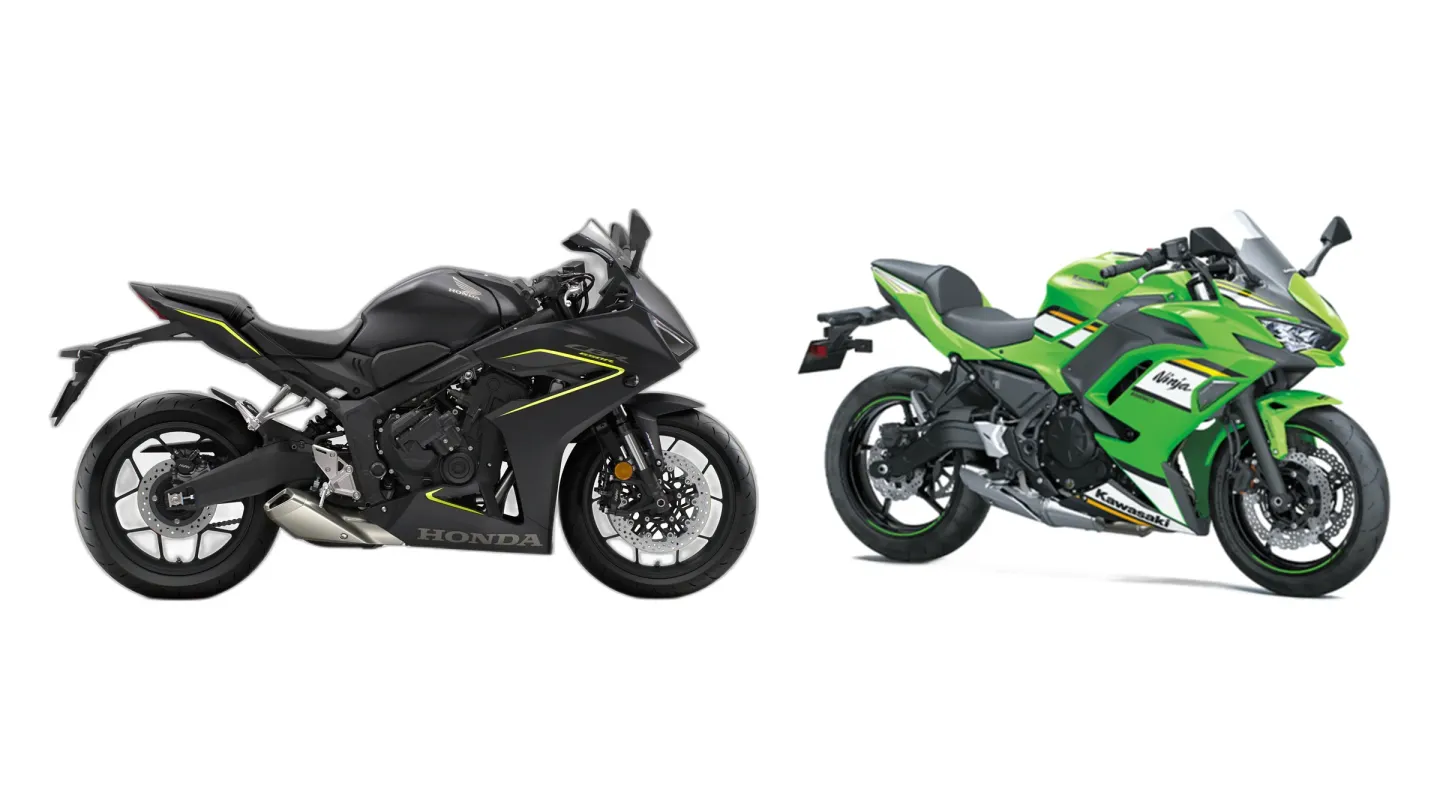
Honda CBR650R (RH15-E_Clutch) vs Kawasaki Ninja 650 (EX650M)
Honda CBR650R vs Kawasaki Ninja 650: one garage spot. Here's what should decide it.
Roll on the Honda CBR650R and it's still pulling smoothly as the revs climb, its intake howl swelling toward redline. The Kawasaki Ninja 650 doesn't lurch; it tugs predictably.
So which one do you buy?
The CBR650R has the edge if…
Racetrack use
By a nose: CBR650R
Between the curbs, the CBR650R asks a bit less of you at speed. Thank better suspension for that. It's a fine margin, nothing more.
Daily commuting & city riding
A touch ahead: CBR650R
Day in, day out, the CBR650R nudges ahead in traffic. The difference is easier everyday riding. It isn't a big enough gap to plan around.
What makes each one tick
CBR650R
The CBR650R's E-Clutch moves it off and changes gear without your left hand touching the lever, and you don't lose the manual override. At a light, there's only the brake lever to work, since the clutch looks after itself. Higher up, the inline-four gathers into a rush that won't quit until the top of the tach. The exhaust note hardens with it.
Ninja 650
Off the sidestand, the Ninja 650 weighs just 425 lb (193 kg) wet, and the bars don't fight the first push. There's a flat torque curve behind the twin, which keeps city streets easy. On Back of the Dragon, corner entry doesn't take more than a nudge before the front tips in. Esses snap past in quick flicks.
The Voice of Experience

What actually separates them
- The Ninja 650 has the lower seat: 31.1 in (790 mm) vs 31.9 in (810 mm).
- The Ninja 650 has the lower wet weight: 425 lb (193 kg) vs 465 lb (211 kg).
- The CBR650R makes more peak power: 95 hp (70 kW) vs 68 hp (50 kW).
Which one for the way you ride
Comfortable long-distance riding
Not their thing
Hours in the saddle won't flatter either of these. They're happier on shorter runs.
Look at twisty roads and running costs and you'll find two bikes doing the same job equally well. Fit is what breaks the tie.
Who each one is built for
What's good, and what you'll live with
CBR650R
What owners say
Strengths
- Innovative E-Clutch system
- Smooth, high-revving inline-four engine
Ninja 650
What owners say
Strengths
- Excellent reliability and low maintenance
- Light and agile handling
- Eager, rev-happy parallel-twin engine
Known problems to check before you buy
CBR650R
- Gearshift arm fastener recall Recall 25V107000 On certain 2024 units built between June 7 and July 18, 2024, the fasteners securing the gearshift arm may loosen and detach, resulting in total loss of gear-shifting capability — a serious safety risk. Honda launched a safety recall (NHTSA 25V-107) to replace the gearshift arm assembly.
Ninja 650
No confirmed faults on file yet. That's not the same as fault-free.
What they share
- Displacement
- 649 cc
- Cooling
- Liquid-cooled
- Gearbox
- 6-speed
- Final drive
- Chain
- Front tire
- 120/70-17
Where the spec sheets split
| CBR650R | Ninja 650 | |
|---|---|---|
| Seat height | 31.9 in (810 mm) | 31.1 in (790 mm) |
| Wet weight | 465 lb (211 kg) | 425 lb (193 kg) |
| CBR650R | Ninja 650 | |
|---|---|---|
| Engine | Inline-four | Parallel twin |
| Power | 95 hp (70 kW) | 68 hp (50 kW) |
| Peak power at | 12,000 rpm | 8,000 rpm |
| Torque | 46 lb-ft (63 Nm) | 47 lb-ft (64 Nm) |
| Peak torque at | 9,000 rpm | 6,700 rpm |
| CBR650R | Ninja 650 | |
|---|---|---|
| Fuel capacity | 4.1 US gal (15.4 L) | 4.0 US gal (15 L) |
| CBR650R | Ninja 650 | |
|---|---|---|
| Fork | Upside-down (USD) | Telescopic |
| Front brake | 310 mm | 300 mm |
| Rear tire | 180/55-17 | 160/60-17 |
| Wheelbase | 57.3 in (1455 mm) | 55.5 in (1410 mm) |
What comes fitted, what costs extra
| CBR650R | Ninja 650 | |
|---|---|---|
| ABS | Standard | Option |
Head to head, area by area
Both bikes on the same scale, one area at a time.