By NastyNils·
Motorcycle comparison · Supersport
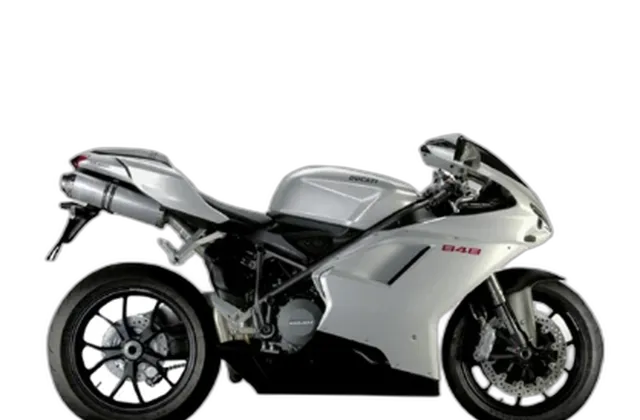
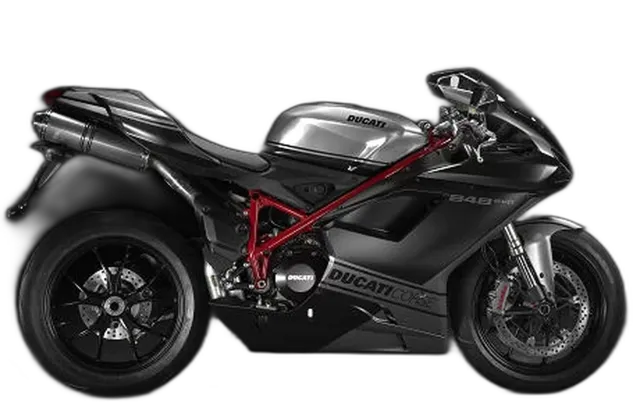
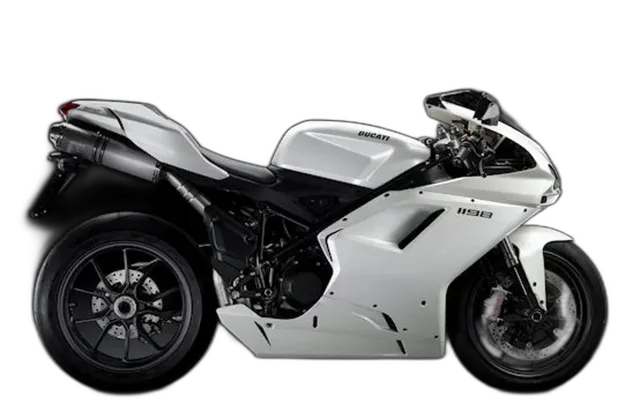
Ducati 848 EVO (MY2011) vs 1198 (MY2009)
Ducati 848 EVO vs 1198: fast is a given. What sets them apart isn't.
You'll roll open the Ducati 848 EVO's throttle and it's pulling the instant you ask, building speed in one even line. The Ducati 1198's twin swells into a thick wave of shove once it's into the middle revs. Then it keeps rushing toward the redline.
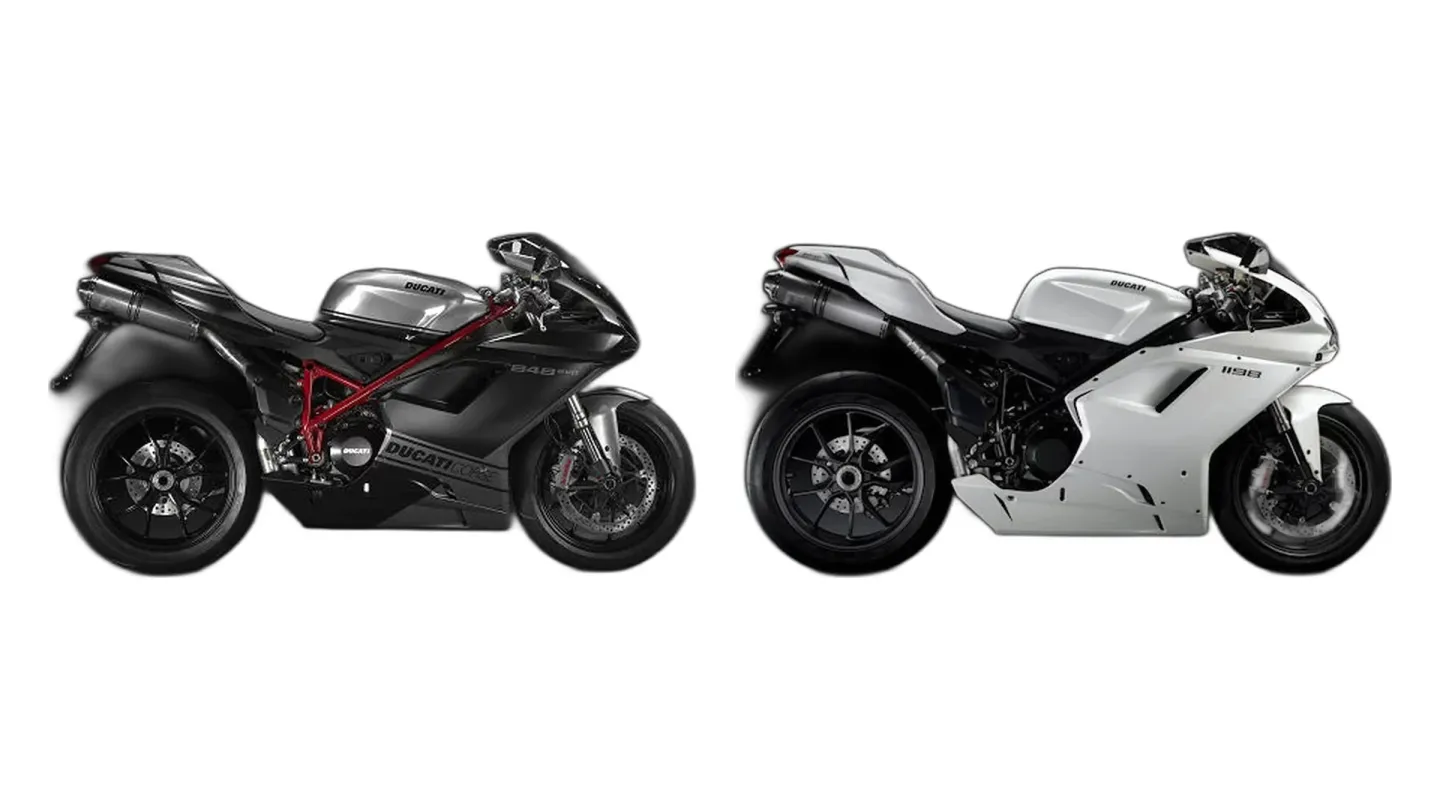
So which one do you buy?
The 1198 has the edge if…
Racetrack use
By a nose: 1198
Between the curbs, the 1198 asks a bit less of you at speed. The difference is better suspension and stronger brakes. It's a fine margin, nothing more.
Sporty riding on twisty roads
Small edge: 1198
Once the road starts to bend, the 1198 noses ahead. The reason: harder acceleration. Your own skill counts for more than a gap this size.
Which one's the smarter buy
Money won't decide it
Neither is the clear better buy for the money. Your choice depends on what you want it for.
What makes each one tick
848 EVO
Every ripple of a corner climbs through the 848 EVO's trellis frame and firm Showa suspension into the bars, and it's all useful feedback. Broken pavement turns that harsh. At the brake lever, there's clear feel from the radial-mount Brembo calipers working the dual front discs. Those Brembos haul the bike down hard.
1198
Out of a corner, the 1198's 97 lb-ft (131 Nm) of torque catapults the bike onto the next straight. Corner entry doesn't come cheap at low speeds: the chassis needs real muscle to turn in through tight bends. Through the fast sweepers at WeatherTech Raceway Laguna Seca, the stiff trellis frame and adjustable suspension keep the bike composed, and there's feedback all the way through. At pace, it holds every arc.
The Voice of Experience

What actually separates them
- The 1198 makes more peak power: 169 hp (124 kW) vs 140 hp (103 kW).
- The 1198 makes more peak torque: 97 lb-ft (131 Nm) vs 72 lb-ft (98 Nm).
- The 1198 has the larger engine: 1198 cc vs 849 cc.
Which one for the way you ride
Comfortable long-distance riding
Both miss here
Hours in the saddle won't flatter either of these. They're happier on shorter runs.
Count commuting and running costs as a draw. The deal on the table and the condition of the bike matter more here.
Who each one is built for
What's good, and what you'll live with
848 EVO
What owners say
Strengths
- Iconic Italian design
- Precise, race-bred handling
- Soulful, charismatic V-twin engine
- Strong Brembo braking system
Trade-offs
- Excessive engine heat in slow riding
- Unforgiving ergonomics for street use
- Firm suspension on rough roads
- No ABS or electronic rider aids
1198
What owners say
Strengths
- Monstrous, characterful V-twin engine
- Sublime chassis and high-speed stability
- Timeless, exotic Italian design
- Powerful, race-spec Brembo brakes
Trade-offs
- High ownership and maintenance costs
- Punishing ergonomics and heavy steering
- Snatchy stock fueling and no electronic rider aids
Known problems to check before you buy
848 EVO
- Rear brake pad friction material detachment (recall 12V-188) Recall 12V188000 On 2012 models, the rear brake pad friction material may separate from the backing plate, causing sudden loss of rear braking efficiency. Ducati issued a recall to replace pads.
- Hard starting due to low-capacity battery terminals Many owners report slow cranking and failure to start, especially when cold. Upgrading to heavier-gauge battery cables (e.g., Motolectric HICAP) often resolves this.
- Fuel tank swelling from ethanol-blended fuel The plastic fuel tank can deform and swell when exposed to ethanol, making removal difficult and potentially causing fitment issues.
- Voltage regulator / rectifier failure The stock voltage regulator is prone to overheating and failure, causing charging system problems and electrical gremlins. Upgrading to a more robust unit is a common fix.
1198
- Fuel line leak at injector connection Recall 09V170000 A recall (NHTSA campaign 09V170000) affects 2009 1198 and 1198 S models where the plastic fuel line fitting at the injector can warp or crack, causing a fuel leak and fire risk.
What they cost used
These prices compare a 15-year-old 848 EVO with a 15-year-old 1198.
- 848 EVO
- about $7,200
- 1198
- about $10,000
At 15 years old, the Ducati 848 EVO sits around $7,200 while the Ducati 1198 runs about $10,000. That's a $2,800 gap in the 848 EVO's favor. These are US market estimates, not live listings.
What they share
- Cooling
- Liquid-cooled
- Fuel capacity
- 4.1 US gal (15.5 L)
- Gearbox
- 6-speed
- Final drive
- Chain
- Fork
- Upside-down (USD)
- Front tire
- 120/70-17
Where the spec sheets split
| 848 EVO | 1198 | |
|---|---|---|
| Seat height | 32.7 in (830 mm) | 32.3 in (820 mm) |
| Wet weight | 430 lb (195 kg) | 432 lb (196 kg) |
| 848 EVO | 1198 | |
|---|---|---|
| Displacement | 849 cc | 1198 cc |
| Engine | L-twin | 90° V-twin |
| Power | 140 hp (103 kW) | 169 hp (124 kW) |
| Peak power at | 10,500 rpm | 9,750 rpm |
| Torque | 72 lb-ft (98 Nm) | 97 lb-ft (131 Nm) |
| Peak torque at | 9,750 rpm | 8,000 rpm |
| Top speed | 166 mph (267 km/h) | 185 mph (298 km/h) |
| 848 EVO | 1198 | |
|---|---|---|
| Front brake | 320 mm | 330 mm |
| Rear tire | 180/55-17 | 190/55-17 |
Head to head, area by area
Both bikes on the same scale, one area at a time.