By NastyNils·
Motorcycle comparison · Scrambler vs Retro Classic
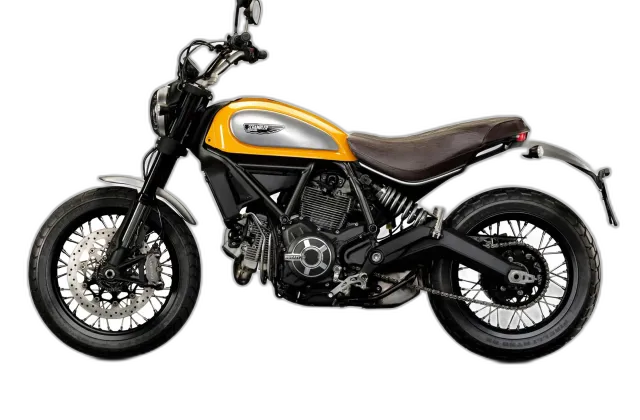
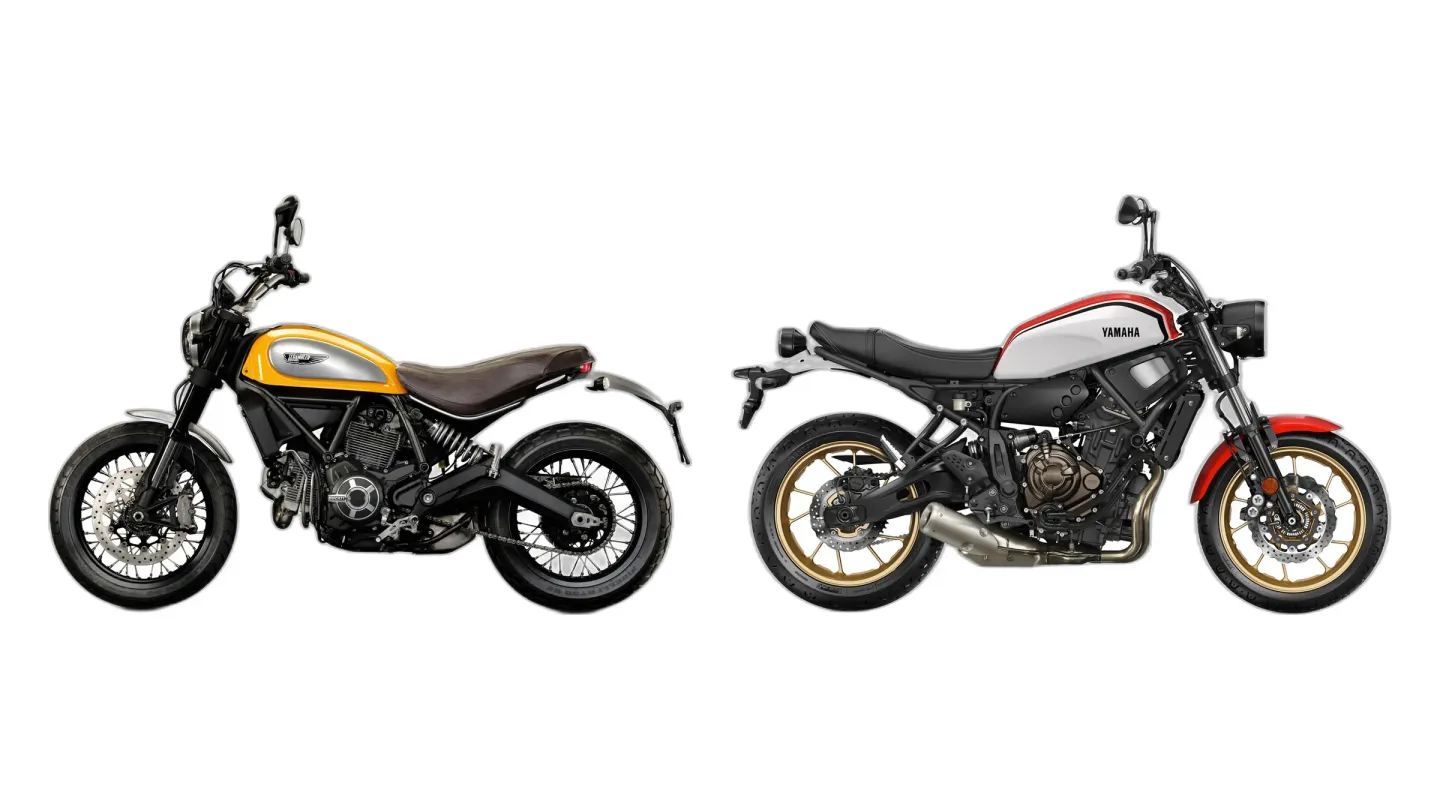
Ducati Scrambler Classic (MY2015) vs Yamaha XSR700 (RM11)
Ducati Scrambler Classic vs Yamaha XSR700: buy with your heart, but read this first.
You'll squeeze the lever on the Ducati Scrambler Classic, and the light bike doesn't fight you as it settles. On the Yamaha XSR700, the brakes bite plain and sober.
So which one do you buy?
Buy the Scrambler Classic if…
Keeping running costs low
Better bet: Scrambler Classic
For a rider watching every dollar after the sale, the Scrambler Classic is the clear choice.
The Scrambler Classic has the edge if…
Sporty riding on twisty roads
Narrow edge: Scrambler Classic
The Scrambler Classic nudges ahead once the pavement starts to wiggle. Don't expect a night-and-day difference.
Which one's the smarter buy
Two different jobs
The Ducati Scrambler Classic and Yamaha XSR700 do different jobs, so neither is the clear better buy for the money. With no meaningful price gap between the two, the choice comes down to which style you want.
What makes each one tick
Scrambler Classic
It's the wide bars that make the Scrambler Classic fun, because a small push on them turns into a big steering input. Corner entry takes one nudge, and the bike's already turned in. Out of the exit, there's L-twin torque you'll feel from low revs on up. The twin builds in one long swell.
XSR700
The XSR700 puts you square in the middle, and there's no lean toward the bars or the pegs. Veteran riders enjoy it, and you can hand it to a fresh license holder without worry. Pull, handling, brakes and the snappy gearbox all work the way you'd expect: sober, typically Japanese. The suspension won't keep up on a track day. A twist of throttle and the front wheel's up.
The Voice of Experience
What actually separates them
- The Scrambler Classic has the lower seat: 31.1 in (790 mm) vs 32.1 in (815 mm).
- The Scrambler Classic has the larger engine: 803 cc vs 689 cc.
- Heated Grips: option on the Scrambler Classic, not offered on the XSR700.
Which one for the way you ride
Comfortable long-distance riding
Neither is a natural fit
Hours in the saddle won't flatter either of these. They're happier on shorter runs.
Count commuting and a first bike as a draw. The deal on the table and the condition of the bike matter more here.
Who each one is built for
What's good, and what you'll live with
Scrambler Classic
What owners say
Strengths
- Lightweight, nimble handling
- Smooth, characterful V-twin engine
- Accessible and beginner-friendly
- Stylish retro design with quality finish
Trade-offs
- Basic suspension limits chassis potential
- Engine lacks top-end rush for experienced riders
XSR700
Strengths
- Handling You Trust Immediately
- Cheap To Keep Running
- A Genuine Blank Canvas
- Settled At Highway Speed
- Punchy, characterful CP2 engine
Trade-offs
- Occasional False Neutral
- Surface Rust Shows Early
- Sticky Starter Switch
- Wiring After Winter Storage
- Budget suspension limits fast riding
Known problems to check before you buy
Scrambler Classic
No confirmed faults on file yet. That's not the same as fault-free.
XSR700
- Swingarm and fastener corrosion Surface rust appears on the swingarm, frame welds, and zinc-plated fasteners, particularly when ridden in wet conditions or exposed to winter road salt.
What they cost used
These prices compare an 8-year-old Scrambler Classic with an 8-year-old XSR700.
- Scrambler Classic
- about $6,600
- XSR700
- about $6,900
At eight years old, the Ducati Scrambler Classic sits around $6,600 while the Yamaha XSR700 lands near $6,900. That small gap doesn't change the math. These are US market estimates, not live listings.
What they share
- Wet weight
- 410 lb (186 kg)
- Torque
- 50 lb-ft (68 Nm)
- Gearbox
- 6-speed
- Fork
- Telescopic
- Rear tire
- 180/55-17
Where the spec sheets split
| Scrambler Classic | XSR700 | |
|---|---|---|
| Seat height | 31.1 in (790 mm) | 32.1 in (815 mm) |
| Scrambler Classic | XSR700 | |
|---|---|---|
| Displacement | 803 cc | 689 cc |
| Engine | L-twin | Parallel twin |
| Cooling | Air-cooled | Liquid-cooled |
| Power | 73 hp (54 kW) | 75 hp (55 kW) |
| Peak power at | 8,250 rpm | 9,000 rpm |
| Peak torque at | 5,750 rpm | 6,500 rpm |
| Scrambler Classic | XSR700 | |
|---|---|---|
| Fuel economy | 44 mpg (US) / 5.4 L/100 km | 55 mpg (US) / 4.3 L/100 km |
| Fuel capacity | 3.6 US gal (13.5 L) | 3.7 US gal (14 L) |
| Scrambler Classic | XSR700 | |
|---|---|---|
| Front brake | 330 mm | 282 mm |
| Front tire | 110/80-18 | 120/70-17 |
| Wheelbase | 56.9 in (1445 mm) | 55.3 in (1405 mm) |
| Front travel | 5.9 in (150 mm) | 5.1 in (130 mm) |
| Rear travel | 5.9 in (150 mm) | 5.1 in (130 mm) |
What comes fitted, what costs extra
| Scrambler Classic | XSR700 | |
|---|---|---|
| Heated Grips | Option | Not offered |
| Luggage System | Option | Not offered |
Head to head, area by area
Both bikes on the same scale, one area at a time.