By NastyNils·
Motorcycle comparison · Scooter
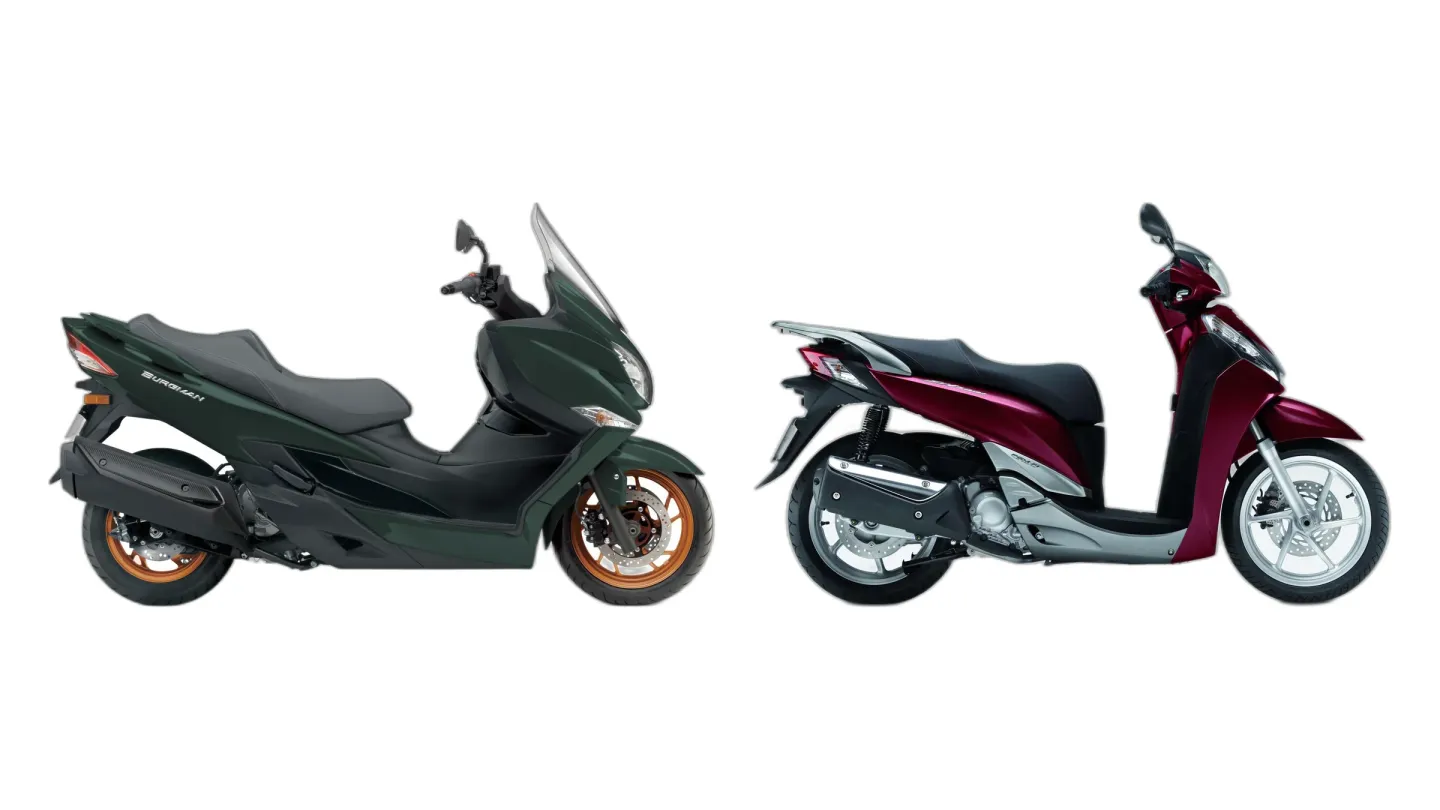
Suzuki Burgman 400 (AN400 C) vs Honda SH300i (NF 02-2)
Suzuki Burgman 400 vs Honda SH300i: which one's easier to live with every day.
You'll keep the Suzuki Burgman 400 running year after year, with a big owner community behind it. The Honda SH300i's automatic drive doesn't ask you for a single shift through stop-start traffic. It doesn't stretch to a full day's riding.
So which one do you buy?
The SH300i has the edge if…
Sporty riding on twisty roads
Edges it: SH300i
The SH300i nudges ahead once the pavement starts to wiggle. Put it down to lighter steering and a sportier chassis. Don't expect a night-and-day difference.
Keeping running costs low
Nose ahead: SH300i
The SH300i is a touch easier on the wallet to run. Condition still matters more than the model.
Daily commuting & city riding
Slight edge: SH300i
For the Monday-to-Friday grind, the SH300i pulls a nose in front. Your own commute could easily flip it.
What makes each one tick
Burgman 400
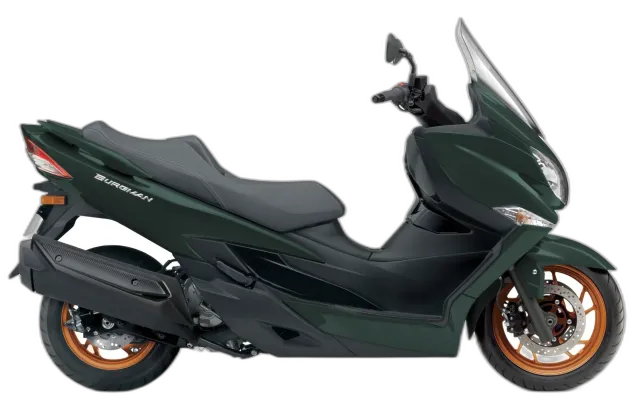
Long hours don't wear thin on the Burgman, whose plush seat and adjustable backrest keep you sitting low with room to lean back. Once it's in, it stays put. The windscreen shoves the wind clear of the bars.
SH300i
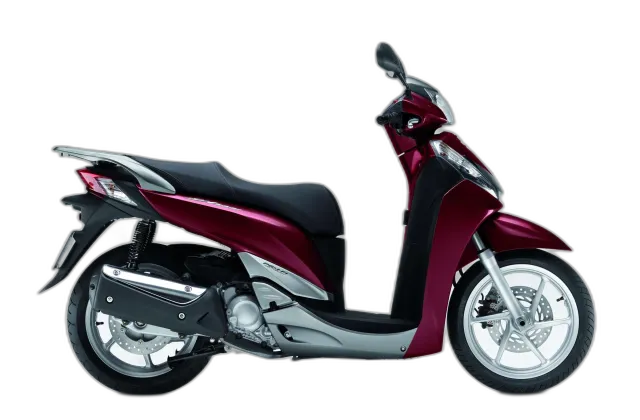
A light push on the bar swings the SH300i through tight turns the way a motorcycle does. The engine pulls with real pep. The flat floorboard leaves your legs plenty of room.
The Voice of Experience

What actually separates them
- The Burgman 400 has the lower seat: 28.0 in (710 mm) vs 30.9 in (785 mm).
- The SH300i has the lower wet weight: 373 lb (169 kg) vs 489 lb (222 kg).
- The Burgman 400 makes more peak power: 34 hp (25 kW) vs 27 hp (20 kW).
Which one for the way you ride
Comfortable long-distance riding
Not built for it: SH300i
Long days on the highway aren't the SH300i's job, so there's no verdict for it here.
Count a first bike as a draw. The deal on the table and the condition of the bike matter more here.
Who each one is built for
What's good, and what you'll live with
Burgman 400
What owners say
Strengths
- Proven reliability with strong owner community
SH300i
What owners say
Strengths
- Easy automatic operation
What they share
- Engine
- Single-cylinder
- Cooling
- Liquid-cooled
- Peak torque at
- 6,000 rpm
- Final drive
- Belt
Where the spec sheets split
| Burgman 400 | SH300i | |
|---|---|---|
| Seat height | 28.0 in (710 mm) | 30.9 in (785 mm) |
| Wet weight | 489 lb (222 kg) | 373 lb (169 kg) |
| Burgman 400 | SH300i | |
|---|---|---|
| Displacement | 400 cc | 279 cc |
| Power | 34 hp (25 kW) | 27 hp (20 kW) |
| Peak power at | 7,600 rpm | 8,250 rpm |
| Torque | 27 lb-ft (36 Nm) | 19 lb-ft (26 Nm) |
| Burgman 400 | SH300i | |
|---|---|---|
| Fuel capacity | 3.6 US gal (13.6 L) | 2.4 US gal (9.1 L) |
| Burgman 400 | SH300i | |
|---|---|---|
| Front tire | 120/80-14 | 110/70-16 |
| Rear tire | 150/70-13 | 130/70-16 |
What comes fitted, what costs extra
| Burgman 400 | SH300i | |
|---|---|---|
| ABS | Standard | Option |
Head to head, area by area
Both bikes on the same scale, one area at a time.