By NastyNils·
Motorcycle comparison · Retro Classic vs Cruiser
Triumph Bonneville Bobber (DV01A) vs Indian Scout (MY2015)
Triumph Bonneville Bobber vs Indian Scout: buy with your heart, but read this first.
You'll feel the Triumph Bonneville Bobber's twin dig in hard at low rpm, its exhaust thumping as the throttle opens. The Indian Scout's liquid-cooled V-twin doesn't snatch at your wrist. Its power keeps building, smooth and even, as revs climb.
So which one do you buy?
Buy the Bonneville Bobber if…
Keeping running costs low
Gets the nod: Bonneville Bobber
On running costs, the Bonneville Bobber pulls clearly ahead. It's the easier one to own on a tight budget.
The Bonneville Bobber has the edge if…
Daily commuting & city riding
A touch ahead: Bonneville Bobber
The Bonneville Bobber makes slightly more sense as a commuter. Don't read much into a gap this small.
Sporty riding on twisty roads
Small edge: Bonneville Bobber
On a winding road, the Bonneville Bobber comes out a touch ahead. Most of that is more feel through the bars. You wouldn't bet much on a gap like that.
Which one's the smarter buy
Different classes, different trade-offs
The Bonneville Bobber and the Scout sit in different classes, so neither is the clear better buy for the money.
What makes each one tick
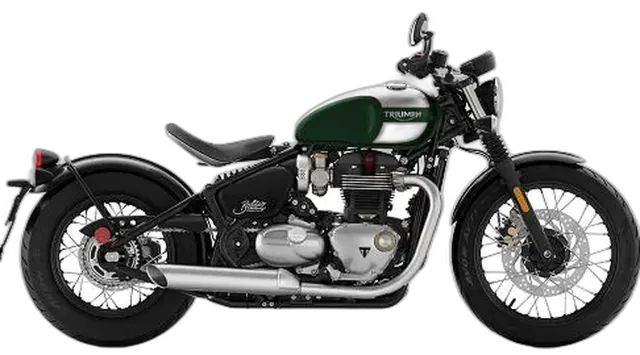
Bonneville Bobber
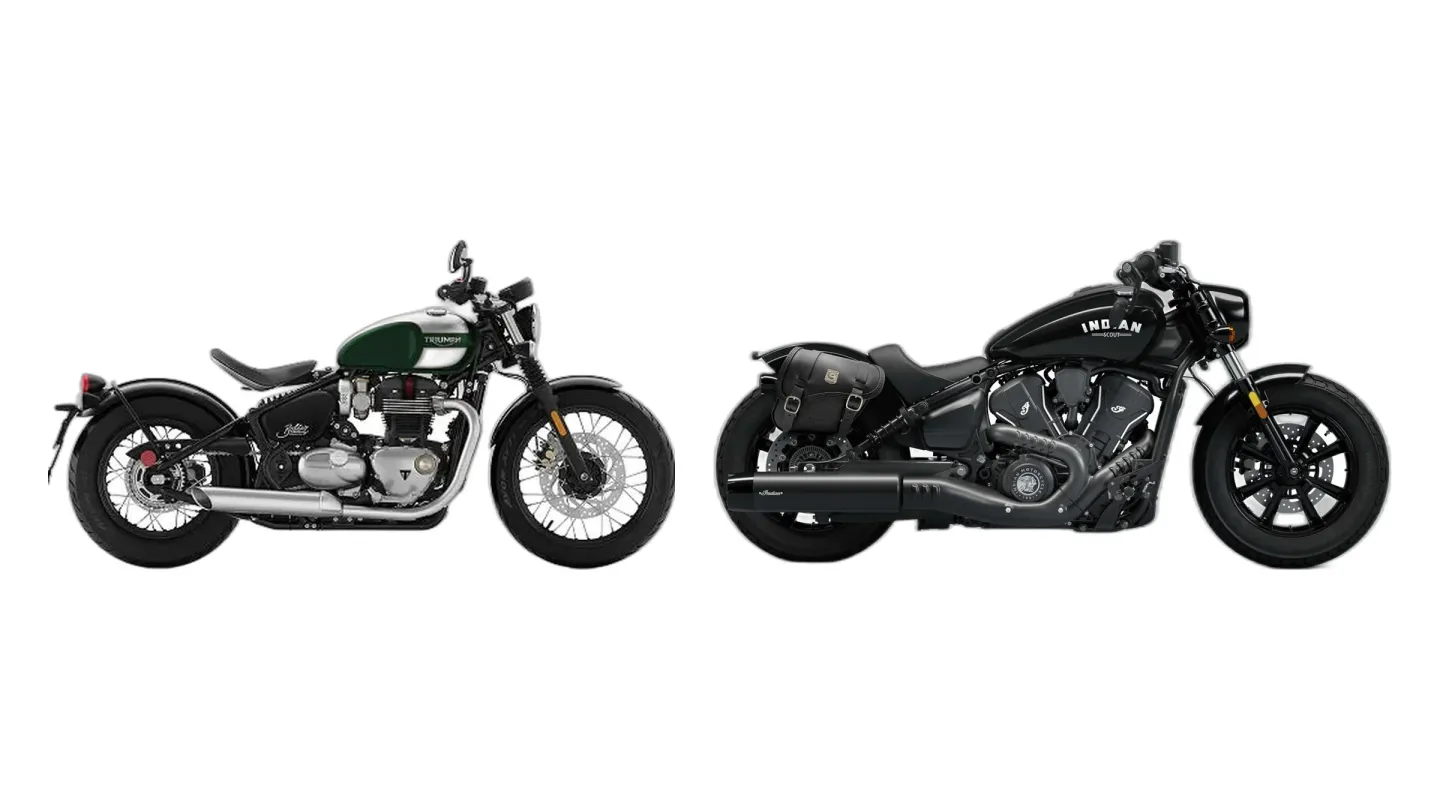
Low and long as it sits, the Bobber steers neutrally into a corner and holds its line once it's leaned over. Bumps don't pull it wide. The patented aluminum seat moves horizontally on the frame, and the riding position moves with it. Wire wheels turn under bodywork stripped to the bone.
Scout
Along Iron Mountain Road, the Scout's steering answers the bar quickly, and there's enough ground clearance to keep the pegs off the asphalt. At 26.5 in (673 mm), the seat's low enough for most riders to plant both boots flat. The clutch takes up without a grab. Each upshift clicks home cleanly.
Nils rode the Scout in the Canary Islands in 2021 (NastyNils Testride).
The Voice of Experience

What actually separates them
- The Scout has the lower seat: 26.5 in (673 mm) vs 27.2 in (690 mm).
- The Bonneville Bobber has the lower wet weight: 522 lb (237 kg) vs 558 lb (253 kg).
- The Scout makes more peak power: 100 hp (75 kW) vs 76 hp (57 kW).
Which one for the way you ride
Comfortable long-distance riding
Not their thing
Hours in the saddle won't flatter either of these. They're happier on shorter runs.
A confidence-building first motorcycle
Both miss here
For a brand-new rider, both are the wrong place to start. Learn the basics on a smaller bike first.
Who each one is built for
What's good, and what you'll live with
Bonneville Bobber
What owners say
Strengths
- Confident handling and low center of gravity
- Stunning, authentic factory bobber styling
- Torque-rich, characterful engine
Trade-offs
- Intermittent electrical problems and quality control lapses
Scout
What owners say
Strengths
- Low seat height for approachability
- Smooth and powerful engine
- Good clutch feel and gearbox
Known problems to check before you buy
Bonneville Bobber
- Electrical system failures and wiring loom tightness Multiple owners report intermittent electrical problems including dashboard blackouts, warning lights illuminating, and engine cut-outs, often traced to loose or overstretched wiring harnesses near the headstock.
Scout
- Rear brake master cylinder recall (2015, NHTSA Recall 15V-142) Recall 15V142000 Approximately 806 early 2015 Scouts were recalled due to a potential rear brake master cylinder issue that could reduce braking power. Authorized dealers inspect and replace the component free of charge.
What they cost used
These prices compare a 6-year-old Bonneville Bobber with a 6-year-old Scout.
- Bonneville Bobber
- about $9,100
- Scout
- about $9,000
At six years old, the Triumph Bonneville Bobber sits around $9,100 while the Indian Scout lands near $9,000. That's no meaningful gap between the two. These are US market estimates, not live listings.
What they share
- Cooling
- Liquid-cooled
- Gearbox
- 6-speed
- Rear tire
- 150/80-16
Where the spec sheets split
| Bonneville Bobber | Scout | |
|---|---|---|
| Seat height | 27.2 in (690 mm) | 26.5 in (673 mm) |
| Wet weight | 522 lb (237 kg) | 558 lb (253 kg) |
| Bonneville Bobber | Scout | |
|---|---|---|
| Displacement | 1200 cc | 1133 cc |
| Engine | Parallel twin | 60° V-twin |
| Power | 76 hp (57 kW) | 100 hp (75 kW) |
| Peak power at | 6,100 rpm | 8,100 rpm |
| Torque | 78 lb-ft (106 Nm) | 72 lb-ft (98 Nm) |
| Peak torque at | 4,000 rpm | 5,900 rpm |
| Bonneville Bobber | Scout | |
|---|---|---|
| Fuel economy | 57 mpg (US) / 4.1 L/100 km | 44 mpg (US) / 5.4 L/100 km |
| Fuel capacity | 2.4 US gal (9.1 L) | 3.3 US gal (12.5 L) |
| Bonneville Bobber | Scout | |
|---|---|---|
| Final drive | Chain | Belt |
| Front tire | 100/90-19 | 130/90-16 |
What comes fitted, what costs extra
| Bonneville Bobber | Scout | |
|---|---|---|
| ABS | Standard | Standard (from 2016) |
| Traction Control | Standard | Not offered |
Head to head, area by area
Both bikes on the same scale, one area at a time.