By NastyNils·
Motorcycle comparison · Retro Classic
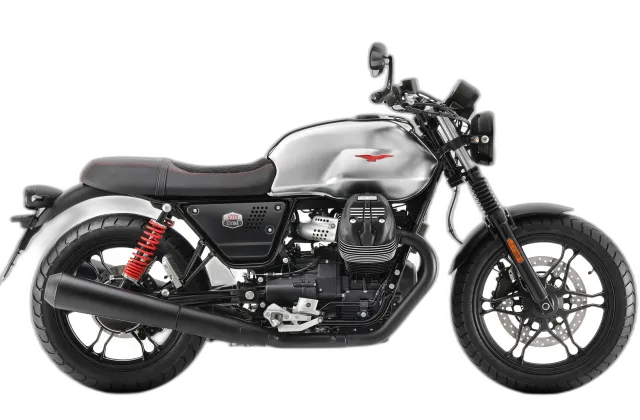
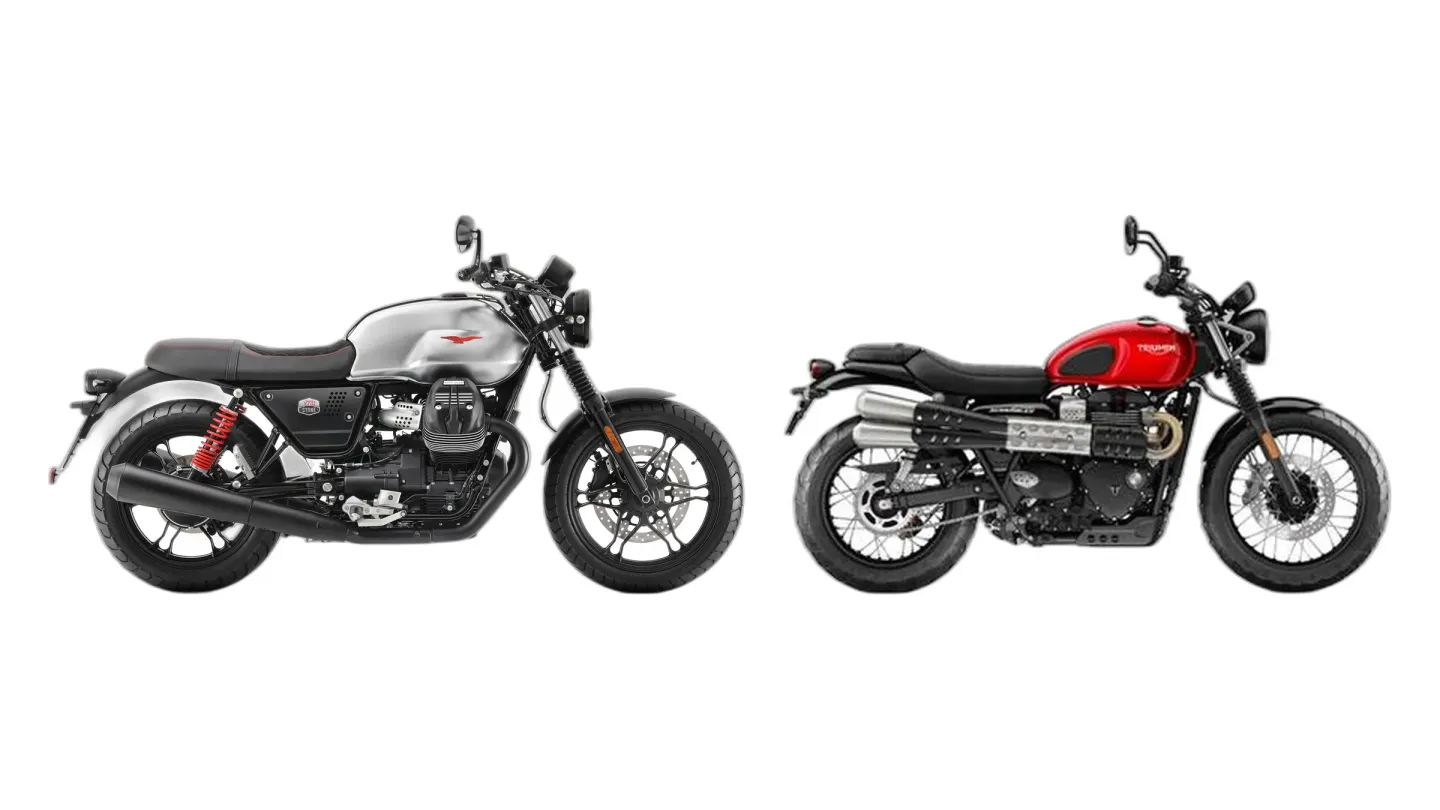
Moto Guzzi V7 III Stone (MY2017-S) vs Triumph Street Twin (DP03)
Moto Guzzi V7 III Stone vs Triumph Street Twin: buy with your heart, but read this first.
Over the first sharp bump after the swap, the Moto Guzzi V7 III Stone's low center of gravity keeps it calm, and it's back on line in a beat. On the Triumph Street Twin, the KYB cartridge fork takes the hit. The bike stays neutral and doesn't wander.
So which one do you buy?
The Street Twin has the edge if…
Sporty riding on twisty roads
Narrow edge: Street Twin
The Street Twin nudges ahead once the pavement starts to wiggle. The reason: harder acceleration and better suspension. Don't expect a night-and-day difference.
Daily commuting & city riding
Slight edge: Street Twin
Your daily ride leans slightly toward the Street Twin. Put it down to friendlier manners. Fit and price can easily outweigh that.
Character, looks and sound
A touch ahead: Street Twin
On sound and soul, the Street Twin comes out a touch ahead. Your own eyes and ears outrank this verdict.
Which one's the smarter buy
No clear advantage
The lower sticker price doesn't settle which one is the better buy. Neither bike is the clear better value for the money.
What makes each one tick
V7 III Stone
On a twisting back road, the V7 III Stone's steel double-cradle frame tips into each bend eagerly, and it's happiest at a moderate pace. The throttle wakes a throb from the V-twin. There's usable pull behind it.
Street Twin
From the middle of its revs, the Street Twin's liquid-cooled twin pulls with a strong surge, and it's lively right up through the gears. Corner entry doesn't surprise you: the chassis settles into a stable arc without a twitch at the bar. The front brake bites hard, then keeps building. The plush seat shrugs off commutes.
The Voice of Experience

What actually separates them
- The V7 III Stone has the lower wet weight: 461 lb (209 kg) vs 476 lb (216 kg).
- The Street Twin makes more peak power: 64 hp (48 kW) vs 52 hp (38 kW).
- The Street Twin makes more peak torque: 59 lb-ft (80 Nm) vs 44 lb-ft (60 Nm).
Which one for the way you ride
Comfortable long-distance riding
Look elsewhere
Both of these get tiring on a long day. A proper tourer will treat you better on big miles.
Look at running costs and you'll find two bikes doing the same job equally well. Fit is what breaks the tie.
Who each one is built for
What's good, and what you'll live with
V7 III Stone
What owners say
Strengths
- Engaging, balanced chassis
Street Twin
What owners say
Strengths
- Significantly improved engine performance
- Excellent front brake feel and power
- Timeless retro styling with modern fit and finish
- Comfortable and commuter-friendly ergonomics
What they cost used
These prices compare a 6-year-old V7 III Stone with a 6-year-old Street Twin.
- V7 III Stone
- about $5,300
- Street Twin
- about $7,000
At six years old, the Moto Guzzi V7 III Stone sits around $5,300 while the Triumph Street Twin runs about $7,000. That's a $1,700 gap in the V7 III Stone's favor. These are US market estimates, not live listings.
What they share
- Fork
- Telescopic
- Front tire
- 100/90-18
Where the spec sheets split
| V7 III Stone | Street Twin | |
|---|---|---|
| Seat height | 30.3 in (770 mm) | 30.1 in (765 mm) |
| Wet weight | 461 lb (209 kg) | 476 lb (216 kg) |
| V7 III Stone | Street Twin | |
|---|---|---|
| Displacement | 744 cc | 900 cc |
| Engine | 90° V-twin | Parallel twin |
| Cooling | Air-cooled | Liquid-cooled |
| Power | 52 hp (38 kW) | 64 hp (48 kW) |
| Torque | 44 lb-ft (60 Nm) | 59 lb-ft (80 Nm) |
| V7 III Stone | Street Twin | |
|---|---|---|
| Fuel capacity | 5.5 US gal (21 L) | 3.2 US gal (12 L) |
| V7 III Stone | Street Twin | |
|---|---|---|
| Gearbox | 6-speed | 5-speed |
| Final drive | Shaft | Chain |
| Rear tire | 130/80-17 | 150/70-17 |
| Wheelbase | 56.9 in (1445 mm) | 55.7 in (1415 mm) |
What comes fitted, what costs extra
| V7 III Stone | Street Twin | |
|---|---|---|
| Ride Modes | Not offered | Standard |
Head to head, area by area
Both bikes on the same scale, one area at a time.