By NastyNils·
Motorcycle comparison · Retro Classic
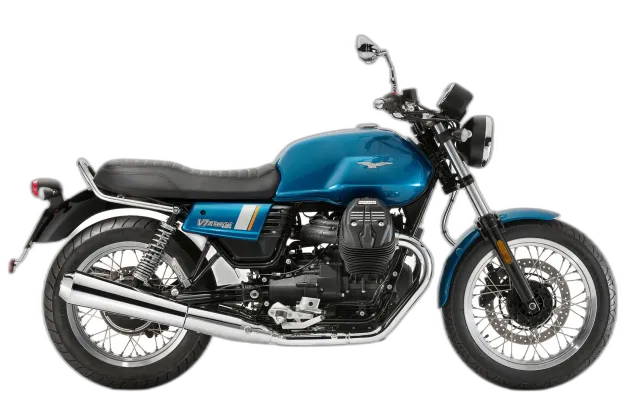
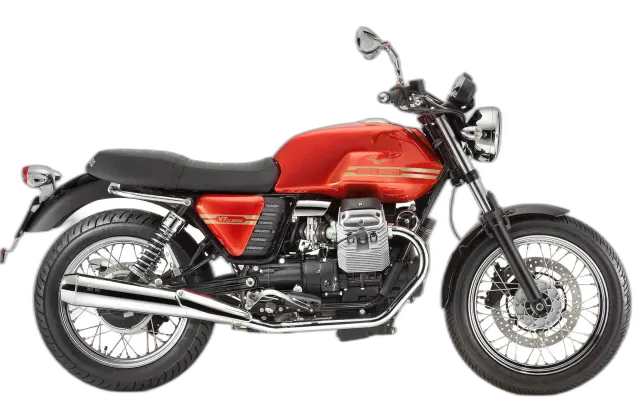
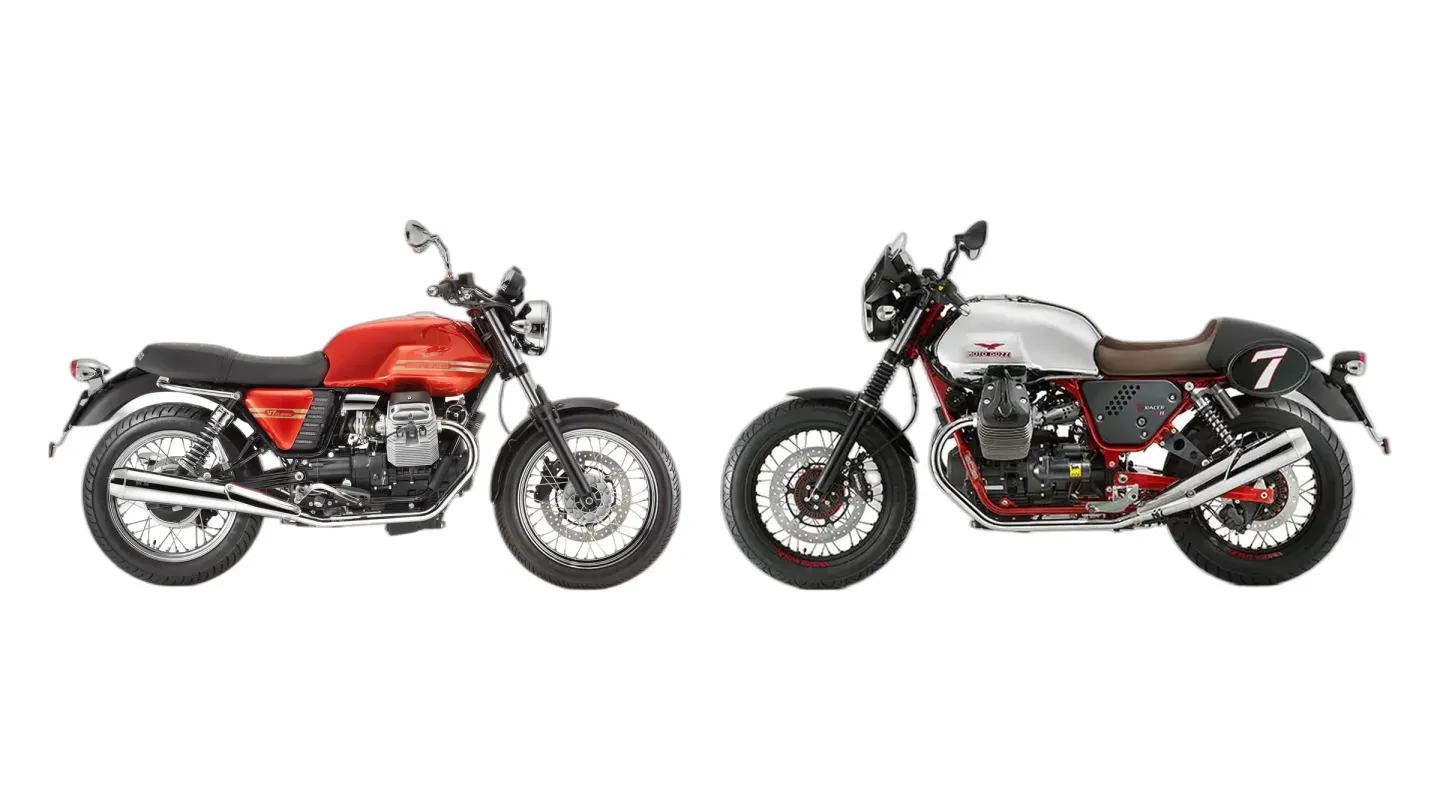
Moto Guzzi V7 Classic (MY2008) vs V7 II Racer (MY2015)
Moto Guzzi V7 Classic vs V7 II Racer: which one to buy once you're past the looks.
In a tight city corner, the Moto Guzzi V7 Classic's slim frame tips in the moment you're on the bars. The Moto Guzzi V7 II Racer puts your hands down on clip-ons, though the reach stays short. Its clutch lever pulls in with barely any weight.
So which one do you buy?
The V7 Classic has the edge if…
Sporty riding on twisty roads
Small edge: V7 Classic
Back-road fun leans slightly toward the V7 Classic. That comes from a sportier chassis and more feel through the bars. It's a narrow call, so trust your test ride.
The V7 II Racer has the edge if…
Daily commuting & city riding
By a nose: V7 II Racer
For the Monday-to-Friday grind, the V7 II Racer pulls a nose in front. Your own commute could easily flip it.
What makes each one tick
V7 Classic
Down low in the revs, the V7 Classic's transverse twin swells with smooth torque, and there's an exhaust bark in every gear. The twin doesn't chase outright speed. A bump in the pavement doesn't break the relaxed ride as the telescopic fork soaks it up. The chassis flicks from one bend into the next.
V7 II Racer
By 2,800 rpm, there's already peak torque coming from the V7 II Racer's air-cooled twin. Its exhaust thumps with personality. At the brake lever, there's a 320 mm front brake doing the stopping. Rear-set pegs fold the stance forward over the chromed tank.
The Voice of Experience

What actually separates them
- The V7 II Racer has the lower seat: 31.1 in (790 mm) vs 31.7 in (805 mm).
- The V7 II Racer has the lower wet weight: 417 lb (189 kg) vs 437 lb (198 kg).
- The V7 II Racer makes more peak torque: 44 lb-ft (60 Nm) vs 40 lb-ft (55 Nm).
Which one for the way you ride
Comfortable long-distance riding
Not built for this
For all-day comfort, both fall short. Keep the rides short and you'll get on fine with either.
Look at character and running costs and you'll find two bikes doing the same job equally well. Fit is what breaks the tie.
Who each one is built for
What's good, and what you'll live with
V7 Classic
What owners say
Strengths
- Charismatic, torque-rich engine
- Classic Italian styling with high-quality details
- Low-maintenance shaft final drive
V7 II Racer
What owners say
Strengths
- Characterful, torque-rich air-cooled V-twin
What they share
- Displacement
- 744 cc
- Engine
- 90° V-twin
- Cooling
- Air-cooled
- Final drive
- Shaft
- Fork
- Telescopic
- Front brake
- 320 mm
- Front tire
- 100/90-18
- Rear tire
- 130/80-17
Where the spec sheets split
| V7 Classic | V7 II Racer | |
|---|---|---|
| Seat height | 31.7 in (805 mm) | 31.1 in (790 mm) |
| Wet weight | 437 lb (198 kg) | 417 lb (189 kg) |
| V7 Classic | V7 II Racer | |
|---|---|---|
| Power | 49 hp (36 kW) | 48 hp (35 kW) |
| Torque | 40 lb-ft (55 Nm) | 44 lb-ft (60 Nm) |
| Peak torque at | 3,600 rpm | 2,800 rpm |
| Top speed | 103 mph (165 km/h) | 100 mph (161 km/h) |
| V7 Classic | V7 II Racer | |
|---|---|---|
| Fuel economy | 46 mpg (US) / 5.14 L/100 km | 37 mpg (US) / 6.3 L/100 km |
| Fuel capacity | 4.5 US gal (17 L) | 5.8 US gal (22 L) |
| V7 Classic | V7 II Racer | |
|---|---|---|
| Gearbox | 5-speed | 6-speed |
What comes fitted, what costs extra
| V7 Classic | V7 II Racer | |
|---|---|---|
| ABS | Not offered | Standard |
| Traction Control | Not offered | Standard |
| Heated Grips | Option | Not offered |
| Luggage System | Not offered | Option |
Head to head, area by area
Both bikes on the same scale, one area at a time.