By NastyNils·
Motorcycle comparison · Naked Bike vs Cruiser
Yamaha SCR950 (MY2017) vs XV 950 (MY2013)
Yamaha SCR950 vs XV 950: two kinds of bike, and who each one is for.
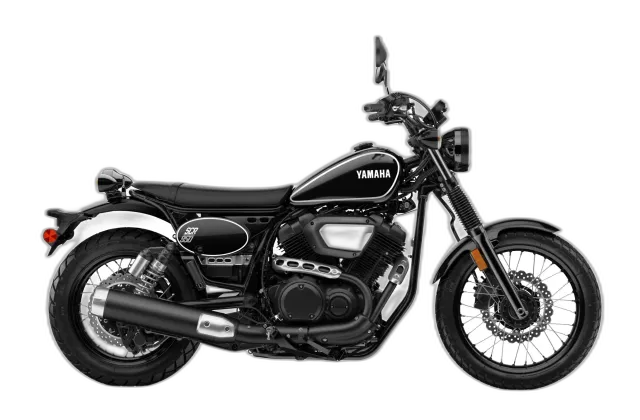
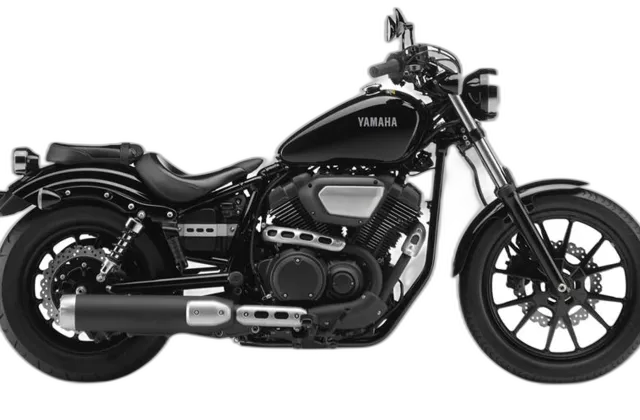
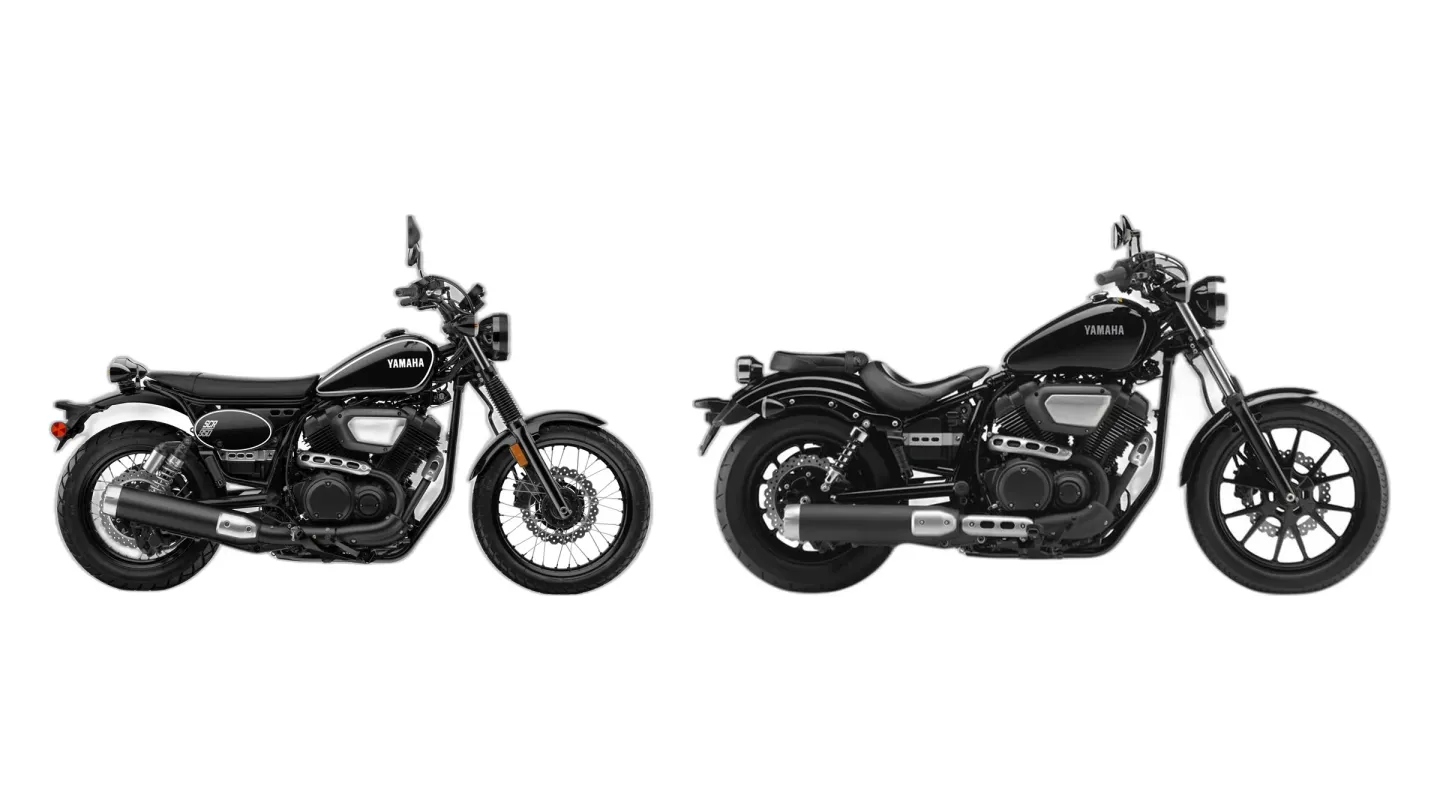
You'll notice the bars first: the Yamaha SCR950's wide dirt-track bend and mid-mounted pegs sit you upright with a clear view ahead. The Yamaha XV 950's saddle sets you down low.
So which one do you buy?
The SCR950 has the edge if…
Daily commuting & city riding
Nose ahead: SCR950
For the ride to work, the SCR950 noses ahead. Don't let that alone make the call.
Sporty riding on twisty roads
Slight edge: SCR950
Through a string of corners, the SCR950 feels a little more eager. The difference is a sportier chassis. The gap is small, so ride both.
What makes each one tick
SCR950
The SCR950's twin hits its torque peak low in the revs and pulls with a fluid shove that doesn't beg for the redline. Broken pavement is where it's weakest: the short-travel shocks and plain fork pass every hit straight into the seat. Each squeeze of the brake lever has 547 lb (248 kg) to haul down. Low torque rolls it away again.
XV 950
Stripped back to an air-cooled twin and a belt, the XV 950 runs the city as a plain bobber. The throttle needs only a small twist, and there's a thick pull right off the bottom. The chassis doesn't balk at Iron Mountain Road's switchbacks. Its air-cooled twin keeps on running.
The Voice of Experience

What actually separates them
- The XV 950 has the lower seat: 27.2 in (690 mm) vs 32.7 in (831 mm).
- The SCR950 has the larger fuel tank: 3.5 US gal (13.2 L) vs 3.2 US gal (12 L).
- ABS: standard on the SCR950, option on the XV 950.
Which one for the way you ride
Comfortable long-distance riding
Neither one fits
Neither one is built for long-haul comfort. For big miles, look at a proper tourer or sport tourer.
A confidence-building first motorcycle
Not built for this
For a brand-new rider, both are the wrong place to start. Learn the basics on a smaller bike first.
Look at running costs and you'll find two bikes doing the same job equally well. Fit is what breaks the tie.
Who each one is built for
What's good, and what you'll live with
SCR950
What owners say
Strengths
- Torquey, characterful V-twin engine
- Comfortable upright riding position
- Distinctive scrambler styling with custom potential
- Reliable, under-stressed engine
Trade-offs
- Excessive weight hampers agility and off‑road use
- Harsh, under‑damped suspension with limited travel
What they cost used
These prices compare a 5-year-old SCR950 with a 5-year-old XV 950.
- SCR950
- about $5,800
- XV 950
- about $6,300
At five years old, the Yamaha SCR950 sits around $5,800 while the Yamaha XV 950 lands near $6,300. That's no meaningful gap between the two. These are US market estimates, not live listings.
What they share
- Displacement
- 942 cc
- Engine
- 60° V-twin
- Cooling
- Air-cooled
- Power
- 52 hp (38 kW)
- Peak power at
- 5,500 rpm
- Torque
- 59 lb-ft (80 Nm)
- Peak torque at
- 3,000 rpm
- Gearbox
- 5-speed
- Final drive
- Belt
- Fork
- Telescopic
- Front tire
- 100/90-19
Where the spec sheets split
| SCR950 | XV 950 | |
|---|---|---|
| Seat height | 32.7 in (831 mm) | 27.2 in (690 mm) |
| Wet weight | 547 lb (248 kg) | 545 lb (247 kg) |
| SCR950 | XV 950 | |
|---|---|---|
| Fuel economy | 47 mpg (US) / 5 L/100 km | 39 mpg (US) / 6 L/100 km |
| Fuel capacity | 3.5 US gal (13.2 L) | 3.2 US gal (12 L) |
| SCR950 | XV 950 | |
|---|---|---|
| Rear tire | 140/80-17 | 150/80-16 |
What comes fitted, what costs extra
| SCR950 | XV 950 | |
|---|---|---|
| ABS | Standard | Option |
Head to head, area by area
Both bikes on the same scale, one area at a time.