By NastyNils·
Motorcycle comparison · Naked Bike
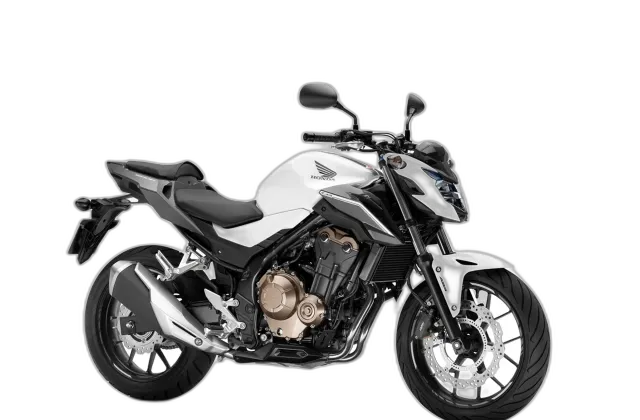
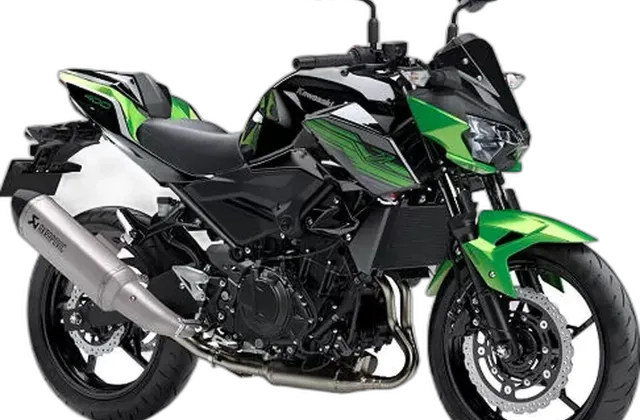
Honda CB500F (PC 45) vs Kawasaki Z 400 (MY2019)
Honda CB500F vs Kawasaki Z 400: which one to buy, and what actually separates them.
You'll feel the Honda CB500F roll into a bend without fuss, and its chassis stays settled as the lean builds. The Kawasaki Z 400 flicks in off the lightest push.
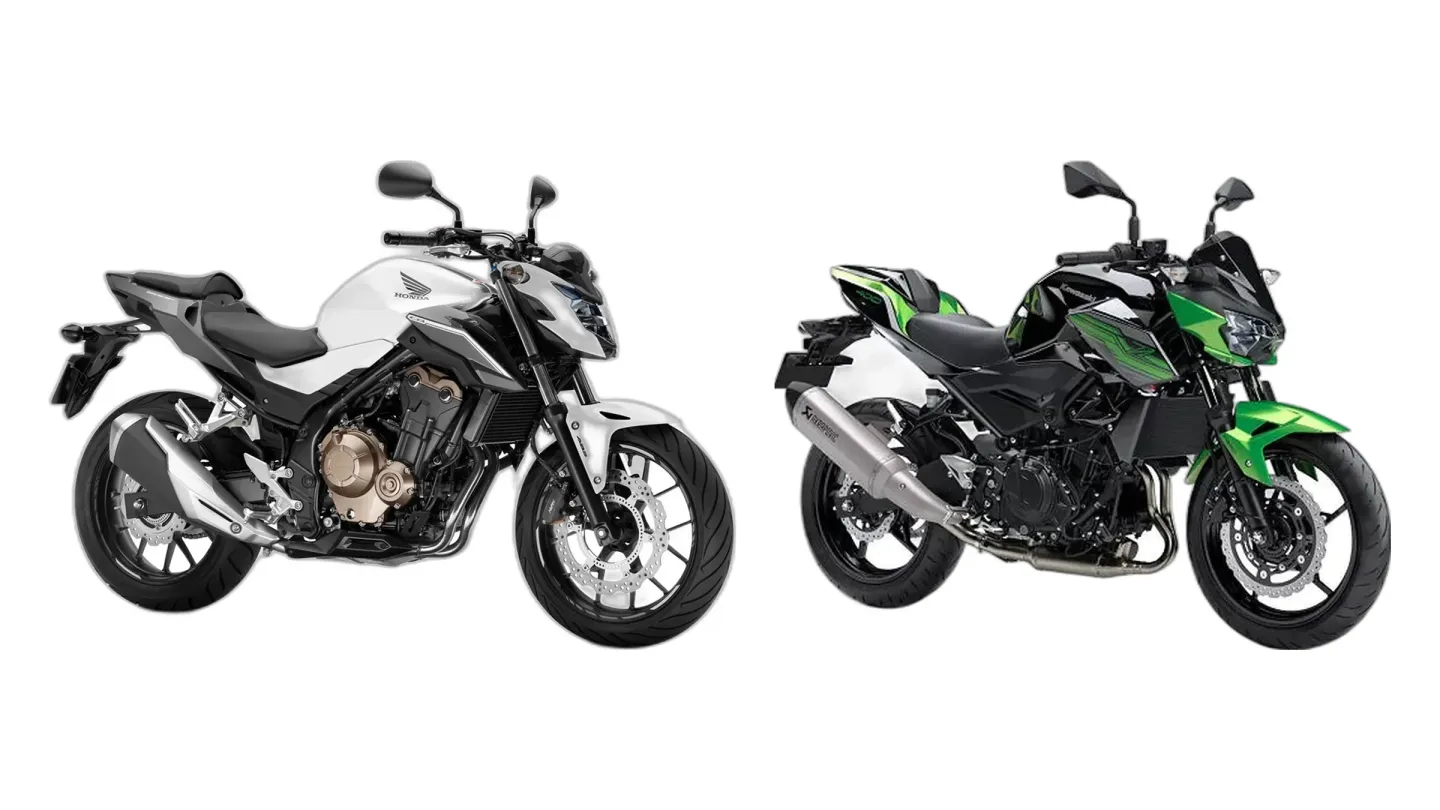
So which one do you buy?
The Z 400 has the edge if…
Daily commuting & city riding
A touch ahead: Z 400
Your daily ride leans slightly toward the Z 400. It's down to lighter steering. Fit and price can easily outweigh that.
Sporty riding on twisty roads
Small edge: Z 400
The Z 400 is a touch more fun when the road starts bending. Credit more feel through the bars and a sportier chassis.
What makes each one tick
CB500F
Behind its flat bar, the CB500F sits you upright over mid-set pegs, and there's nothing in that posture that wears thin by evening. Through the curves of the Blue Ridge Parkway, the steering stays neutral and the frame doesn't wander. The brake lever lacks initial bite. The single front disc still hauls it to a stop.
Z 400
Around town the Z 400 steers like a bicycle, threading slow, tight turns with hardly any input at the bar. There's barely any effort at the clutch lever, and the twin's pull stays predictable until it livens up near the top. The little engine wants wringing out.
The Voice of Experience

What actually separates them
- The Z 400 has the lower wet weight: 368 lb (167 kg) vs 423 lb (192 kg).
- The CB500F makes more peak power: 48 hp (35 kW) vs 45 hp (33 kW).
- The CB500F makes more peak torque: 32 lb-ft (43 Nm) vs 28 lb-ft (38 Nm).
Which one for the way you ride
Comfortable long-distance riding
Both miss here
Big miles aren't where either one shines. You'll be watching for the next rest stop.
Traveling with luggage
Not built for this
If touring with luggage is the plan, keep looking. Neither one was built around it.
Nothing splits them on a first bike. Ride both back to back and the decision usually makes itself.
Who each one is built for
What's good, and what you'll live with
CB500F
What owners say
Strengths
- Forgiving, beginner‑friendly handling
- Comfortable upright ergonomics
Trade-offs
- Adequate but uninspiring brakes
- Budget suspension limits performance
Z 400
What owners say
Strengths
- Exceptionally lightweight and agile
- Approachable for new riders
Known problems to check before you buy
CB500F
- Fuel level sensor float arm recall Recall 15V475000 The float arm can detach, causing inaccurate fuel gauge readings and, in some cases, a short that blows the FI fuse, leading to an engine stall. A redesigned sensor was provided under NHTSA safety recall 15V-475 (Honda campaign JT1).
Z 400
- Cylinder coolant seal leak The rubber seal around the coolant passage between the cylinder block and crankcase can deform and cause an external coolant leak.
- Clutch slippage and false neutrals Some owners report clutch slippage under hard acceleration and occasional false neutrals or jerky shifting, potentially related to weak clutch springs or improper adjustment.
What they share
- Seat height
- 30.9 in (785 mm)
- Engine
- Parallel twin
- Cooling
- Liquid-cooled
- Gearbox
- 6-speed
- Final drive
- Chain
- Fork
- Telescopic
Where the spec sheets split
| CB500F | Z 400 | |
|---|---|---|
| Wet weight | 423 lb (192 kg) | 368 lb (167 kg) |
| CB500F | Z 400 | |
|---|---|---|
| Displacement | 471 cc | 399 cc |
| Power | 48 hp (35 kW) | 45 hp (33 kW) |
| Peak power at | 8,500 rpm | 10,000 rpm |
| Torque | 32 lb-ft (43 Nm) | 28 lb-ft (38 Nm) |
| Peak torque at | 7,000 rpm | 8,000 rpm |
| CB500F | Z 400 | |
|---|---|---|
| Fuel capacity | 4.1 US gal (15.7 L) | 3.7 US gal (14 L) |
| CB500F | Z 400 | |
|---|---|---|
| Front tire | 120/70-17 | 110/70-17 |
| Rear tire | 160/60-17 | 150/60-17 |
| Wheelbase | 55.5 in (1410 mm) | 53.9 in (1369 mm) |
What comes fitted, what costs extra
| CB500F | Z 400 | |
|---|---|---|
| ABS | Option | Standard |
| Slipper Clutch | Not offered | Standard |
Head to head, area by area
Both bikes on the same scale, one area at a time.