By NastyNils·
Motorcycle comparison · Naked Bike
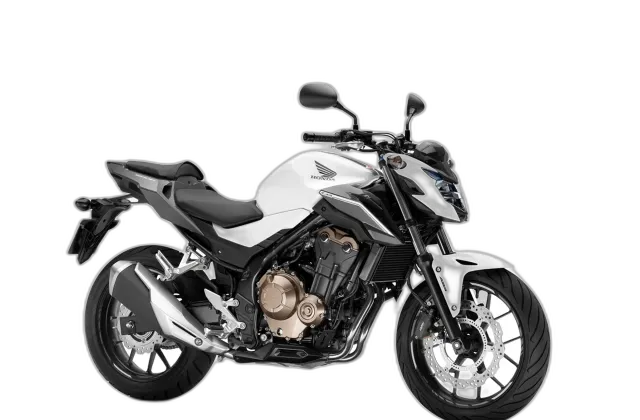
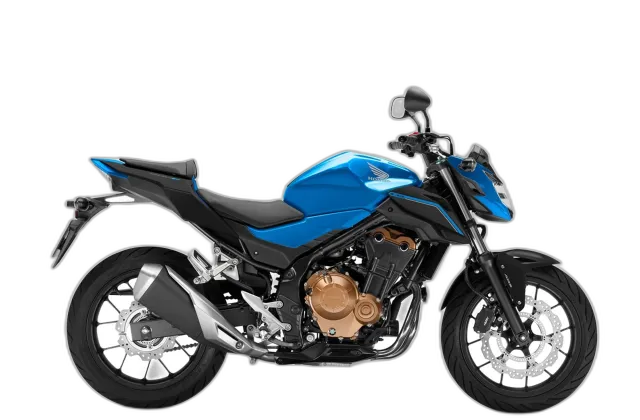
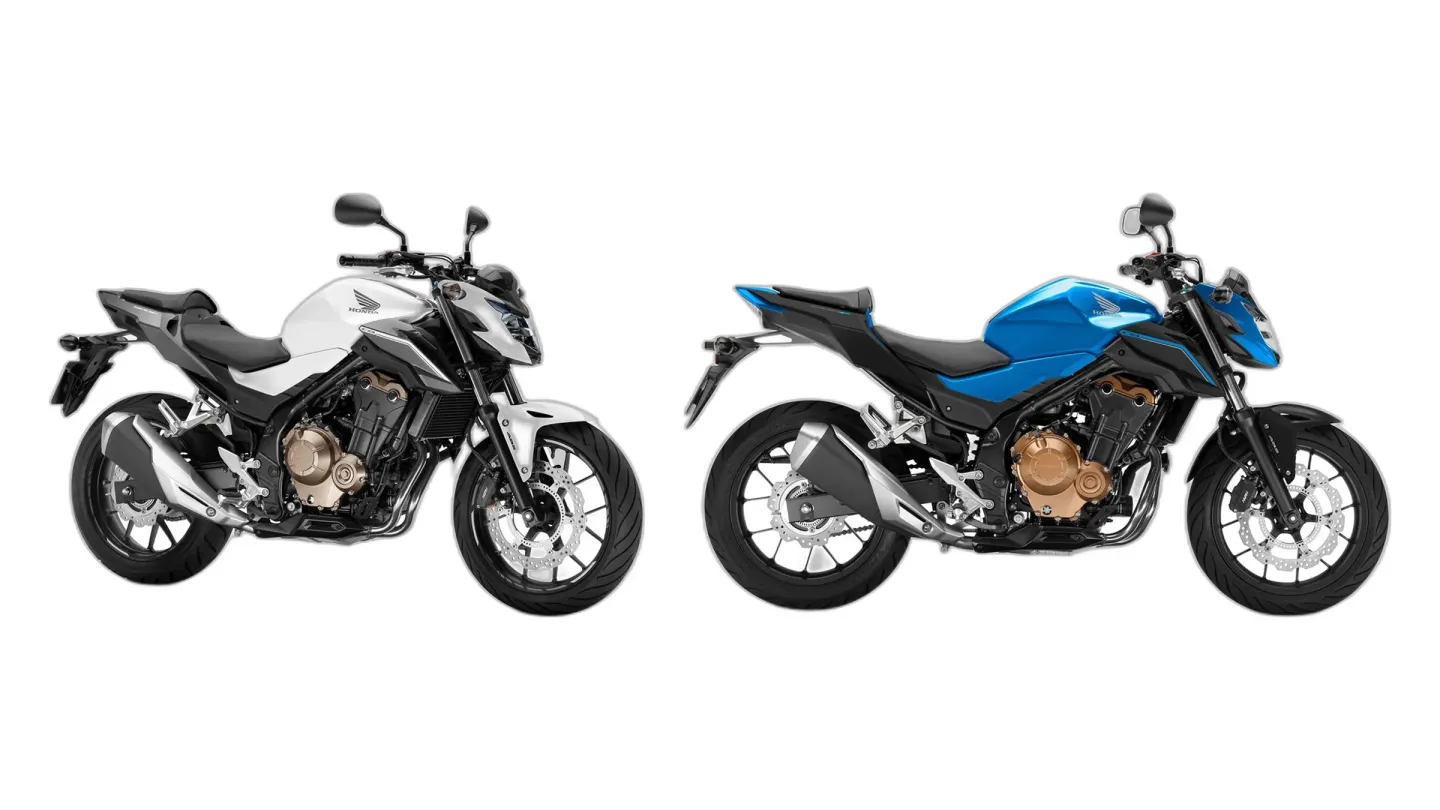
Honda CB500F (PC 45) vs CB500F (PC 58)
2013 Honda CB500F vs 2016 Honda CB500F: no fairing, no excuses. Here's how to pick.
You'll squeeze the 2013 Honda CB500F's front brake and wait for a bite that's never quite there. Ease off the 2016 Honda CB500F's lever at a corner's entry. It's already dropping toward the apex.
What makes each one tick
2013 CB500F
On a twisty road, the 2013 CB500F's neutral steering and stable chassis don't fight your line. There's no jolt in how its liquid-cooled twin answers the throttle. The pull builds evenly. Once the pace turns hard over rough pavement, the basic fork and shock run out of damping and the ride gets harsh. Mid-set pegs and a flat bar hold you upright.
2016 CB500F
In city traffic, the 2016 CB500F feels light enough that it'll slot into a gap off a nudge of the bar. Its parallel twin barely buzzes, and there's enough torque for brisk runs. Its twin keeps stacking up miles.
The Voice of Experience

What actually separates them
- The 2016 CB500F has the larger fuel tank: 4.4 US gal (16.7 L) vs 4.1 US gal (15.7 L).
- ABS: standard on the 2016 CB500F, option on the 2013 CB500F.
- Manually Adjustable Front Suspension: standard on the 2016 CB500F, not offered on the 2013 CB500F.
Which one for the way you ride
Comfortable long-distance riding
Not built for this
Hours in the saddle won't flatter either of these. They're happier on shorter runs.
Nothing splits them on commuting, twisty roads, running costs, and a first bike. Ride both back to back and the decision usually makes itself.
Who each one is built for
What's good, and what you'll live with
2013 CB500F
What owners say
Strengths
- Forgiving, beginner‑friendly handling
- Comfortable upright ergonomics
Trade-offs
- Adequate but uninspiring brakes
- Budget suspension limits performance
2016 CB500F
What owners say
Strengths
- Honda reliability and build quality
- Lightweight, agile handling
- Smooth, tractable engine
Known problems to check before you buy
2013 CB500F
- Fuel level sensor float arm recall Recall 15V475000 The float arm can detach, causing inaccurate fuel gauge readings and, in some cases, a short that blows the FI fuse, leading to an engine stall. A redesigned sensor was provided under NHTSA safety recall 15V-475 (Honda campaign JT1).
2016 CB500F
No confirmed faults on file yet. That's not the same as fault-free.
What they share
- Seat height
- 30.9 in (785 mm)
- Displacement
- 471 cc
- Engine
- Parallel twin
- Cooling
- Liquid-cooled
- Power
- 48 hp (35 kW)
- Peak power at
- 8,500 rpm
- Torque
- 32 lb-ft (43 Nm)
- Peak torque at
- 7,000 rpm
- Gearbox
- 6-speed
- Final drive
- Chain
- Fork
- Telescopic
- Front brake
- 320 mm
- Front tire
- 120/70-17
- Rear tire
- 160/60-17
- Wheelbase
- 55.5 in (1410 mm)
Where the spec sheets split
| 2013 CB500F | 2016 CB500F | |
|---|---|---|
| Wet weight | 423 lb (192 kg) | 419 lb (190 kg) |
| 2013 CB500F | 2016 CB500F | |
|---|---|---|
| Fuel capacity | 4.1 US gal (15.7 L) | 4.4 US gal (16.7 L) |
What comes fitted, what costs extra
| 2013 CB500F | 2016 CB500F | |
|---|---|---|
| ABS | Option | Standard |
| Manually Adjustable Front Suspension | Not offered | Standard |
| LED Headlight | Not offered | Standard |
Head to head, area by area
Both bikes on the same scale, one area at a time.