By NastyNils·
Motorcycle comparison · Naked Bike vs Hyper Naked
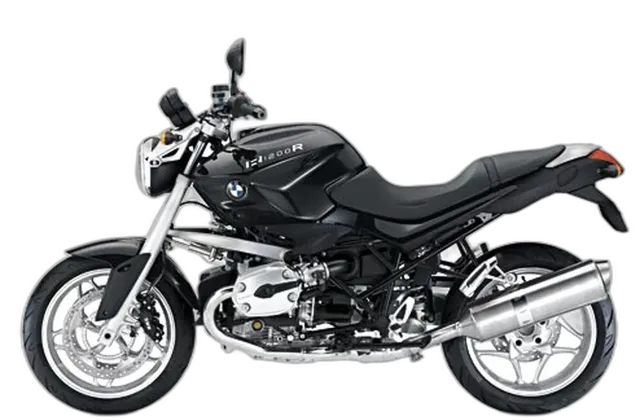
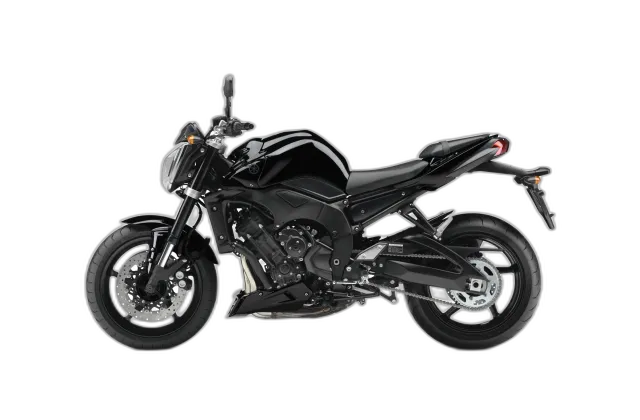
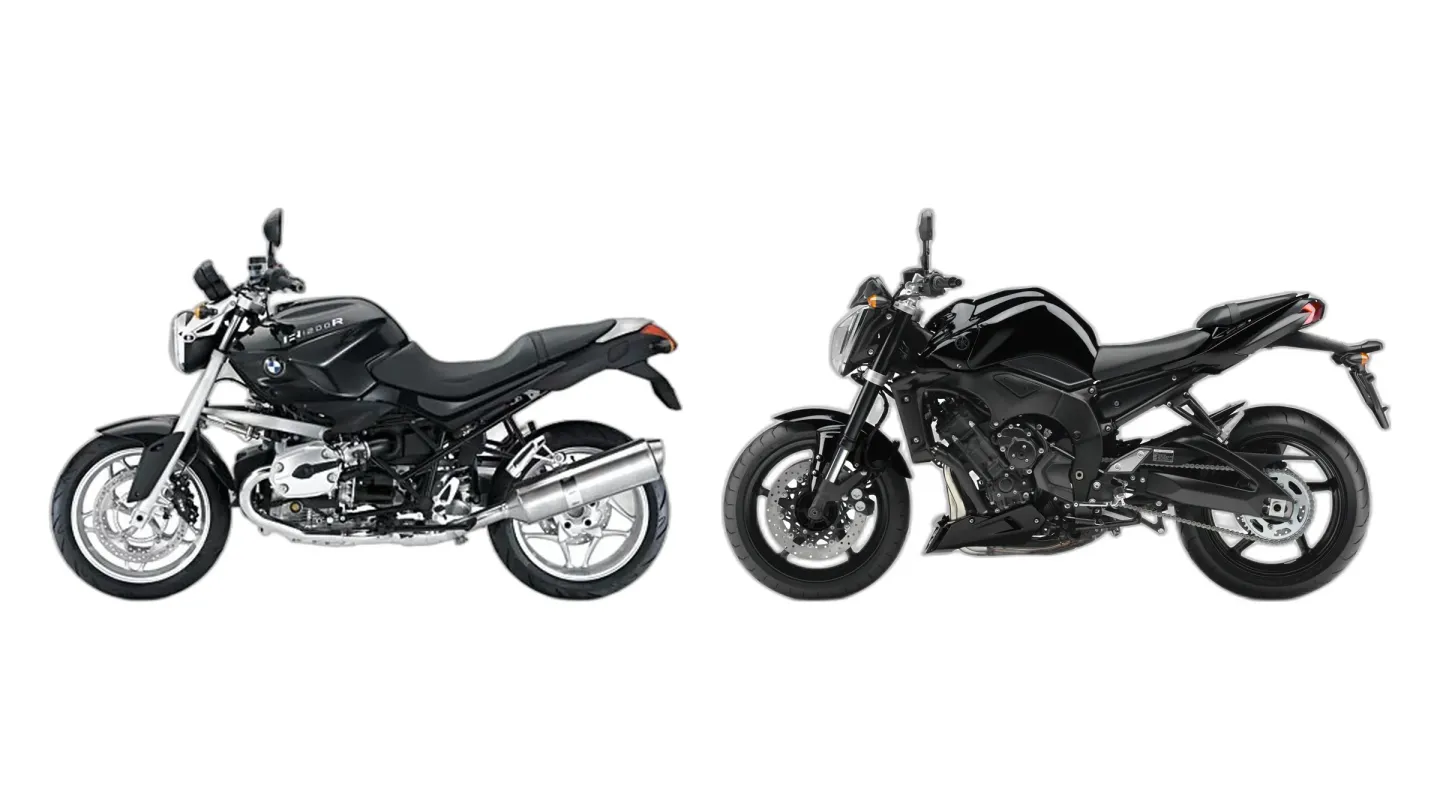
BMW R 1200 R (K27) vs Yamaha FZ1 (MY2006)
BMW R 1200 R vs Yamaha FZ1: no fairing, no excuses. Here's how to pick.
Rolling on from low revs, the BMW R 1200 R's boxer pulls hard right away, and it's smooth about it. An early Yamaha FZ1 snatches as the throttle opens and closes.
So which one do you buy?
The R 1200 R has the edge if…
Traveling with luggage
Small edge: R 1200 R
Trips with luggage lean slightly toward the R 1200 R. The reason: more range per tank and more comfort on long stints. Treat it as a tiebreaker.
Daily commuting & city riding
By a nose: R 1200 R
The R 1200 R makes slightly more sense as a commuter. Put it down to simpler maintenance and friendlier manners. Don't read much into a gap this small.
Riding two-up with a passenger
Inches ahead: R 1200 R
Carrying a passenger, the R 1200 R noses ahead. The person on the back may well disagree.
Sporty riding on twisty roads
Narrow edge: R 1200 R
On a twisty road, the R 1200 R edges ahead. Most of that is stronger brakes. Not by enough to settle it alone.
What makes each one tick
R 1200 R
Down low, the R 1200 R's flat-twin shoves the bike forward on thick torque, and there's an engaging feel in it that no inline-four copies. Its low center of gravity keeps it easy to steer at parking-lot speed. A bump under braking doesn't upset the Telelever front end. The bars stay quiet.
Nils rode the R 1200 R in Andalusia and Spain in 2007 (NastyNils Testride).
FZ1
The FZ1's inline-four saves its frantic rush for the top of the tach, and it's still climbing toward peak power at 11,000 rpm. On the first bikes, the rear shock is underdamped and the tail doesn't settle. With the budget rear shock swapped out, the frame wakes up at corner entry: the bar points the front where you're looking and it stays steady through the turn. The front tucks in and holds.
The Voice of Experience

What actually separates them
- The R 1200 R has the lower seat: 31.3 in (795 mm) vs 32.1 in (815 mm).
- The FZ1 makes more peak power: 150 hp (110 kW) vs 110 hp (81 kW).
- The R 1200 R makes more peak torque: 85 lb-ft (115 Nm) vs 78 lb-ft (106 Nm).
Which one for the way you ride
Comfortable long-distance riding
Neither one fits
Long-haul comfort is a weak spot for both. If you tour, shop with that in mind.
Who each one is built for
What's good, and what you'll live with
R 1200 R
What owners say
Strengths
- Torquey and characterful boxer engine
- Agile handling with Telever stability
- Proven reliability and robust build
- Comfortable all-day ergonomics
- Shaft drive convenience
FZ1
What owners say
Strengths
- Agile, stable handling (with upgraded suspension)
Trade-offs
- Snatchy throttle response (early models)
Known problems to check before you buy
R 1200 R
- Fuel pump flange crack and fuel leak (Safety Recall) Recall 21V060000 The fuel pump flange may develop cracks over time, leading to a fuel leak that could pose a fire risk. NHTSA recall 21V-060 was issued for 2011–2014 models; the remedy involves replacing the fuel pump with an improved version.
- Fuel strip (fuel level sensor) failure The fuel strip in the fuel tank is prone to failure, causing inaccurate fuel level readings. Replacement strips often fail again, indicating a design flaw. Many owners report multiple strip replacements under warranty.
- Recall 14V065000: ELECTRICAL SYSTEM Recall 14V065000 BMW of North America, LLC (BMW) is recalling certain model year 2013 C 600 Sport, C 650 GT, F 700 GS, F 800 GS, F 800 GS Adventure, F 800 GT, R 1200 R and R1200 GS motorcycles. Water may enter the side-stand switch preventing the motorcycle from starting or potentially shutting off the motorcycle while it is being ridden.
- Rust under fuel filler cap Rust can form under the fuel filler cap area due to water pooling.
FZ1
- Stick coil failure The ignition stick coils can fail, often starting on the left side, causing a misfire or rough running.
- Snatchy throttle response (pre-2010) The ECU cuts fuel aggressively on closed throttle, causing a sudden jerk when the throttle is reopened. Yamaha released an improved map for 2010+ models; earlier bikes benefit from a Power Commander or ECU reflash.
What they share
- Fuel capacity
- 4.8 US gal (18 L)
- Gearbox
- 6-speed
- Front brake
- 320 mm
- Front tire
- 120/70-17
Where the spec sheets split
| R 1200 R | FZ1 | |
|---|---|---|
| Seat height | 31.3 in (795 mm) | 32.1 in (815 mm) |
| Wet weight | 492 lb (223 kg) | 489 lb (222 kg) |
| R 1200 R | FZ1 | |
|---|---|---|
| Displacement | 1170 cc | 998 cc |
| Engine | Flat-twin (boxer) | Inline-four |
| Cooling | Air/oil-cooled | Liquid-cooled |
| Power | 110 hp (81 kW) | 150 hp (110 kW) |
| Peak power at | 7,500 rpm | 11,000 rpm |
| Torque | 85 lb-ft (115 Nm) | 78 lb-ft (106 Nm) |
| Peak torque at | 6,000 rpm | 8,000 rpm |
| Top speed | 130 mph (209 km/h) | 160 mph (257 km/h) |
| R 1200 R | FZ1 | |
|---|---|---|
| Fuel economy | 39 mpg (US) / 6.01 L/100 km | 34 mpg (US) / 6.89 L/100 km |
| R 1200 R | FZ1 | |
|---|---|---|
| Final drive | Shaft | Chain |
| Fork | Telelever | Telescopic |
| Rear tire | 180/55-17 | 190/50-17 |
What comes fitted, what costs extra
| R 1200 R | FZ1 | |
|---|---|---|
| ABS | Option | Option (from 2011) |
| Traction Control | Option | Not offered |
| Electronic Suspension | Option | Not offered |
| Manually Adjustable Front Suspension | Not offered | Standard |
| Tire Pressure Monitoring (TPMS) | Option | Not offered |
| Heated Grips | Option | Not offered |
Head to head, area by area
Both bikes on the same scale, one area at a time.