By NastyNils·
Motorcycle comparison · Naked Bike
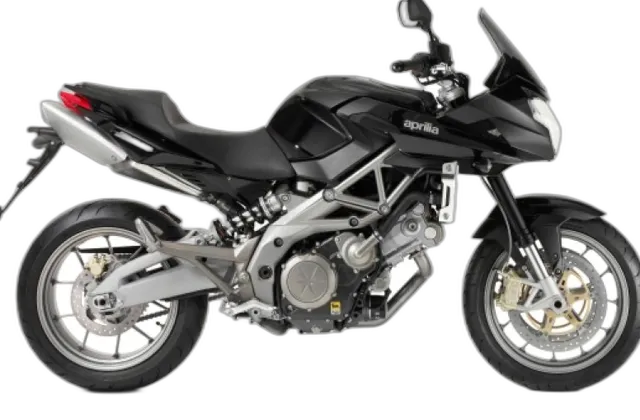
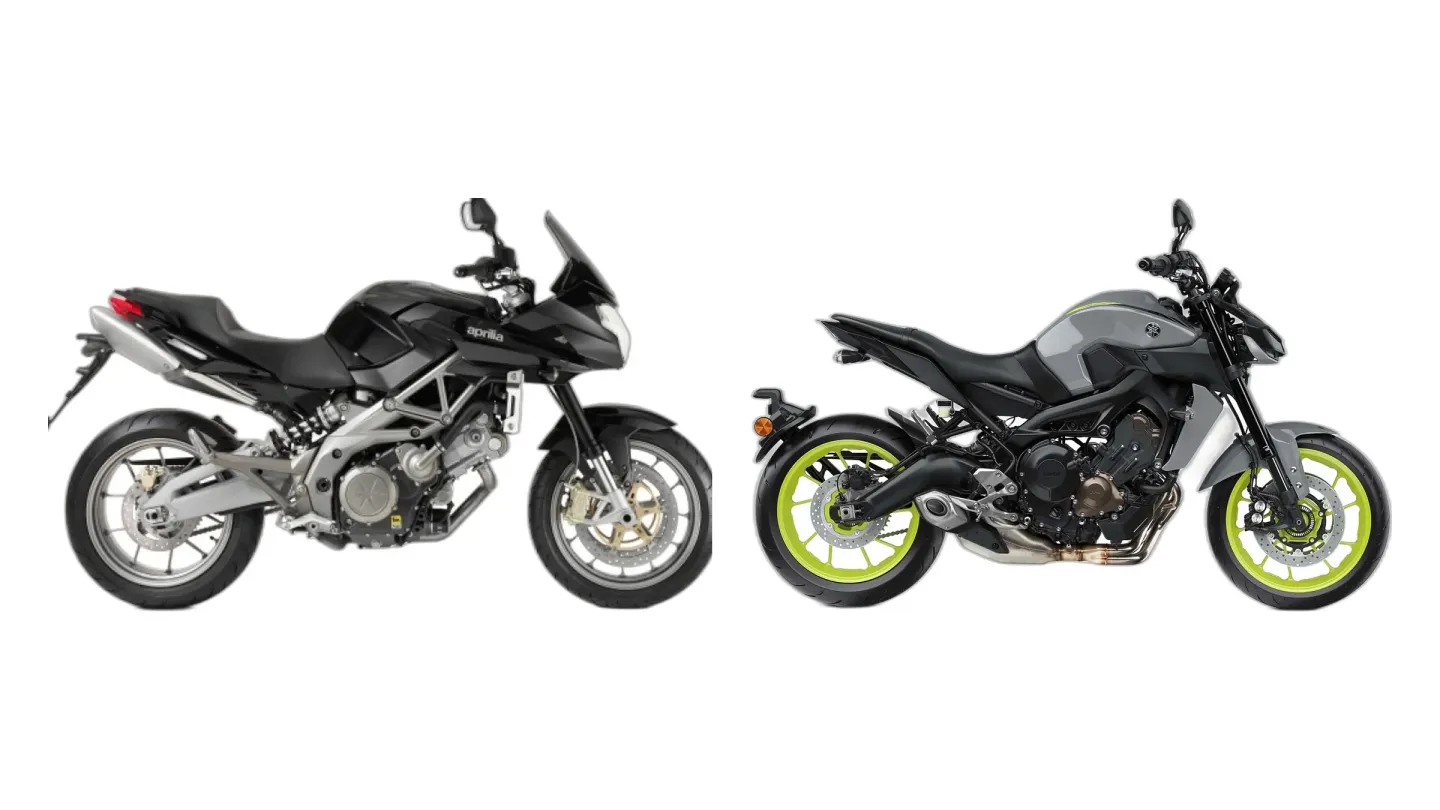
Aprilia Shiver 900 (MY2017) vs Yamaha MT-09 (RN43)
Aprilia Shiver 900 vs Yamaha MT-09: which one to buy, and what actually separates them.
At the turn-in point the Aprilia Shiver 900 doesn't hurry, and it settles onto its trellis frame and holds a steady line as you add lean. The Yamaha MT-09's wide bars and short wheelbase mean it's already tipping in the instant you push.
So which one do you buy?
The MT-09 has the edge if…
Keeping running costs low
Narrow edge: MT-09
The MT-09 is a touch easier on the wallet to run. Condition still matters more than the model.
Sporty riding on twisty roads
Small edge: MT-09
Back-road fun leans slightly toward the MT-09. It's a narrow call, so trust your test ride.
Daily commuting & city riding
Nose ahead: MT-09
The MT-09 edges it for the daily grind. What tips it: simpler maintenance. It's a small gap, not a reason on its own.
Which one's the smarter buy
No clear winner on value
The Shiver 900 costs less, but that gap doesn't make it the better buy. Neither bike is the clear value winner here.
What makes each one tick
Shiver 900
The Shiver 900's V-twin pulls clean from low revs and doesn't let up through the part of the rev range you'll actually use. There's no drama as it revs out. The brake lever works radial brakes, and the steel chassis doesn't squirm as the bike slows. The fork's still talking the whole way down.
MT-09
The MT-09's crossplane triple hauls hard from low revs with a pulse that isn't like any twin's or ordinary triple's. The throttle's snatchy off idle, and there's a push-pull jerk through the lower revs. It'll keep pulling right to redline.
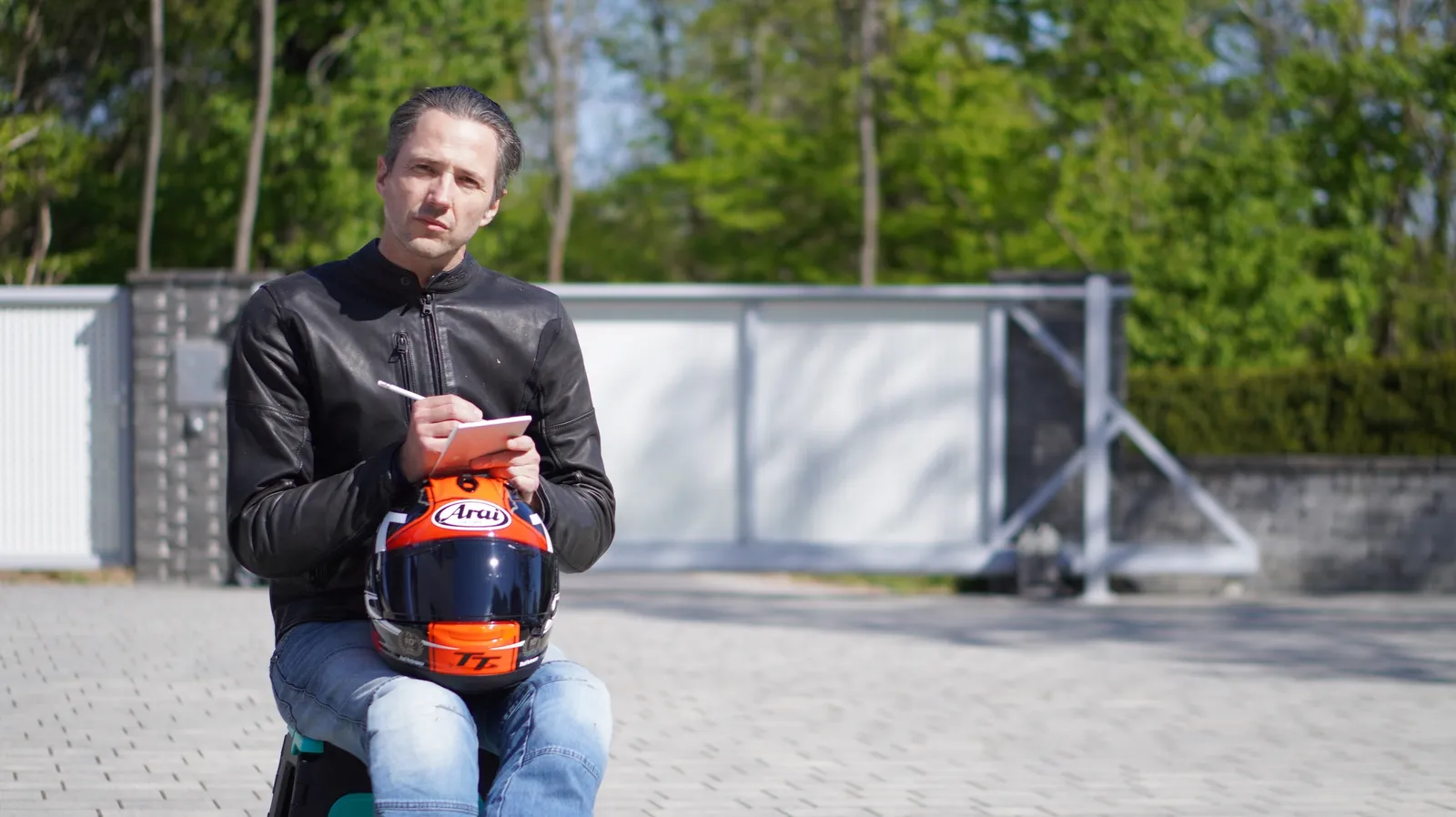
Nils rode the MT-09 in Austria in 2017, and in 2018 (NastyNils Testride).
The Voice of Experience
What actually separates them
- The MT-09 has the lower wet weight: 425 lb (193 kg) vs 470 lb (213 kg).
- The MT-09 makes more peak power: 115 hp (85 kW) vs 95 hp (70 kW).
- The Shiver 900 has the larger engine: 896 cc vs 847 cc.
Which one for the way you ride
Comfortable long-distance riding
Look elsewhere
Long days aren't what these two do best. Plan shorter legs and plenty of stops.
A confidence-building first motorcycle
Not its job: MT-09
The MT-09 has too much motor for a first bike. Get your basics down on something smaller.
Who each one is built for
What's good, and what you'll live with
Shiver 900
What owners say
Strengths
- Comprehensive electronics package
- Smooth, torquey 90° V-twin
- Premium chassis and adjustable suspension
- Distinctive Italian styling and quality finish
MT-09
What owners say
Strengths
- Exceptional CP3 engine character
- Outstanding agility and lightness
- Strong mechanical reliability
Trade-offs
- Snatchy low-RPM throttle response
- Uncomfortable stock seat
- No wind protection
- Small tank / limited range
- Handlebar vibration at highway speed
Known problems to check before you buy
Shiver 900
No confirmed faults on file yet. That's not the same as fault-free.
MT-09
- Throttle body de-synchronization causing rough idle The three throttle bodies go out of sync within a few thousand miles (a few thousand km), leading to rough idle, stalling (especially at low speeds), and poor low-RPM response. Idle Speed Control (ISC) may need resetting after synchronization. Some cases traced to Throttle Position Sensor (TPS) degradation or Acceleration Position Sensor (APS) issues.
- Quick Shifter System intermittent failure The OEM quickshifter can stop working intermittently. Common cause is an internal Alps Alpine micro-switch failure. Symptoms include QS light on but no function, intermittent ignition cut during shifts, and hard/stuck upshifts. Cold engine operation worsens symptoms. Yamaha dealers have confirmed replacing multiple faulty units under warranty.
- Front brake disc pulsation / warping Front brake discs develop pulsation felt through the lever during braking. The floating disc design may not fully prevent warping under hard or normal use. Disc replacement or aftermarket rotors are the definitive cure.
- Snatchy ride-by-wire throttle response at low RPM The electronic throttle is abrupt and jerky between 2,500–4,000 RPM, creating a push/pull sensation when rolling on from idle or cruising at low speeds. This is an ECU mapping issue inherent to the CP3 engine across all generations, though the 2017 D-Mode B setting helps. The mixture is set lean for Euro 4 compliance, and deceleration fuel cut causes jerkiness when reaccelerating. An ECU flash or tune (e.g., 2WheelDynoWorks, Woolich Racing) is the common fix.
- Seat seams leak water during rain riding Seat seams allow water to seep in during rain. The seat foam absorbs water, making it uncomfortable and slow to dry.
- Excessive handlebar vibration during sustained high-speed riding Noticeable buzzing/micro-vibration through the handlebars, particularly during sustained highway riding. Causes hand numbness within 5–10 minutes at certain RPM ranges. OEM bar-end weights are light (~1 oz (~30 g)); heavier aftermarket bar ends (~8 oz (~230 g) per side) help but don't fully eliminate. Engine mount and handlebar mount bolt torque should be checked.
- Premature corrosion on multiple components Multiple components prone to premature corrosion: bar-end Allen key holes rust quickly, rear shock spring corrodes, front disc bolts rust, exhaust headers show surface corrosion and discoloration, general bolt corrosion. Matte paint finish is very thin, scratches easily. Some bolts showed rust at less than 1,000 miles on new bikes. Pressure washing and salt exposure accelerate corrosion significantly.
What they cost used
These prices compare a 6-year-old Shiver 900 with a 6-year-old MT-09.
- Shiver 900
- about $6,400
- MT-09
- about $8,100
At six years old, the Aprilia Shiver 900 sits around $6,400 while the Yamaha MT-09 runs about $8,100. That's a $1,700 gap in the Shiver's favor. These are US market estimates, not live listings.
What they share
- Cooling
- Liquid-cooled
- Gearbox
- 6-speed
- Final drive
- Chain
- Front tire
- 120/70-17
- Rear tire
- 180/55-17
Where the spec sheets split
| Shiver 900 | MT-09 | |
|---|---|---|
| Seat height | 31.9 in (810 mm) | 32.3 in (820 mm) |
| Wet weight | 470 lb (213 kg) | 425 lb (193 kg) |
| Shiver 900 | MT-09 | |
|---|---|---|
| Displacement | 896 cc | 847 cc |
| Engine | 90° V-twin | Inline-three |
| Power | 95 hp (70 kW) | 115 hp (85 kW) |
| Torque | 66 lb-ft (90 Nm) | 65 lb-ft (88 Nm) |
| Shiver 900 | MT-09 | |
|---|---|---|
| Fuel economy | 44 mpg (US) / 5.31 L/100 km | 47 mpg (US) / 5 L/100 km |
| Fuel capacity | 4.0 US gal (15 L) | 3.7 US gal (14 L) |
What comes fitted, what costs extra
| Shiver 900 | MT-09 | |
|---|---|---|
| Slipper Clutch | Not offered | Standard |
| TFT Display | Standard | Not offered |
| Smartphone Connectivity | Option | Not offered |
| USB Charging Port | Standard | Not offered |
Head to head, area by area
Both bikes on the same scale, one area at a time.