By NastyNils·
Motorcycle comparison · Cruiser
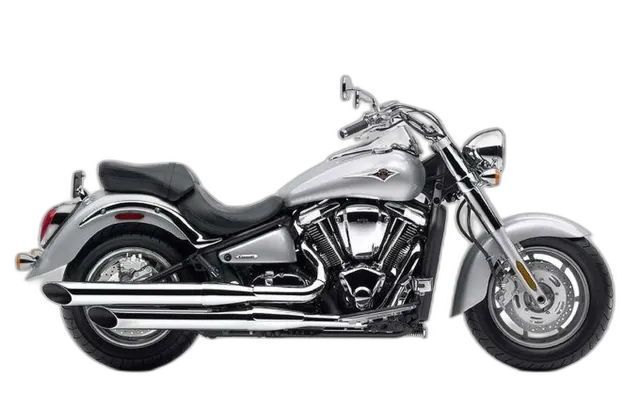
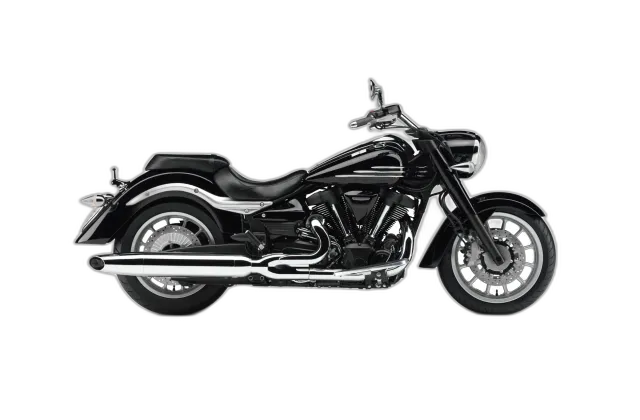
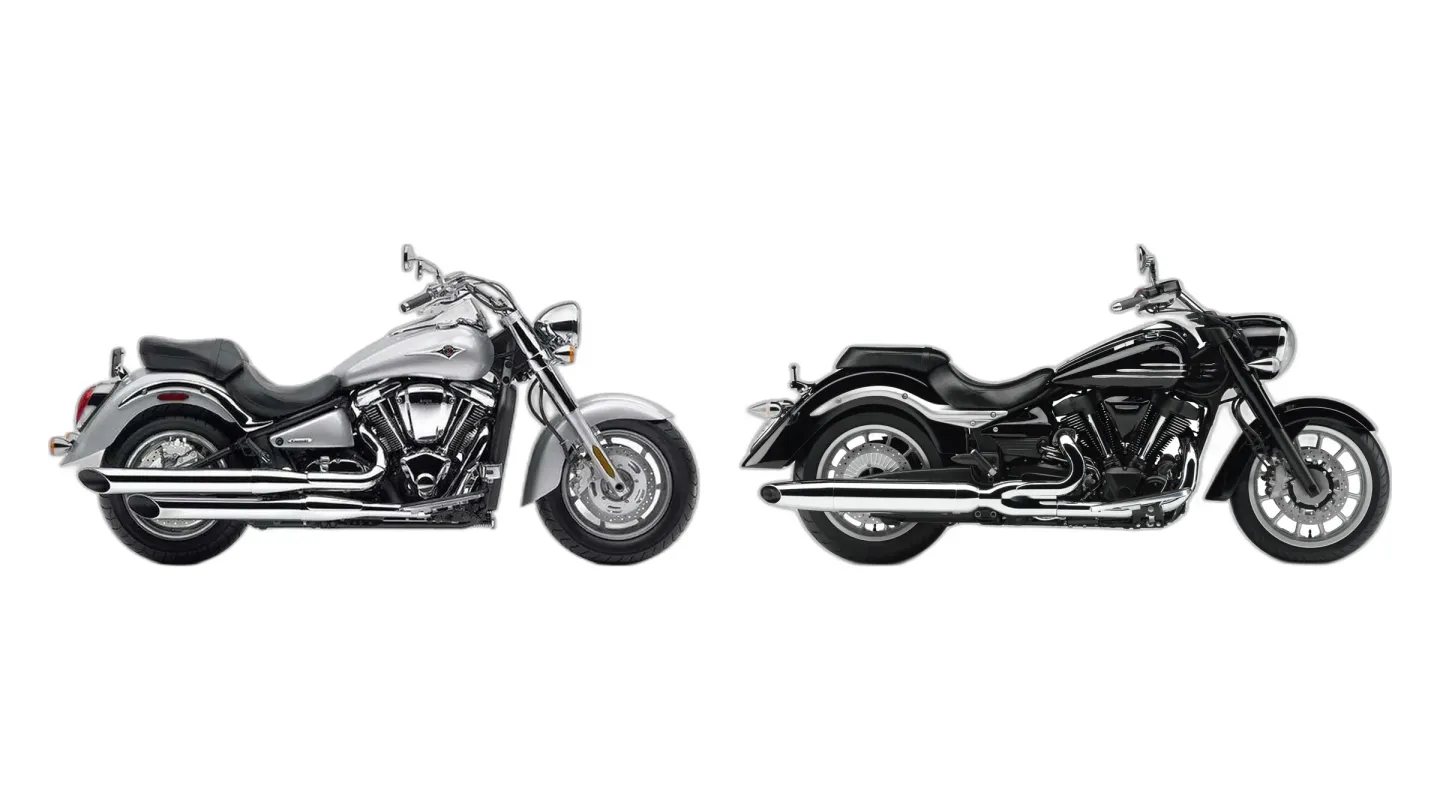
Kawasaki VN 2000 Classic (VN2000-MY2004) vs Yamaha XV 1900 A (XV1900A-Gen1)
Kawasaki VN 2000 Classic vs Yamaha XV 1900 A: buy with your heart, but read this first.
Off a green light, the Kawasaki VN 2000 Classic thumps and clatters, and it's already shoving hard from idle. The Yamaha XV 1900 A pulls early and barely trembles.
What makes each one tick
VN 2000 Classic
Torque runs the show on the VN 2000 Classic, with a liquid-cooled twin that's never short of another surge. Each roll of the throttle sends an industrial pulse through the bike, and there's mechanical noise riding along with it. Parking all that mass is work. At triple digits, the fat front tire holds its line.
Nils rode the VN 2000 Classic in Austria in 2004 (NastyNils Testride).
XV 1900 A
Peak torque arrives just above tickover on the XV 1900 A, and its counterbalanced twin doesn't need a downshift to hum along at highway speed. On Iron Mountain Road, the aluminum frame lets the bike tip into each bend willingly and stay steady once it's leaned over. The bars don't fight slow U-turns. Hours in, the suspension's still soaking up the road.
The Voice of Experience

What actually separates them
- The VN 2000 Classic has the lower seat: 26.8 in (680 mm) vs 27.8 in (705 mm).
- The XV 1900 A has the lower wet weight: 725 lb (329 kg) vs 814 lb (369 kg).
- The VN 2000 Classic makes more peak torque: 131 lb-ft (177 Nm) vs 123 lb-ft (167 Nm).
Which one for the way you ride
Daily commuting & city riding
Not their thing
Neither of these is a natural commuter. For daily traffic duty, look at something lighter and simpler.
Comfortable long-distance riding
Not its job: VN 2000 Classic
Leave the VN 2000 Classic out of any touring plans. Big miles aren't what it's made for.
A confidence-building first motorcycle
Not built for this
A first bike should forgive mistakes, and these two don't do that well enough. Come back to them later.
Call it even on character. Choose on fit, price and the one that makes you grin.
Who each one is built for
What's good, and what you'll live with
VN 2000 Classic
What owners say
Strengths
- Epic road presence
- Massive, relentless torque
- Strong, industrial engine feel
Trade-offs
- Stiff, underdamped suspension
- Uncomfortable stock seat
- Short sidestand (2004 models)
XV 1900 A
What owners say
Strengths
- Massive, low-end torque
- Comfortable long-distance ergonomics
- Surprisingly nimble handling for its size
Known problems to check before you buy
VN 2000 Classic
- Excessive oil consumption Some engines consume noticeable amounts of oil between scheduled service intervals, requiring owners to monitor oil levels regularly and top up between fluid changes.
- Clutch cable breakage The clutch cable can fray and snap without warning, leaving the rider stranded. A spare cable is recommended for long trips.
- Noisy hydraulic lifters Some engines exhibit a prominent ticking from the valve train, attributed to hydraulic lash adjusters. Usually benign but can be disconcerting.
XV 1900 A
- Third gear failure on early models (2006-2007) A number of 2006 and 2007 models experienced third gear failures due to improperly heat-treated teeth, causing a rattling or howling noise and eventual gear destruction. Repairs require complete engine disassembly.
- Fuel pump housing crack The fuel pump, located in a lower auxiliary tank, can develop cracks in its plastic housing, leading to fuel leaks and pump failure. This is often attributed to thermal shock from adding cold fuel to a nearly empty hot tank.
What they share
- Gearbox
- 5-speed
- Final drive
- Belt
- Fork
- Telescopic
Where the spec sheets split
| VN 2000 Classic | XV 1900 A | |
|---|---|---|
| Seat height | 26.8 in (680 mm) | 27.8 in (705 mm) |
| Wet weight | 814 lb (369 kg) | 725 lb (329 kg) |
| VN 2000 Classic | XV 1900 A | |
|---|---|---|
| Displacement | 2053 cc | 1854 cc |
| Engine | 52° V-twin | 48° V-twin |
| Cooling | Liquid-cooled | Air-cooled |
| Power | 103 hp (76 kW) | 100 hp (74 kW) |
| Peak power at | 4,800 rpm | 4,400 rpm |
| Torque | 131 lb-ft (177 Nm) | 123 lb-ft (167 Nm) |
| Peak torque at | 3,350 rpm | 2,250 rpm |
| Top speed | 115 mph (185 km/h) | 120 mph (193 km/h) |
| VN 2000 Classic | XV 1900 A | |
|---|---|---|
| Fuel economy | 43 mpg (US) / 5.5 L/100 km | 34 mpg (US) / 6.89 L/100 km |
| Fuel capacity | 5.5 US gal (21 L) | 4.5 US gal (17 L) |
| VN 2000 Classic | XV 1900 A | |
|---|---|---|
| Front brake | 300 mm | 298 mm |
| Front tire | 150/80-16 | 130/70-18 |
| Rear tire | 200/60-16 | 190/60-17 |
Head to head, area by area
Both bikes on the same scale, one area at a time.