By NastyNils·
Motorcycle comparison · Cruiser
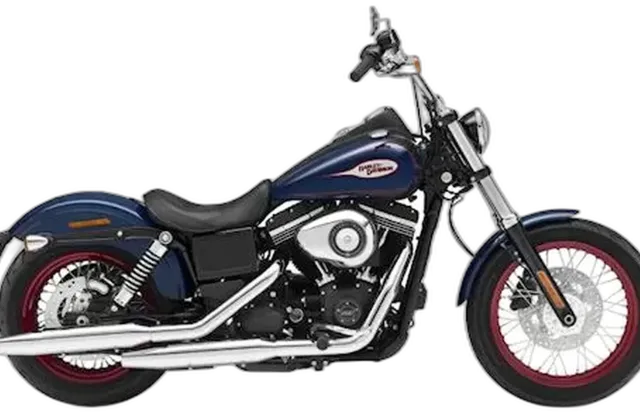
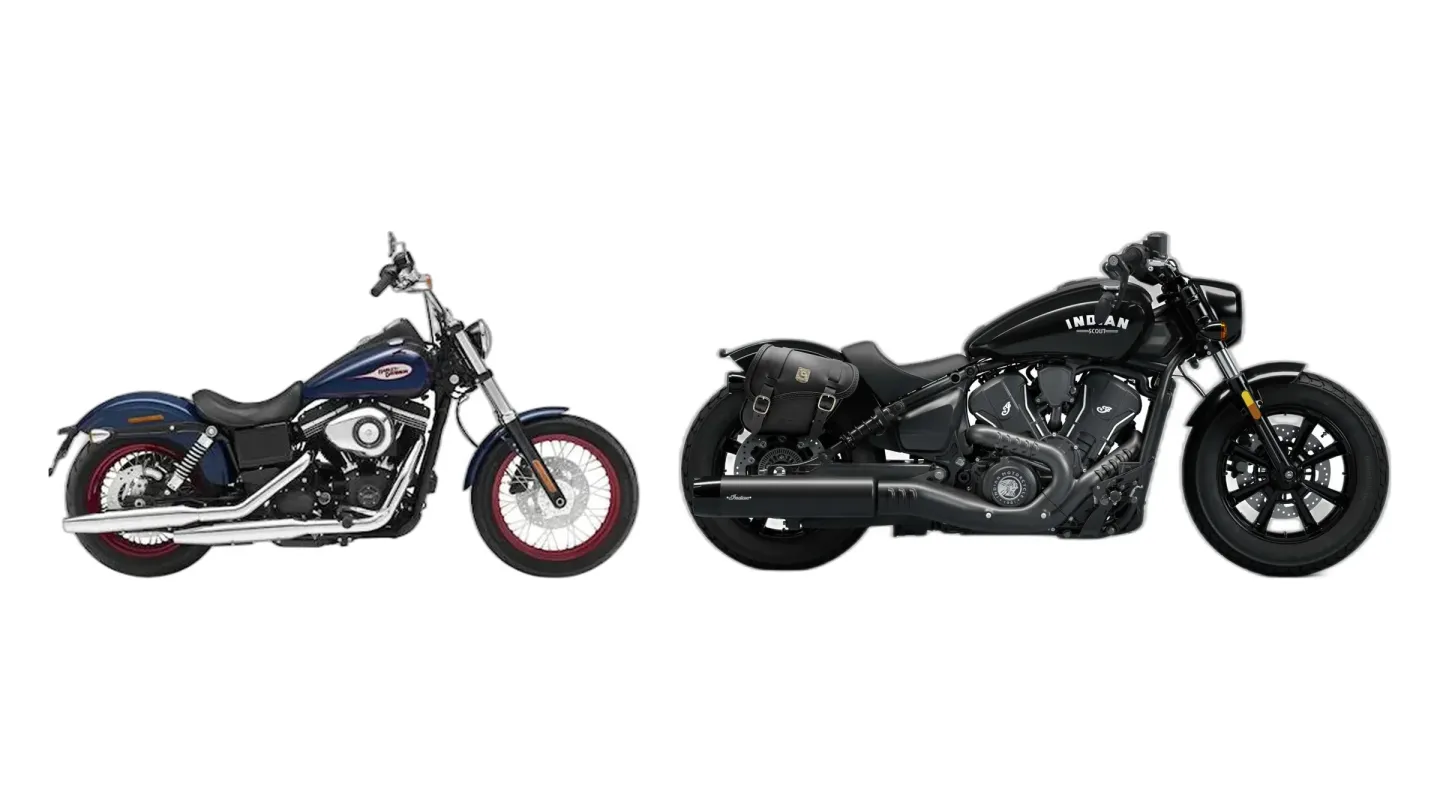
Harley-Davidson Dyna Street Bob Special (FXDBB) vs Indian Scout (MY2015)
Roll on the Harley-Davidson Dyna Street Bob Special and it's already shoving hard a breath above idle. The Indian Scout's engine spins up in one smooth swell.
So which one do you buy?
The Scout has the edge if…
Daily commuting & city riding
Edges it: Scout
Your daily ride leans slightly toward the Scout. Thank friendlier manners and lower running costs for that. Fit and price can easily outweigh that.
Keeping running costs low
Inches ahead: Scout
On running costs, the Scout edges it. Not by enough to bank on.
Sporty riding on twisty roads
Slight edge: Scout
Once the road starts to bend, the Scout noses ahead. Your own skill counts for more than a gap this size.
What makes each one tick
Dyna Street Bob Special
Down low, the Street Bob's rubber-mounted Twin Cam thumps out a fat wave of torque from the first crack of throttle, and the big twin feels potent anywhere you'd ride it. The brake lever's job is hauling 697 lb (316 kg) down from speed. The chassis stays tight anyway.
Scout
The Scout's cast aluminum frame lets the bar pull it into a bend quickly, with good ground clearance once it's leaned over. At 26.5 in (673 mm), the seat lets both feet land flat at a stop. There's pull from the liquid-cooled V-twin that keeps building as the revs climb. Each gear clicks home cleanly.
Nils rode the Scout in the Canary Islands in 2021 (NastyNils Testride).
The Voice of Experience

What actually separates them
- The Scout has the lower wet weight: 558 lb (253 kg) vs 697 lb (316 kg).
- The Scout makes more peak power: 100 hp (75 kW) vs 77 hp (57 kW).
- The Dyna Street Bob Special makes more peak torque: 99 lb-ft (134 Nm) vs 72 lb-ft (98 Nm).
Which one for the way you ride
Comfortable long-distance riding
Both fall short
Neither one is built for long-haul comfort. For big miles, look at a proper tourer or sport tourer.
They come out level on character. The better-kept used example is the smarter money.
Who each one is built for
What's good, and what you'll live with
Dyna Street Bob Special
What owners say
Strengths
- Muscular torque output
Scout
What owners say
Strengths
- Low seat height for approachability
- Smooth and powerful engine
- Good clutch feel and gearbox
Known problems to check before you buy
Dyna Street Bob Special
No confirmed faults on file yet. That's not the same as fault-free.
Scout
- Rear brake master cylinder recall (2015, NHTSA Recall 15V-142) Recall 15V142000 Approximately 806 early 2015 Scouts were recalled due to a potential rear brake master cylinder issue that could reduce braking power. Authorized dealers inspect and replace the component free of charge.
What they share
- Gearbox
- 6-speed
- Final drive
- Belt
Where the spec sheets split
| Dyna Street Bob Special | Scout | |
|---|---|---|
| Seat height | 26.8 in (680 mm) | 26.5 in (673 mm) |
| Wet weight | 697 lb (316 kg) | 558 lb (253 kg) |
| Dyna Street Bob Special | Scout | |
|---|---|---|
| Displacement | 1690 cc | 1133 cc |
| Engine | 45° V-twin | 60° V-twin |
| Cooling | Air-cooled | Liquid-cooled |
| Power | 77 hp (57 kW) | 100 hp (75 kW) |
| Torque | 99 lb-ft (134 Nm) | 72 lb-ft (98 Nm) |
| Peak torque at | 3,000 rpm | 5,900 rpm |
| Dyna Street Bob Special | Scout | |
|---|---|---|
| Fuel capacity | 4.7 US gal (17.8 L) | 3.3 US gal (12.5 L) |
| Dyna Street Bob Special | Scout | |
|---|---|---|
| Front tire | 100/90-19 | 130/90-16 |
| Rear tire | 160/70-17 | 150/80-16 |
| Wheelbase | 64.2 in (1631 mm) | 61.5 in (1562 mm) |
What comes fitted, what costs extra
| Dyna Street Bob Special | Scout | |
|---|---|---|
| ABS | Standard | Standard (from 2016) |
Head to head, area by area
Both bikes on the same scale, one area at a time.