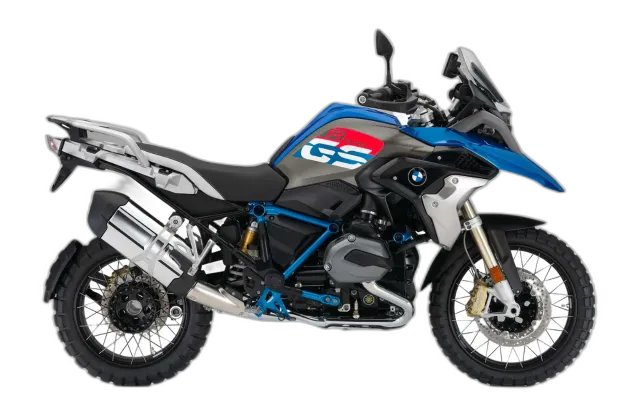
By NastyNils·
Motorcycle comparison · Adventure
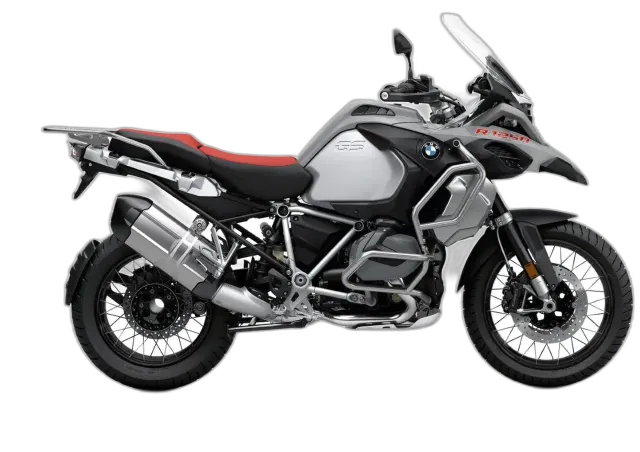
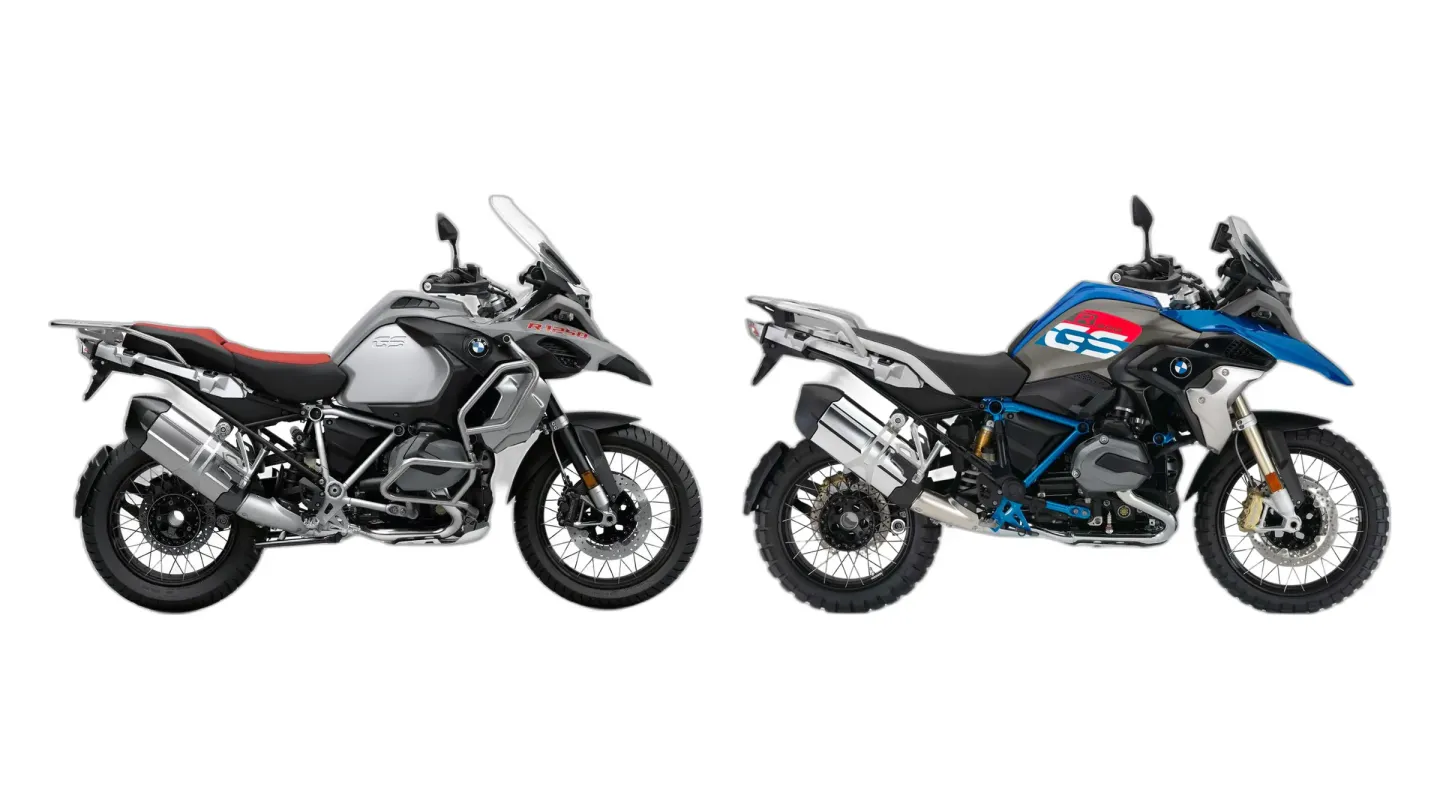
BMW R 1250 GS Adventure (K51) vs R 1200 GS (K50)
BMW R 1250 GS Adventure vs R 1200 GS: long days, loaded bags, one choice to make.
You'll feel the BMW R 1250 GS Adventure's bulk fall away as it turns in, and broken pavement mid-corner doesn't unsettle it. On the BMW R 1200 GS, a glance toward the apex is all the steering it wants. It tips in and picks its own arc.
So which one do you buy?
The R 1250 GS Adventure has the edge if…
Comfortable long-distance riding
Slight edge: R 1250 GS Adventure
For big miles, the R 1250 GS Adventure edges it. Put it down to more range per tank and better wind protection.
Real off-road capability
By a nose: R 1250 GS Adventure
On loose ground, the R 1250 GS Adventure feels a little more sure-footed. Small margin, and the right tires matter more.
Keeping running costs low
Edges it: R 1250 GS Adventure
On upkeep, the R 1250 GS Adventure asks a bit less of your wallet. The difference won't change your life.
What makes each one tick
R 1250 GS Adventure
The R 1250 GS Adventure settles into hours of interstate on a roomy seat and an upright stance that don't wear thin by evening. Any throttle opening, from idle up to redline, gets a thick shove from the ShiftCam boxer, and there's never a gear you'll have to hunt for. The Telelever soaks up rough ground.
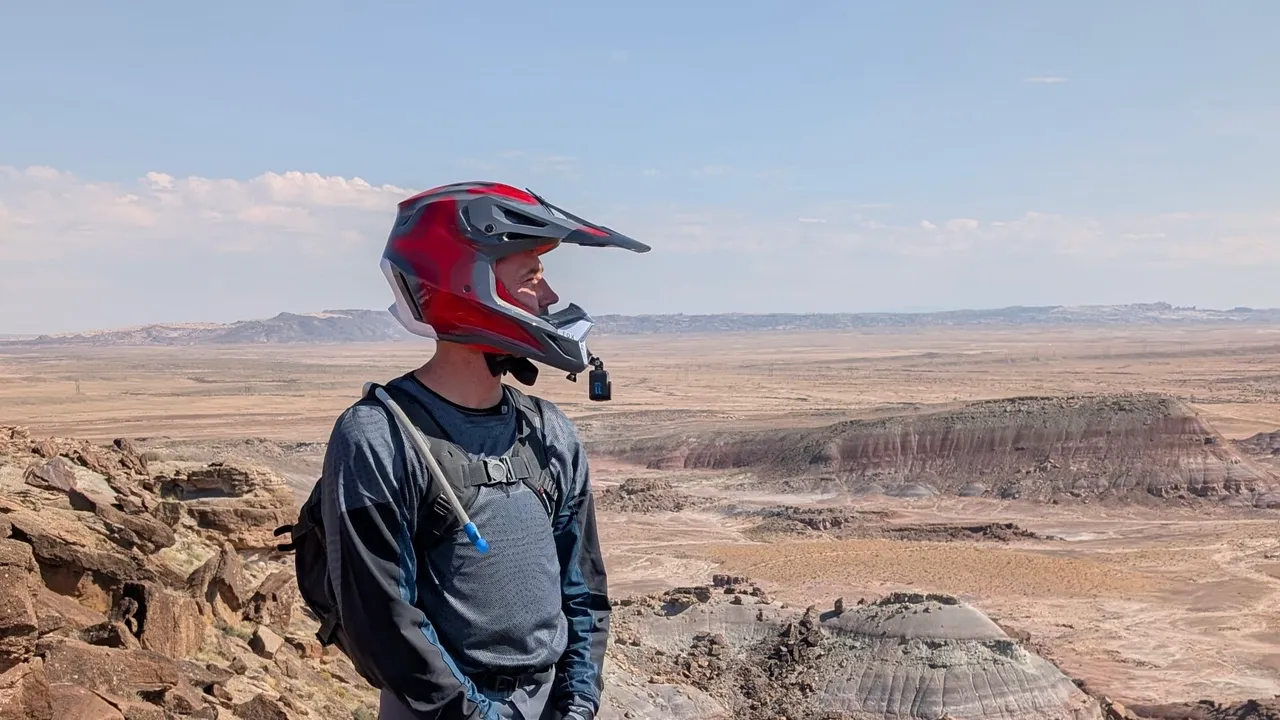
Nils rode the R 1250 GS Adventure in 2021 and 2023 (NastyNils Testride).
R 1200 GS
The R 1200 GS lives low in the revs and pulls hard off the bottom of the tach, and it doesn't need wringing out to go quick. A hard squeeze on the brake lever at the end of a straight stops it late, with the front end staying composed. Then it draws a clean line. It laps a track, then rides home all day.
Nils rode the R 1200 GS in Andalusia and Croatia/Dalmatia in 2013, in Austria in 2015, and in 2016 (NastyNils Testride).
The Voice of Experience
What actually separates them
- The R 1200 GS has the lower seat: 33.5 in (850 mm) vs 35.0 in (890 mm).
- The R 1200 GS has the lower wet weight: 525 lb (238 kg) vs 591 lb (268 kg).
- The R 1250 GS Adventure makes more peak power: 136 hp (100 kW) vs 125 hp (92 kW).
Which one for the way you ride
They come out level on commuting and twisty roads. The better-kept used example is the smarter money.
Who each one is built for
What's good, and what you'll live with
R 1250 GS Adventure
What owners say
Strengths
- Supreme touring comfort and wind protection
- Surprisingly agile handling for its size
Trade-offs
- Heavy and cumbersome at low speeds
- High purchase price and expensive options
- Complexity and early reliability concerns
R 1200 GS
Strengths
- ABS works so finely you forget it's there
- Finds the line almost by itself in tight corners
- Huge low-rpm pull rewards a calm, lugging style
- Late, hard braking with a stable front end
- Track-capable in the morning, Alpine passes home in the evening
Trade-offs
- Runs out of revs and shifting is awkward at big lean
- High cost to buy and maintain
- Wind protection falls short of expectations
Known problems to check before you buy
R 1250 GS Adventure
No confirmed faults on file yet. That's not the same as fault-free.
R 1200 GS
- Shaft drive U-joint corrosion The cardan shaft U-joints can exhibit premature rust, particularly on bikes used in wet conditions or not regularly lubricated, leading to driveline lash or failure.
- Fuel pump cracking On bikes built between 2013 and 2014, the fuel pump unit can crack due to a stressed support washer, leading to fuel leaks and engine hesitation.
- Water pump failure Early water-cooled GS models are prone to water pump failure, often requiring replacement around 20,000–30,000 miles. Symptoms include coolant leaks and overheating.
- Clunky gearbox The transmission can feel harsh, especially shifting between 1st and 2nd gears, with a noticeable clunk. Some owners report difficulty finding neutral.
What they share
- Engine
- Flat-twin (boxer)
- Cooling
- Air/liquid-cooled
- Gearbox
- 6-speed
- Final drive
- Shaft
- Fork
- Telelever
- Front brake
- 305 mm
- Front tire
- 120/70-19
- Rear tire
- 170/60-17
Where the spec sheets split
| R 1250 GS Adventure | R 1200 GS | |
|---|---|---|
| Seat height | 35.0 in (890 mm) | 33.5 in (850 mm) |
| Wet weight | 591 lb (268 kg) | 525 lb (238 kg) |
| R 1250 GS Adventure | R 1200 GS | |
|---|---|---|
| Displacement | 1254 cc | 1170 cc |
| Power | 136 hp (100 kW) | 125 hp (92 kW) |
| Peak power at | 7,750 rpm | 7,700 rpm |
| Torque | 105 lb-ft (143 Nm) | 92 lb-ft (125 Nm) |
| Peak torque at | 6,250 rpm | 6,500 rpm |
| R 1250 GS Adventure | R 1200 GS | |
|---|---|---|
| Fuel economy | 50 mpg (US) / 4.75 L/100 km | 35 mpg (US) / 6.7 L/100 km |
| Fuel capacity | 7.9 US gal (30 L) | 5.3 US gal (20 L) |
| R 1250 GS Adventure | R 1200 GS | |
|---|---|---|
| Wheelbase | 59.2 in (1504 mm) | 59.3 in (1507 mm) |
| Ground clearance | 9.9 in (252 mm) | 7.9 in (200 mm) |
| Front travel | 8.3 in (210 mm) | 7.5 in (190 mm) |
| Rear travel | 8.7 in (220 mm) | 7.9 in (200 mm) |
What comes fitted, what costs extra
| R 1250 GS Adventure | R 1200 GS | |
|---|---|---|
| ABS | Standard | Standard (from 2016) |
| Cornering ABS | Standard (from 2021) | Option |
| Steering Damper | Standard | Not offered |
| Quickshifter | Option | Option (from 2014) |
| TFT Display | Standard | Option |
| Smartphone Connectivity | Standard | Option |
| USB Charging Port | Standard | Not offered |
| LED Headlight | Standard | Option |
| Cornering Lights | Option | Not offered |
Head to head, area by area
Both bikes on the same scale, one area at a time.