Ducati 1199 Panigale Tricolor (MY2012) — Supersport
Ducati press archive

2012–2013 · Supersport · Buyer's Guide

1199 Panigale Tricolor (MY2012)

Italian V-Twin, Full Attack

The Machine's Character

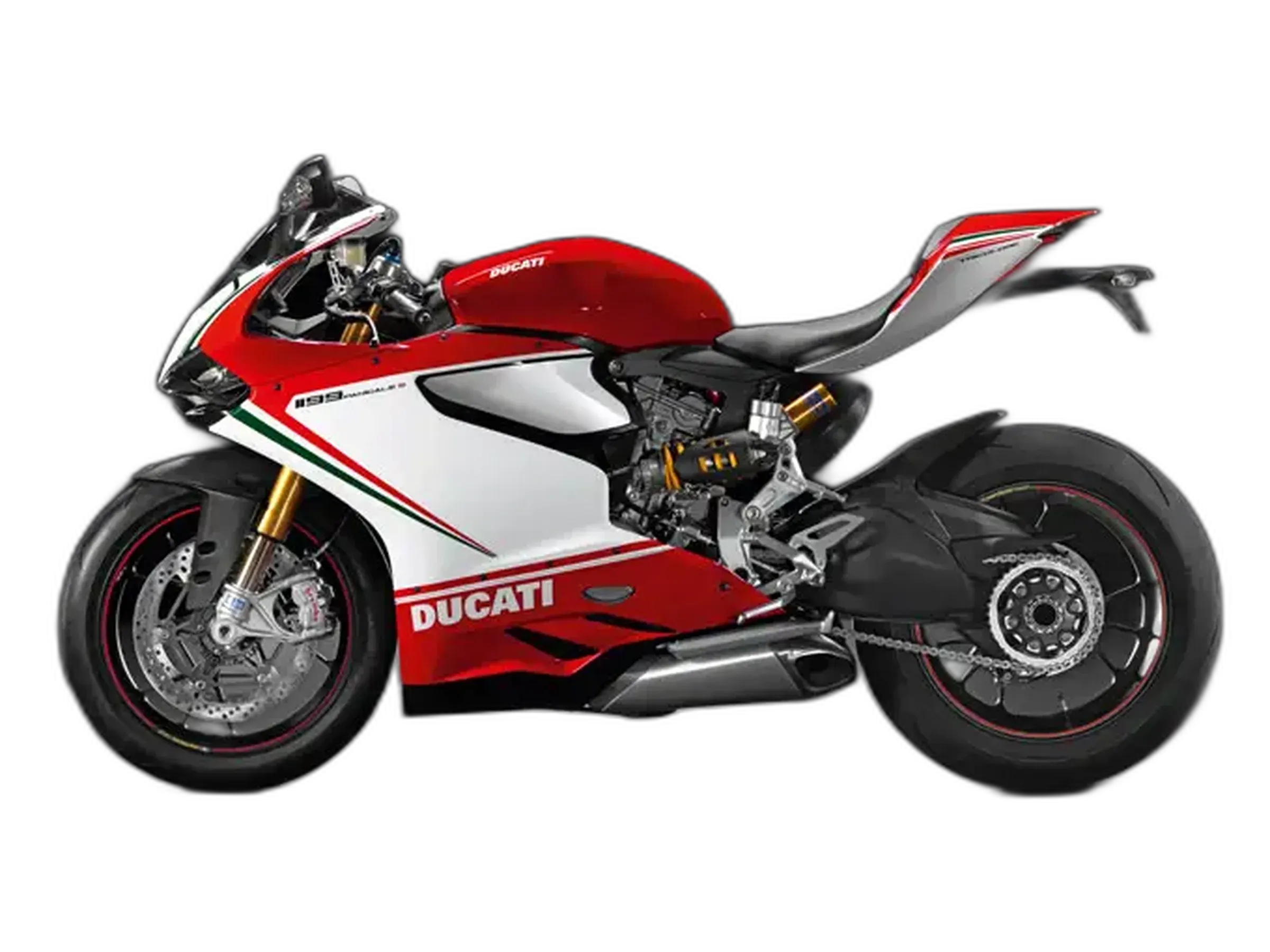
The Tricolor is the Panigale S wearing Italy's colors, and the substance underneath earns the paint. A 1198 cc Superquadro L-twin makes 195 hp at 10,750 rpm and 97 lb-ft, and it does the structural work too: an aluminum monocoque bolts to the engine and carries the steering head instead of a conventional frame. Wet weight is 414 lb. Carbon parts and the limited-run livery handle the exclusivity, while ABS, traction control, ride modes, Ducati Ride-by-Wire power modes, a slipper clutch, a steering damper and Ducati Quick Shift Up handle the riding. This was Ducati's flagship statement, and it still reads like one.

It is a machine that gets better the harder you ride it, which tells you where it belongs: track days, canyon roads, dedicated Sunday miles rather than daily duty. The rider aids are genuinely useful, but they work without lean-angle awareness, so smooth inputs still matter more than any setting you choose. The honest caveat is ownership. Early bikes had real electrical trouble, from loom faults to a switchgear recall, and a few small components age badly. Buy one with a full service history, budget for the known fixes, and you own something whose appeal has not faded at all.

Hard Numbers

Spec sheets don't ride bikes, but they set the baseline.

Show full specs & equipment Hide specs & equipment
Key specifications
Power 195 hp (143 kW) @ 10,750 rpm
Torque 97 lb-ft (132 Nm)
Displacement 1198 cc
Engine L-twin
Cooling Liquid-cooled
Gearbox 6-speed
Final drive Chain
Fork Upside-down (USD)
Front brake 330 mm
Front tire 120/70-17
Rear tire 200/55-17
Wheelbase 56.6 in (1437 mm)
Seat height 32.5 in (825 mm)
Wet weight 414 lb (188 kg)
Fuel capacity 4.5 gal (17 L)

Equipment check

Chassis

  • Front Suspension Adjustable Standard
  • Rear Suspension Adjustable Standard
  • Steering Damper Standard

Connectivity

  • TFT Display Standard

Drivetrain

  • Quickshifter Ducati Quick Shift (DQS) Up Full throttle upshiftClutchless riding Standard
  • Slipper Clutch Standard

Lighting

  • LED Headlight Standard

Safety

  • ABS Standard
  • Traction Control Standard
  • Ride Modes Ducati Ride-by-Wire Power Modes Selectable ride modesRefined throttle response Standard

The Voice of Experience

Portrait of NastyNils

The test ride

Swing a leg over and the geometry announces itself. The seat sits 32.5 in up, the tank is narrow between your knees, and the reach forward puts real weight on your wrists at town speed. The L-twin shakes at idle and keeps a hard pulse running through the pegs and the tank that never fully disappears. In slow traffic it gets warm underneath you and you notice. Then the road opens and everything reorganizes: the vibration turns into rhythm, your weight comes off your hands, and the quickshifter lets you take upshifts without loosening your grip. What arrives behind your helmet at full throttle is worth the ticket by itself. This is a physical motorcycle. It asks for commitment from your whole body, not just your right hand.

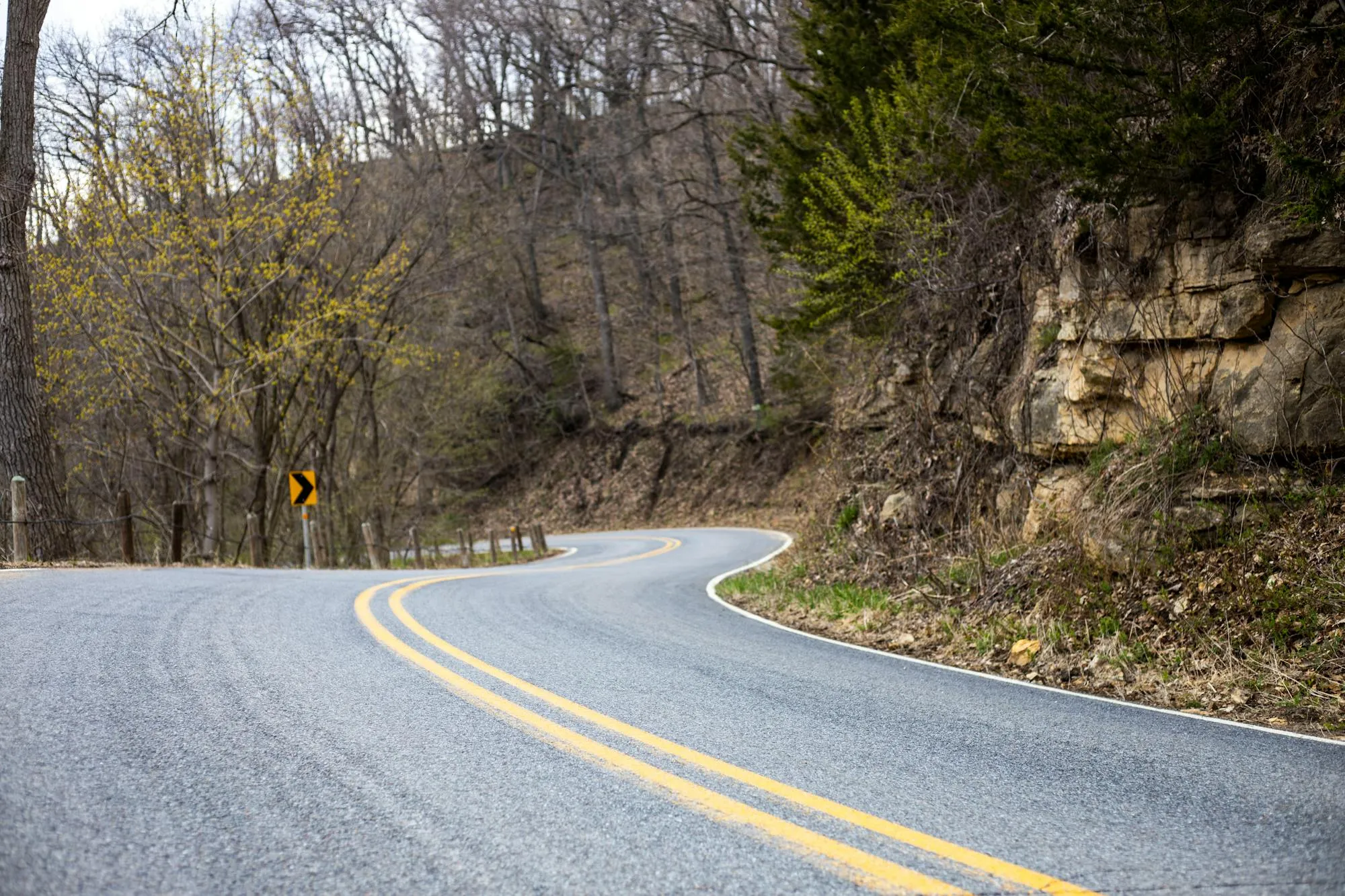
A winding two-lane asphalt road in the Appalachian mountains, photographed in dry daylight. Yellow double-center line markings guide through a series of tight left-hand curves. Dense deciduous and evergreen forest flanks both sides; a rock cut is visible on the right. The road surface and geometry suggest a technical, high-traffic riding corridor popular with motorcyclists.
Chris Flaten / Pexels

The Truth on the Street

Years of listening does this on its own. Riders bring it up in the pit lane between sessions, at club evenings, in long messages from people who have owned one since new, and nobody was ever asked to fill anything in. On the Tricolor the chatter keeps circling back to the same two places: what the engine does at low revs, and what the bike costs to keep on the road.

What Happens Below 6,000 rpm

Riders are consistent that the engine feels flat under 6,000 rpm, and they say so with older big twins in mind. Meaningful acceleration only shows up once the revs are up, and in town that is the thing owners find most frustrating. Running alongside it, a fair number report that the ride-by-wire throttle goes abrupt at parking lot speeds and is hard to modulate smoothly, so they slip the clutch constantly to keep things tidy.

The Service Bill Owners Flag

It surfaces less often than the rest, but when it does, owners are specific about it. The desmodromic valve check at 15,000 miles is a four-figure job, and they put that down to how much engine has to come apart. Riders who mention it treat it as a standing part of the cost of ownership rather than a surprise.

Known issues

  • Left handlebar switch failure (recall)

    electrics common Recall

    The left handlebar switch may lose power from its dashboard connection, disabling the horn, high beam, and right turn signal. Ducati issued recall RCL-14-001 to install an additional wiring harness, free of charge.

  • Wiring loom and electrical gremlins

    electrics occasional

    Multiple reports of wiring faults leading to instrument panel resets, indicator malfunctions, and engine cutouts, particularly on early 2012 models. Some bikes required complete loom replacement.

  • Clutch slave cylinder seal weeping

    drivetrain occasional

    Air enters the clutch hydraulic system, causing a grabby clutch, heavy lever feel, and difficulty finding neutral. An aftermarket slave cylinder with improved seals often fixes the issue.

  • Starting issues due to charcoal canister

    fuel system occasional

    The emissions charcoal canister, located near the lower radiator, can cause hard starting, especially when the engine is hot. Many owners remove the canister to resolve the problem.

  • Gear position sensor failure

    electrics rare

    The gear position sensor can fail, resulting in incorrect gear display on the dashboard and erratic engine behavior. Replacement of the sensor is the usual remedy.

The Expert Benchmark

Where this Ducati 1199 Panigale Tricolor pulls ahead of — or falls behind — its rivals on the numbers, and the typical bike in its class on character.

What kind of bike this is — character vs. the class

This bike Class average

The shape of the Ducati 1199 Panigale Tricolor — numbers and character vs. the average Supersport

Head-to-head: Ducati 1199 Panigale Tricolor vs. its rivals

The Handshake Score

Forget spec-sheet bragging. Here's who the 1199 Panigale Tricolor is actually built for.

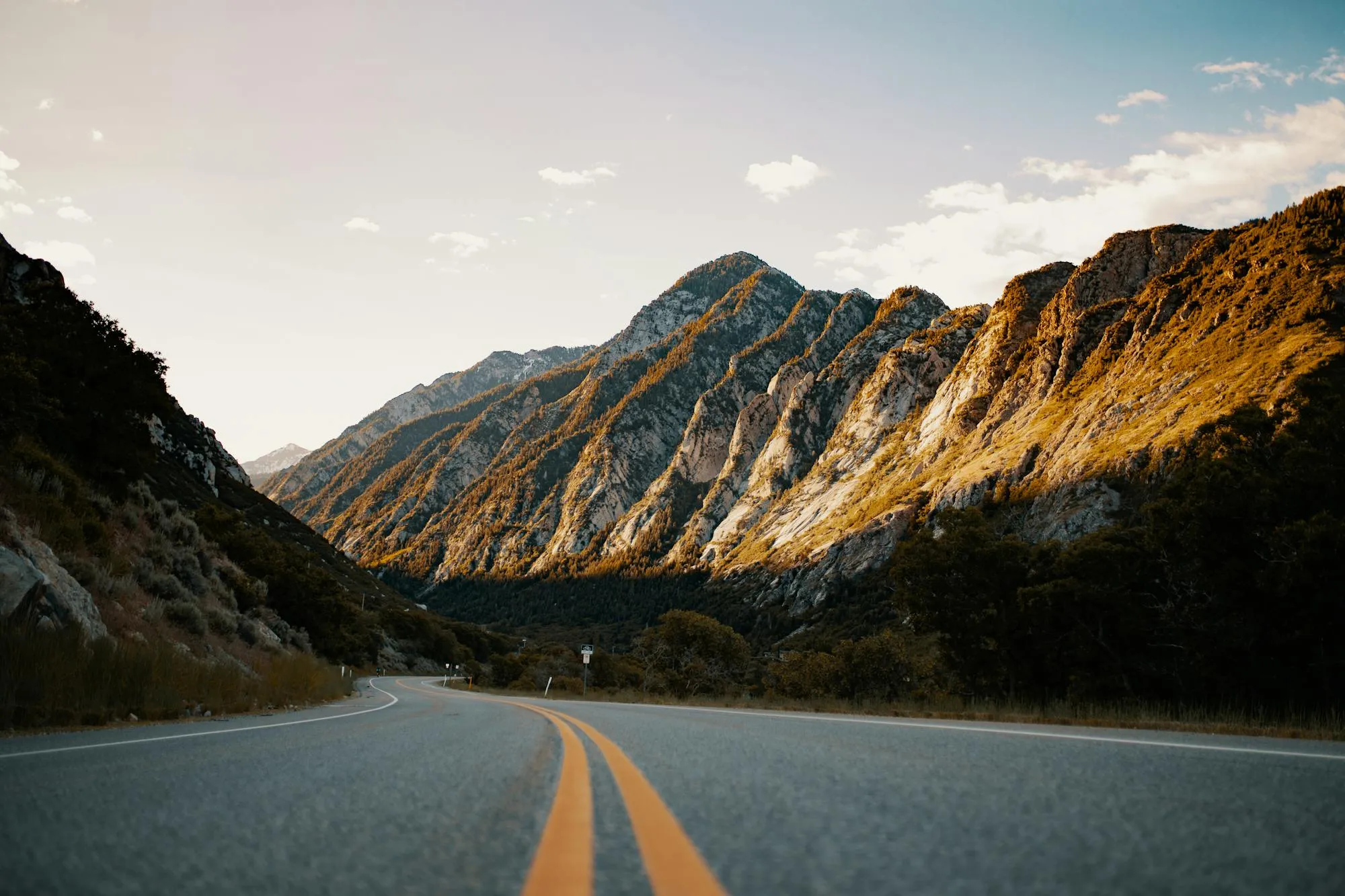
A scenic view of Angeles Crest Highway winding through rugged Southern California canyon terrain. Rocky mountainsides with golden earth tones frame the asphalt road with tight sweeping curves. Double yellow center line visible, sparse vegetation along the shoulders, clear blue sky with white clouds. Daylight, dry conditions. Iconic location for canyon-road enthusiasts.
Josh Sorenson / Pexels

Best motorcycle for Angeles Crest?

For Angeles Crest and the roads behind it, this is superb, as long as you accept an aggressive riding position and a bike that only makes sense once you are actually pushing.

Made for Angeles Crest Highway · Coronado Trail / US 191 · Highway 1 / Big Sur
Best motorcycle for Laguna Seca?

This is the arena it was built for. Huge lean angle, real power and a chassis that stays honest at speed leave the limits to you, though setup work is all done by hand.

Made for Barber Motorsports Park · WeatherTech Raceway Laguna Seca · Circuit of the Americas

Best motorcycle for Tail of the Dragon?

It suits the Dragon and Cherohala because it holds a line without argument and never runs out of ground clearance. The price is your wrists on the slow stretches in between.

Made for Back of the Dragon · Blue Ridge Parkway · Cherohala Skyway

What's new versus the previous generation

If you're cross-shopping the older generation, here's what changed.

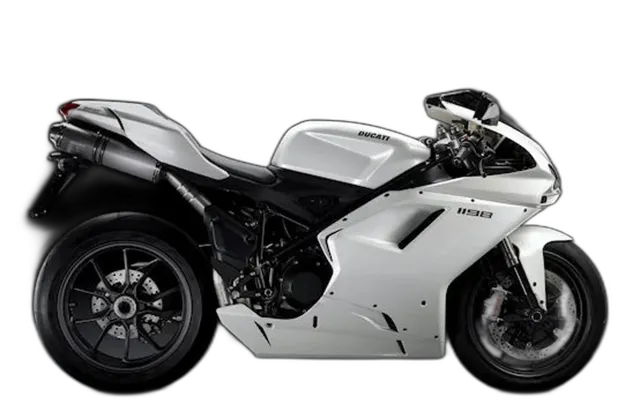
Ducati 1198 (MY2009)

Previous generation · 2009–2011

Ducati 1198 (MY2009)

Thunder, Beauty, No Apologies

Compare to the previous model →

Alternatives to the Ducati 1199 Panigale Tricolor

If this one isn't quite the fit, these are the bikes worth riding back-to-back against it.

Any price note compares both bikes at the same age — the youngest age both have on the used market — against this Ducati 1199 Panigale Tricolor. “cheaper/pricier” is what that bike costs second-hand, not how worn it is.