
Aprilia RSV4 1100 (MY2021-Factory) — Supersport
Aprilia Press

2021–2024 · Supersport · A variant of the RSV4 1100

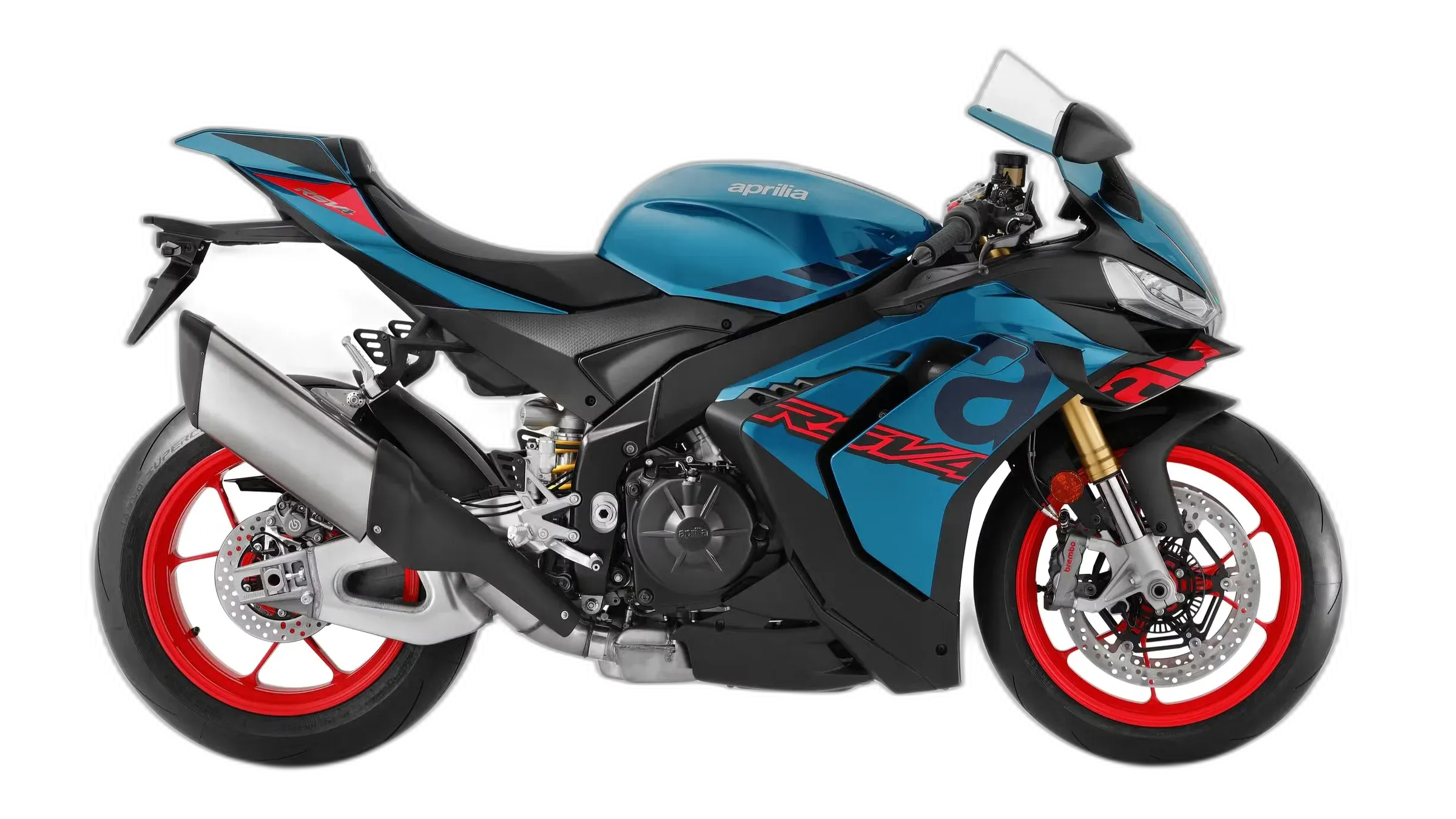
RSV4 1100 Factory (MY2021-Factory)

Differences between the standard RSV4 1100 and the Factory

5 / 5 NastyNils Rating · against its class

217 Horses the Electronics Tame

The Machine's Character

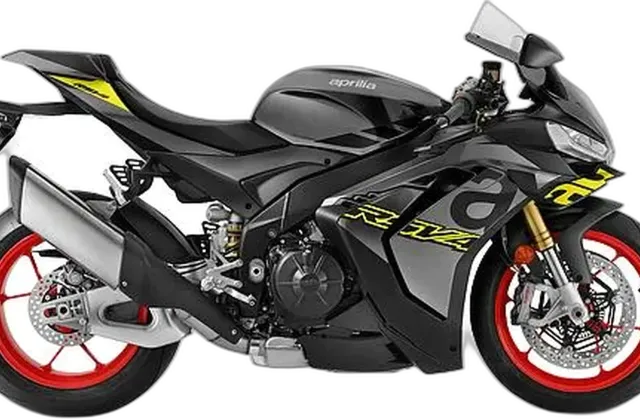
The RSV4 1100 Factory sits at the top of Aprilia's supersport range, built around a 1099 cc V4 that makes 217 hp at 13,000 rpm and 92 lb-ft at 10,500. Öhlins Smart EC 2.0 semi-active suspension is what sets this Factory trim apart, layering electronic damping on top of an already fully sorted base bike. APRC ride-by-wire with three switchable maps, forged aluminum wheels, and integrated winglets round out a package aimed squarely at riders who want genuine racing dynamics they can actually put to use on road and track.

On the move it rides far lighter than its 439 lb wet weight and aggressive stance suggest, turning in fast and holding a line with real front-end feel. This is a focused machine that rewards skilled hands and reads best under a rider who works corners, not one after easy miles. The honest caveats are ownership-level. The quickshifter wants firm, committed inputs, the display looks cheap against everything around it, and new bikes have turned up with loose factory bolts that deserve a full check before you ride hard.

Hard Numbers

Spec sheets don't ride bikes, but they set the baseline.

Show full specs & equipment Hide specs & equipment
Key specifications
Power 217 hp (160 kW) @ 13,000 rpm
Torque 92 lb-ft (125 Nm) @ 10,500 rpm
Displacement 1099 cc
Engine V4
Cooling Liquid-cooled
Gearbox 6-speed
Final drive Chain
Fork Upside-down (USD)
Front brake 330 mm
Front tire 120/70-17
Rear tire 200/55-17
Wheelbase 56.5 in (1435 mm)
Seat height 33.5 in (851 mm)
Wet weight 439 lb (199 kg)
Fuel capacity 4.7 gal (17.9 L)

Equipment check

Chassis

  • Front Suspension Adjustable Standard
  • Rear Suspension Adjustable Standard
  • Steering Damper Standard

Connectivity

  • TFT Display Standard
  • Smartphone Connectivity Aprilia MIA Integrated navigationHandsfree phone integration Optional

Drivetrain

  • Quickshifter Aprilia Quick Shift (AQS) Bidirectional Full throttle upshiftClutchless riding Standard
  • Slipper Clutch Standard

Lighting

  • LED Headlight Standard

Safety

  • ABS Standard
  • Cornering ABS Standard
  • Traction Control Standard
  • Ride Modes Aprilia APRC Ride-by-Wire (three switchable maps) Selectable ride modesRefined throttle response Standard
  • Wheelie Control Standard
  • Launch Control Standard

Signature Tech

The named systems that set this bike apart — and what each one does for you.

Suspension

  • Öhlins Smart EC 2.0 Standard
    • Realtime road adaptation
    • Brake dive control
    • Acceleration stability
    • Wider usable range

Wheels

  • Aprilia Forged Aluminum Wheels Standard
    • Reduced unsprung rotating mass
    • Agile weight reduction

The Voice of Experience

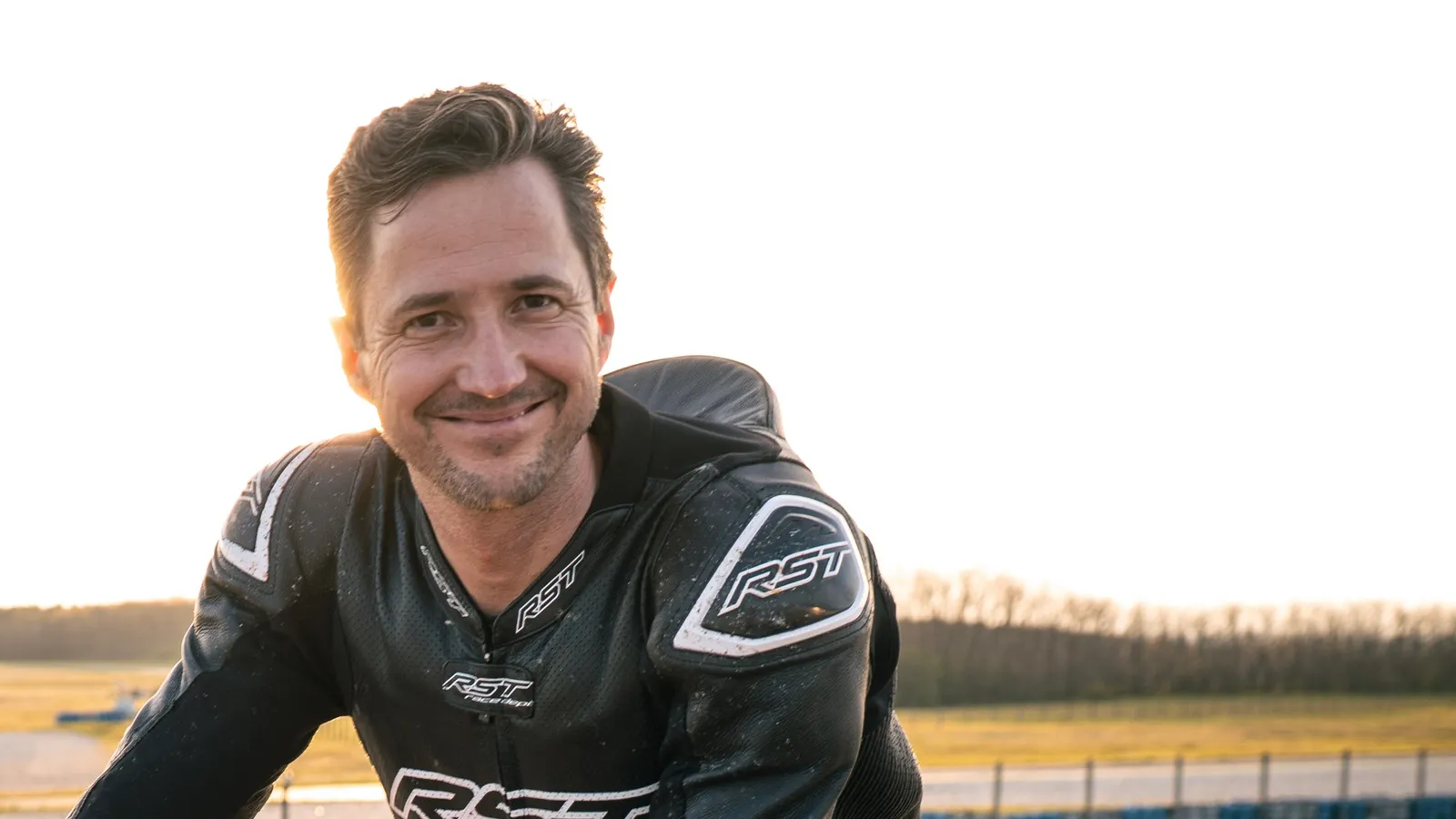
Portrait of NastyNils

The test ride

Roll it off the stand and the height registers first. Walking it through the paddock takes attention, and at 33.5 in the seat never quite lets you forget it. Get moving and that vanishes. The reworked tank-to-seat transition opens up genuine room in the saddle, so your body shifts fore and aft freely and your arms find the tank to brace without fighting the bodywork for a spot. What stays with you is the noise. Wind it toward the limiter in the lower gears and the V4 goes menacing, an acoustic wall that lands right as the drive gets serious. For all the visual bulk up front, the bike feels playful and balanced underneath you, moving with a lightness the wide, aggressive nose never promises.

What the RSV4 1100 Factory Adds — Differences vs the Standard RSV4 1100

The RSV4 1100 Factory (MY2021-Factory) builds on the standard RSV4 1100: the upgraded hardware, the key spec changes and where its character shifts. The full ride, specs, scoring and verdict are all right here on this page.

Premium hardware the Factory brings

  • Suspension Electronic Suspension Semi-active electronic suspension that adapts its damping on the move — the standard runs conventional, manually-set suspension.

Rated point by point — where it earns its keep

My own 0–100 score for this bike against the class, area by area — the marker on each bar is the class average.

Ask it to turn and the front is already committing before your input finishes. The Factory drops toward the apex quicker than the pressure through the bar seems to warrant, and I never had to muscle it the way a full-liter machine usually demands. Once it's leaned over, the load settles squarely on the front tire and the bike pulls you into the bend instead of leaving you clinging off the back. Picking a line stops being a task; you look through the corner and it's already there.

Static, and especially straight on, it wears the face of a bigger, angrier form of racing, broad and hard-angled and clearly built to intimidate before you throw a leg over. Set it rolling and that heft evaporates. There's an ease to the way it changes direction that the aggressive stance actively hides, and it stays friendly and composed where the styling had me expecting a wrestling match. That gap between how it looks standing still and how it feels moving is what I remember afterward.

The bottom of the rev range is polite and forgettable, and I mean that plainly rather than as a complaint. The character lives higher up. Wind it toward the ceiling in second or third and the drive gets serious enough that you notice your own hesitation before the limiter arrives. Winglets or not, the nose still tries to rise under hard acceleration, and the rider aids press it back down cleanly. The real step forward is the updated electronics: exit traction so refined that a bigger share of the output actually reaches the tarmac.

Nothing about a machine like this promises a plush ride, so what struck me was how much freedom the revised cockpit hands you. The new junction between tank and seat opens up space I didn't expect, letting your upper body reposition freely and load your forearms onto the tank right where you want leverage. The real cost shows up with both feet down. At rest it stands tall, and threading it through a crowded paddock takes concentration you can't drop. Under way that bulk stops mattering, and at speed your riding position simply arrives without you arranging it.

Two things let the side down on a bike otherwise this polished. The gearbox is fussier than it ought to be on the way up: give it a clean, decisive nudge and it obliges, but any hesitation in your foot brings a snatch through the driveline that nothing else here would tolerate. The instrument panel is the other soft spot. It works and the readout is legible enough, yet its graphics feel low-rent and unfinished, badly at odds with the caliber of everything around it.

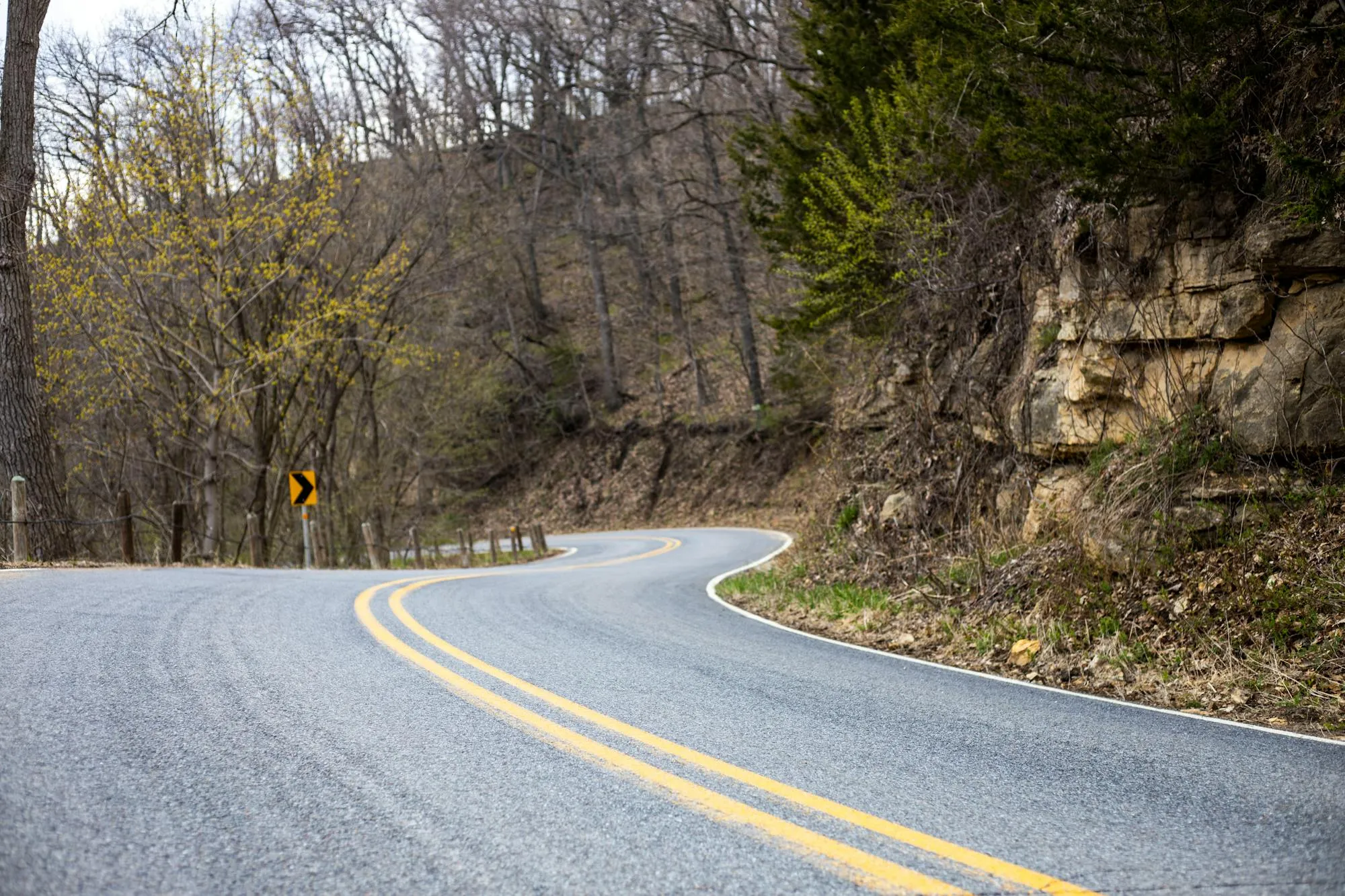
A winding two-lane asphalt road in the Appalachian mountains, photographed in dry daylight. Yellow double-center line markings guide through a series of tight left-hand curves. Dense deciduous and evergreen forest flanks both sides; a rock cut is visible on the right. The road surface and geometry suggest a technical, high-traffic riding corridor popular with motorcyclists.
Chris Flaten / Pexels

The Truth on the Street

This isn't pulled from a brochure. It's what NastyNils has heard from riders over the years: long back-and-forths online, talk at the track, and the messages owners send once a bike has been properly lived with. Gather it all for the RSV4 1100 and the split is plain. Owners get loud about the ride and turn far more measured about daily life with it.

What owners praise in motion

The V4 is what riders bring up first. They describe a mid-range that keeps stacking up toward a top end that climbs and climbs, ferocious in its pull yet even enough that it never turns unruly. Handling earns nearly as much love; for such a big machine, owners are struck by how light and willing it feels changing direction, precise going into a corner and stable once it's leaned over. The APRC rider aids draw the same respect, with cornering ABS plus traction, wheelie and launch control that people find easy to set. The semi-active Öhlins comes up again and again for how well it soaks up the road, supple over rough tarmac and firm at full lean. The winged bodywork has its own admirers, both for the look and the downforce it makes.

Where the enthusiasm cools

The reservations sit almost entirely on the ownership side. Comfort tops the list: bigger and taller riders say the high pegs and long stretch to the bars wear on them once a ride runs long, fine for a short hit and tiring over real distance. Cost comes next, with the Factory priced well above the Japanese field and its own standard sibling, into exotic territory. Service is the other worry, mainly in North America, where a thin dealer network can drag out warranty work and parts. A few add that the setup turns harsh once the road roughens.

Known issues

  • Gear position sensor failure

    electrics occasional

    The gear position sensor may fail, displaying incorrect gear or '-' on the dash, disabling quickshifter and cruise control, and triggering a limp mode. Aprilia has released a superseded part, indicating a known fault.

  • Airbox debris ingress

    engine occasional

    Fine debris or residue enters the airbox past the filter element, potentially due to poor sealing around the filter bracket or showerhead injectors. While possibly just fuel/evaporative residue, it raises concerns about valve damage over time.

  • Oil leak from stator cover and oil pan plug

    engine rare

    Some owners report slow oil leaks from the stator cover gasket and the oil pan plug on the left side. Re-sealing with proper sealant usually resolves the issue.

  • Loose factory bolts and assembly quality

    bodywork occasional

    Several owners have found loose accessory and bodywork bolts from the factory, requiring a thorough retightening upon delivery or early in ownership.

  • Quickshifter harshness at low speed

    drivetrain common

    The quickshifter can feel abrupt or clunky during street riding, especially at lower rpm, though performance improves on track.

  • Veering tendency to the right

    chassis rare

    A minority of owners experience a persistent self-steering pull to the right, even after suspension setup and tire pressure adjustments. The root cause is unclear, and not all bikes are affected.

  • Steering damper interference with fairing stay

    chassis occasional

    The stock steering damper can rub against the dash/fairing stay, causing binding and low-speed handling issues. Elevated wear marks on the damper clamp indicate physical contact.

The Expert Benchmark

Where this Aprilia RSV4 1100 pulls ahead of — or falls behind — its rivals on the numbers, and the typical bike in its class on character.

What kind of bike this is — character vs. the class

This bike Class average

The shape of the Aprilia RSV4 1100 — numbers and character vs. the average Supersport

Head-to-head: Aprilia RSV4 1100 vs. its rivals

The Handshake Score

Forget spec-sheet bragging. Here's who the RSV4 1100 is actually built for.

A scenic view of Angeles Crest Highway winding through rugged Southern California canyon terrain. Rocky mountainsides with golden earth tones frame the asphalt road with tight sweeping curves. Double yellow center line visible, sparse vegetation along the shoulders, clear blue sky with white clouds. Daylight, dry conditions. Iconic location for canyon-road enthusiasts.
Josh Sorenson / Pexels

Best motorcycle for Laguna Seca?

On a closed circuit this is exactly your tool: instant turn-in, huge lean clearance, and traction control that lets you get to full throttle early and clean. Bring your best inputs and it repays them.

Made for WeatherTech Raceway Laguna Seca · Barber Motorsports Park · Circuit of the Americas
Best motorcycle for Angeles Crest?

Angeles Crest and the LA passes suit it well. It stays light and precise at real canyon pace with the front-end feel to place it exactly, though slow, tight sections ask more of you.

Made for Angeles Crest Highway · Coronado Trail / US 191 · Highway 1 / Big Sur

Best motorcycle for Tail of the Dragon?

For Tail of the Dragon and the Blue Ridge twisties it rewards clean, precise inputs and gives you the feedback to nail each apex. Just respect its height and stay sharp at low speed.

Made for Tail of the Dragon · Back of the Dragon · Blue Ridge Parkway

What's new versus the previous generation

If you're cross-shopping the older generation, here's what changed.

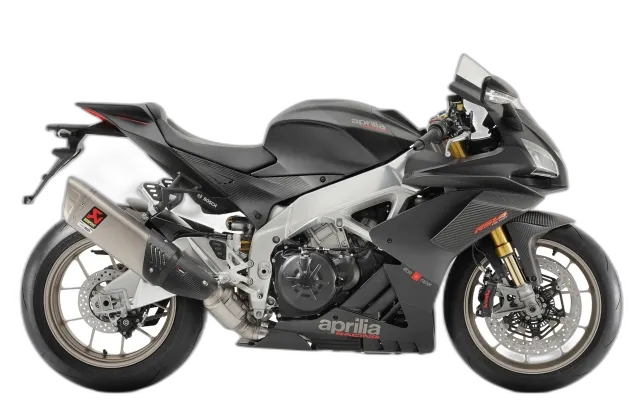
Aprilia RSV4 1100 (MY2019-Factory)

Previous generation · 2019

Aprilia RSV4 1100 (MY2019-Factory)

Feedback, Fire, V4 Fury

Compare to the previous model →

Alternatives to the Aprilia RSV4 1100

If this one isn't quite the fit, these are the bikes worth riding back-to-back against it.

Any price note compares both bikes at the same age — the youngest age both have on the used market — against this Aprilia RSV4 1100. “cheaper/pricier” is what that bike costs second-hand, not how worn it is.