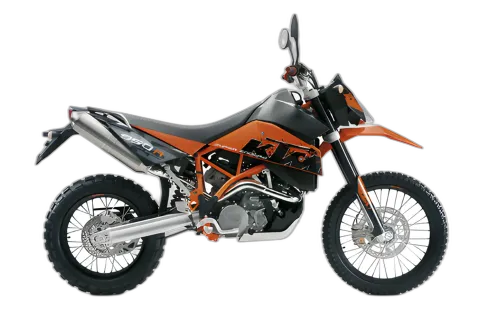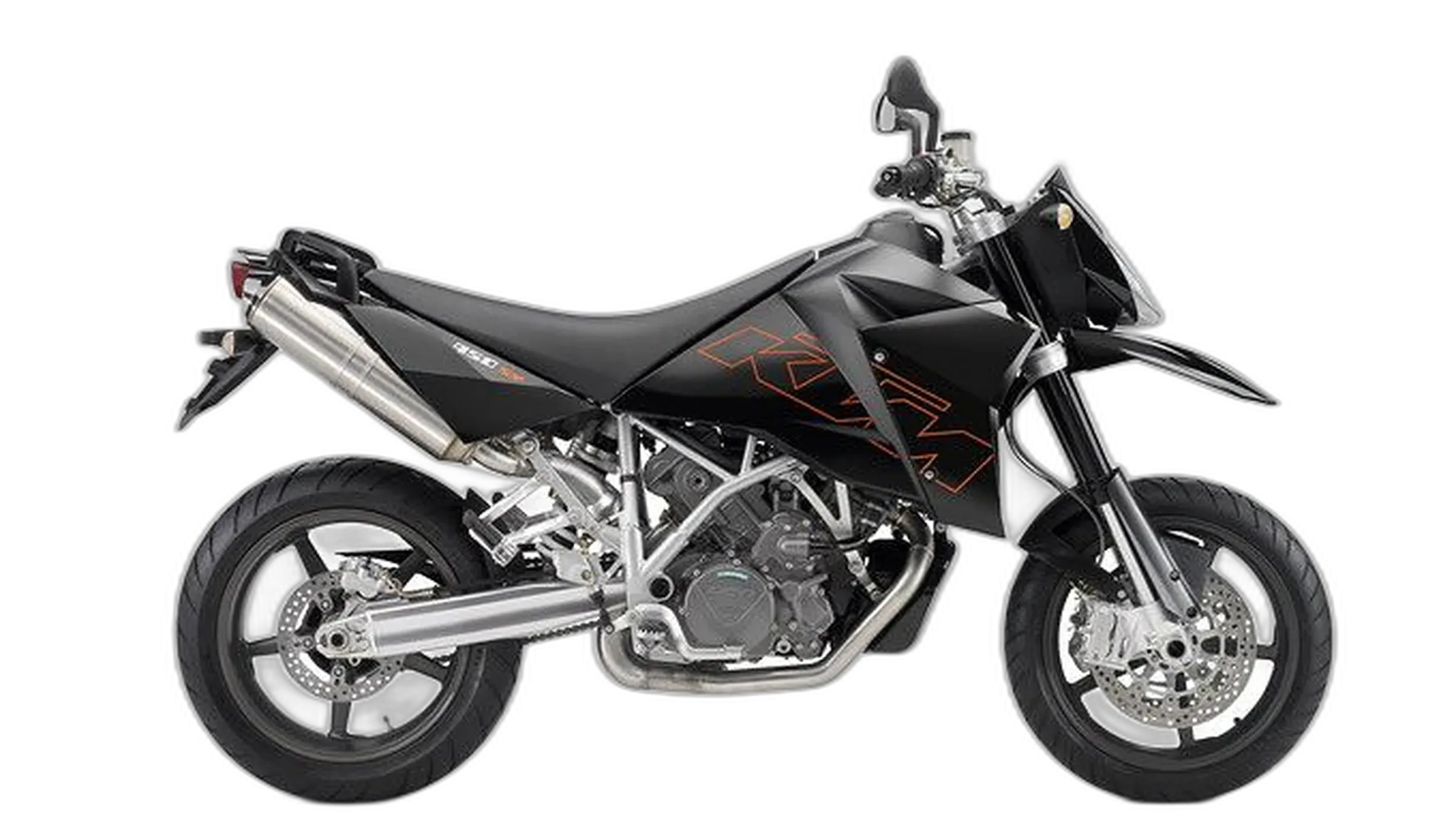

KTM 950 Supermoto (MY2005) — Supermoto
NastyNils / KTM Press

2005–2007 · Supermoto · Buyer's Guide

950 Supermoto (MY2005)

Big Twin, Supermoto Soul

The Machine's Character

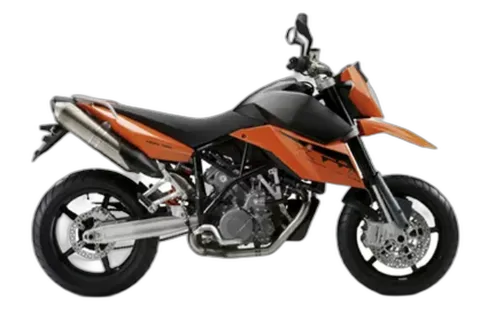
The 950 Supermoto runs a 942cc 75° V-twin that KTM kept on carburetors while the rest of the world chased fuel injection, and that decision defines the bike. You get 98 hp and 70 lb-ft fed through a throttle that stays smooth and progressive, hung on a chromoly steel trellis frame with WP suspension and Brembo brakes at every contact point. Nothing on the spec sheet reads like a cost cut. For a rider stepping up from a single-cylinder supermoto, this is the obvious next bike: the same playful character, a higher ceiling, a second cylinder that extends the playbook rather than rewriting it.

It rides lighter than it looks and asks nothing of you on a commute, then turns vicious the moment you point it at a technical road. The seat and upright position hold up well enough that touring is genuinely on the table, something the styling tells you to dismiss before you've spent a day on it. The honest caveats are mechanical and historical. The footpegs scrape before the tires run out, which caps the chassis on a fast road. And on an older example, maintenance history matters more than the odometer: documented valve checks and an upgraded regulator/rectifier separate a good buy from a project.

Hard Numbers

Spec sheets don't ride bikes, but they set the baseline.

Show full specs & equipment Hide specs & equipment
Key specifications
Power 98 hp (72 kW) @ 8,000 rpm
Torque 70 lb-ft (95 Nm) @ 6,500 rpm
Displacement 942 cc
Engine 75° V-twin
Cooling Liquid-cooled
Gearbox 6-speed
Final drive Chain
Fork Upside-down (USD)
Front brake 305 mm
Front tire 120/70-17
Rear tire 180/55-17
Ground clearance 7.7 in (195 mm)
Front travel 7.9 in (200 mm)
Rear travel 7.9 in (200 mm)
Seat height 34.8 in (885 mm)
Fuel capacity 4.2 gal (16 L)
Top speed 137 mph (220 km/h)
Fuel economy 35 mpg (US)

Equipment check

Chassis

  • Front Suspension Adjustable Standard
  • Rear Suspension Adjustable Standard

The Voice of Experience

Portrait of NastyNils

The test ride

First contact tells you most of what you need to know. Wide Magura bar, upright perch, hands exactly where you want them, and you feel settled before you've turned a wheel. The break-in is almost nonexistent, so you're at full lean angle before you've talked yourself out of it. The V-twin sounds the part, a deep mechanical bark that fills in as the pace does, and the pace builds on its own without you forcing the issue. Chuck it into a corner and it drops in with a looseness that reads as willingness rather than slop. The Brembos give you enough bite to manage the weight cleanly without snapping at the lever. Wind pressure above highway speed is real, that's supermoto physics, but the seat and bars stay civil long after a bike this aggressive has any right to.

Rated point by point — where it earns its keep

My own 0–100 score for this bike against the class, area by area — the marker on each bar is the class average.

The Brembos pitch it just right for a bike carrying this kind of mass. There's real stopping force on tap when you squeeze, yet the lever stays composed and never grabs, so hauling the weight down at the entry to a turn is a calm, measured affair. I could meter it to the inch and rely on it completely, and on a bike you ride this hard, that confidence at the lever counts for as much as outright power.

Crack it open on the way out of a corner and the V-twin simply drives, a clean hard shove up the road with no flat spot and nothing to ride around. The fueling stays civil even as the power lands, which is the carburetors doing honest work; they ask for a little more care than injection would, then hand you a throttle you can lean on in the tight stuff without it ever catching you out. That predictability is what lets you carry real speed without having to think about it.

The chassis surprised me with how little persuasion it needs. On the R the WP fork and revised offset arrive set up for genuine lap pace, so I lost no time fiddling with clickers or booking mechanic hours before a session counted. It also carries its mass strangely well; the bike sits in your eye as the heavier machine and then rides like something lighter, which is the right way around for that illusion to break. Tip it toward an apex and it commits without protest, a relaxed eagerness rather than any vagueness up front. The honest blemish is ground clearance. The pegs find tarmac while the tires still have plenty left, and the R never cured it, so on a quick technical road you meet that limit before a chassis this composed has any business hitting it. It's the one place the size gives itself away.

Hard use is where this bike earns its keep. The steel frame has shrugged off years of abuse with nothing to show for it, no flex, no cracks, no creeping fatigue, and I've seen that borne out again and again on high-hour examples. The engine is just as durable, but it sets a condition: keep the valve clearances in the book and it will run to mileage figures that sound made up. Ignore them and it makes you pay, because this motor has no patience for a skipped service. The component spec backs all of it, with proper Brembo, WP and Magura hardware in the very places lesser bikes save money. Two cautions for anyone shopping a used one. The early regulator/rectifier is a known failure, and a bike still wearing its original unit means a job nobody got to yet. And a clean service record beats a low odometer every time; the paperwork tells you far more than the number on the dash.

If you've worn out a single-cylinder supermoto and aren't ready to leave that world, this is the natural progression. Everything you learned on the thumper carries over intact; the bike feels cut from the same cloth, only with more headroom above and more comfort underneath. And the way it gathers speed is sneaky. You aren't fighting for pace, the bike just keeps finding more of it on its own, and the quickness arrives before you've made any conscious decision to chase it.

Spend a real day in the saddle and this bike quietly rewrites what you expected of it. The seat is properly made, not the afterthought the class usually serves up, and the posture stays loose enough that I'd happily point it at a long route, which is not a sentence the styling lets you say out loud. Wind does become a factor once you sit at highway speed, though that's the tax every supermoto pays and I won't hold it against this one. The riding triangle deserves its own credit: the broad bar and tall stance settle you the moment you climb aboard, hands falling naturally into place, so the bike feels familiar long before it has earned the right to. The one jarring note is the cheap-looking gauge cluster, lifted from an enduro parts bin and bolted onto a machine that otherwise spared no expense anywhere. Once you've noticed that mismatch it keeps tugging at the corner of your eye.

What makes it genuinely usable is how completely it changes hats. Run it to work or out for a lazy ride and it demands nothing of you, calm and predictable, the sort of bike you can ride half-awake. Find a road built entirely of corners and the same machine turns ferociously quick, no long straights needed to let it stretch. The other surprise comes from owners who've kept theirs for years: they keep naming distance riding as one of its real strengths, which the spec sheet would never have you guess. Two jobs, no obvious compromise in either.

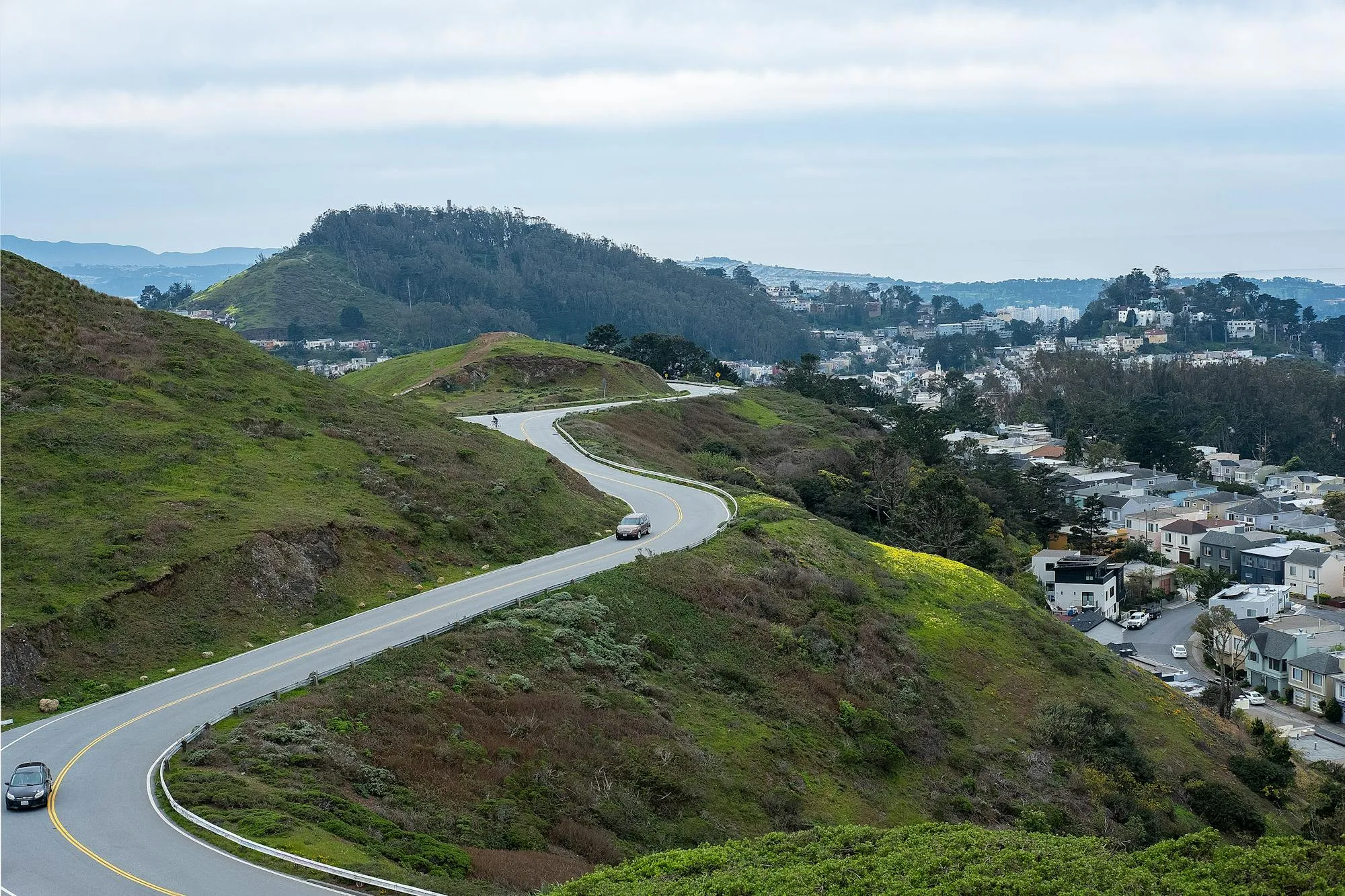
Aerial view of a winding asphalt road traversing rolling green hills in the Bay Area, likely Skyline Boulevard. The road curves through lush grassland with residential development visible in the distance.
David Mcelwee / Pexels

The Truth on the Trail

What follows isn't my own test ride. It's the picture that forms over years of paying attention to riders: the threads I read, conversations in the paddock, and the steady run of owner emails and messages that reach me directly. For this 950, the pattern is steady. Riders love getting on it, as long as they keep ahead of its upkeep.

The motor and chassis riders rave about

The LC8 V-twin draws the most affection. Owners call it potent and full of character, with a strong mid-range that stays tractable enough for everyday use. The handling earns equal loyalty: a light, confident chassis on fully adjustable WP suspension that makes twisty roads a pleasure and holds a clean line through a corner. The premium hardware comes up often too, the Brembo, WP and Magura kit that signals KTM's off-road roots.

Where the gripes pile up

The gearbox is the loudest complaint. Riders find the six-speed notchy and vague, sometimes clunky, and a handful report outright failures. Exposure is the next recurring note: with no fairing or flyscreen, highway speeds put the wind straight on the rider and cap long-distance comfort. Reliability talk carries its own caution, with water pump and clutch slave cylinder leaks surfacing often enough to keep proactive maintenance on the list.

Known issues

  • Rear brake air intrusion (NHTSA recall 07V-065)

    brakesoccasionalRecall

    Air bubbles can enter the rear brake system, causing a spongy/soft feel and potential loss of braking performance. KTM issued a voluntary recall to replace the rear brake caliper/piston kit and master cylinder piston seal assembly.

  • Cracked engine mount near front sprocket

    enginerare

    A crack can develop in the aft engine mount area behind the front sprocket, requiring engine case repair or replacement.

  • Clutch slave cylinder leak

    drivetrainoccasional

    The clutch slave cylinder is prone to fluid leaks, often resulting in a loss of clutch pressure. Upgrading to an aftermarket unit is a common fix.

  • Water pump seal leak

    coolingoccasional

    The water pump seal can fail prematurely, leading to coolant leaks. Some owners have experienced repeated failures.

  • Cam chain tensioner rattle

    engineoccasional

    Worn cam chain tensioners produce a distinct rattling noise at idle. Inspection and replacement is recommended to prevent further damage.

  • Carburetor imbalance and surging

    fuel systemoccasional

    When the twin Keihin CV carburetors are not perfectly synchronized, the engine runs lumpy with noticeable surging and an on/off throttle response. Regular balancing is required.

  • Fuel pump failure

    fuel systemoccasional

    The fuel pump can fail unexpectedly, leaving the rider stranded. Some owners carry a spare due to parts availability concerns.

  • Starter clutch failure

    engineoccasional

    The starter clutch may slip or fail, causing unusual noises during startup and eventually preventing the engine from cranking.

  • Low fuel warning sensor failure

    electricsoccasional

    The low fuel warning sensor may fail, causing the warning light to illuminate erroneously or not at all.

The Expert Benchmark

Where this KTM 950 Supermoto pulls ahead of — or falls behind — its rivals on the numbers, and the typical bike in its class on character.

What kind of bike this is — character vs. the class

This bike Class average

Head-to-head: KTM 950 Supermoto vs. its rivals

The 'Should I Buy It?' Score

Forget spec-sheet bragging. Here's who the 950 Supermoto is actually built for.

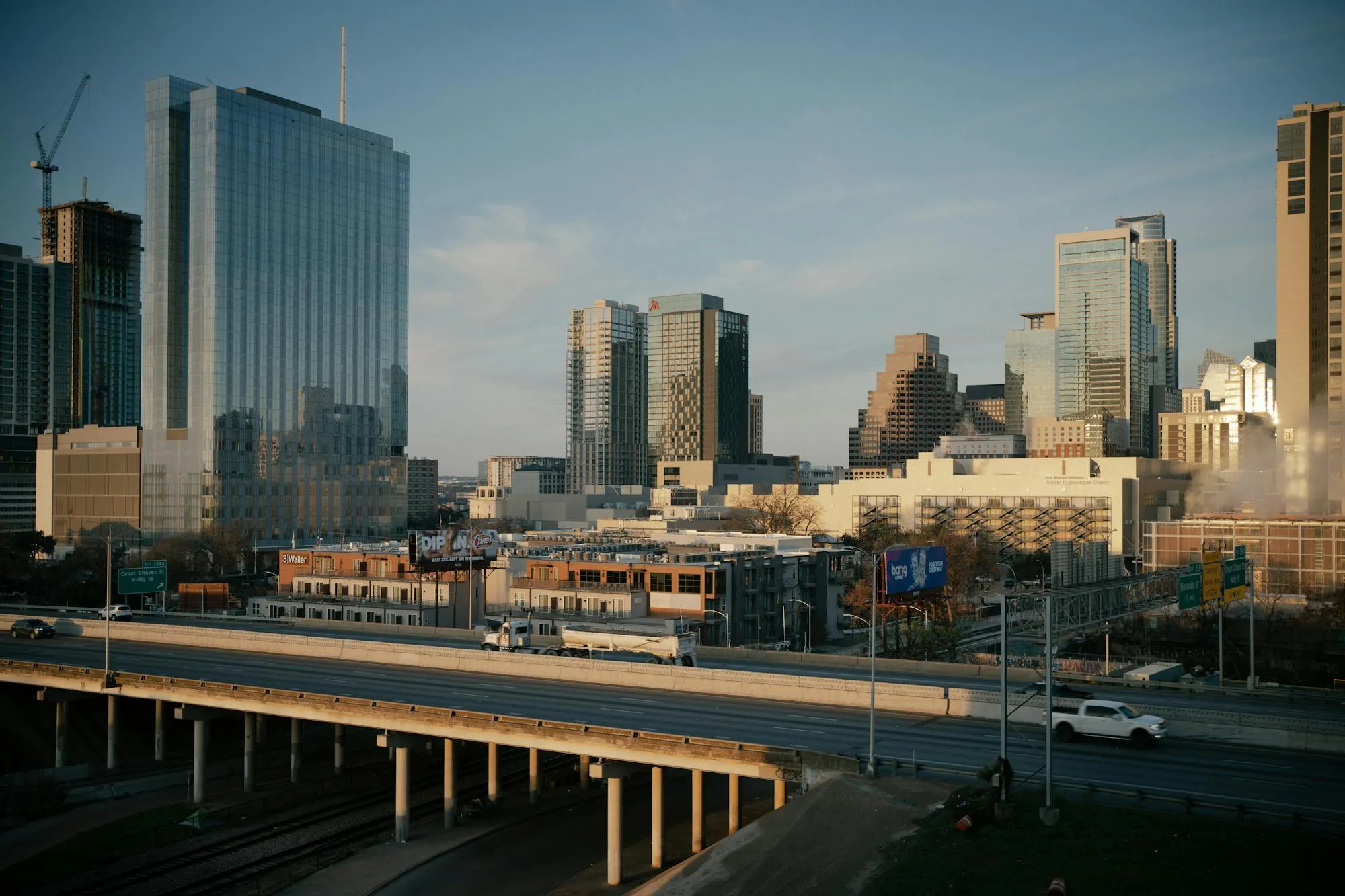
Aerial photograph of downtown Austin, Texas, showing modern high-rise buildings against a clear blue sky. Urban infrastructure, highways, and parking structures visible in the foreground.
Thomas Balabaud / Pexels

Best motorcycle for Tail of the Dragon?

If your weekends are spent learning lines on the Dragon and Cherohala, this rewards precision more than top speed. Light-feeling and playful in the tight stuff, though the pegs scrape before the chassis is done.

Made for Back of the Dragon · Blue Ridge Parkway · Cherohala Skyway
Best motorcycle for Angeles Crest?

Angeles Crest pace suits it well. It drops into corners willingly and the brakes stay honest run after run. The early peg scrape is the one ceiling you'll meet on a fast canyon, so plan your lines around it.

Made for Angeles Crest Highway · Coronado Trail / US 191 · Highway 1 / Big Sur

Best motorcycle for Texas Hill Country?

Built for exactly this. The upright seat and relaxed position make Hill Country roadtrips comfortable all day, and it still turns sharp the moment the Twisted Sisters get technical.

Made for Austin / Texas Hill Country · Twisted Sisters · Austin / Handbuilt Motorcycle Show

Alternatives to the KTM 950 Supermoto

If this one isn't quite the fit, these are the bikes worth riding back-to-back against it.

Any price note compares both bikes at the same age — the youngest age both have on the used market — against this KTM 950 Supermoto. “cheaper/pricier” is what that bike costs second-hand, not how worn it is.