

Ducati Hypermotard 1100 (MY2010) — Supermoto
Ducati Press

2010–2012 · Supermoto · Buyer's Guide

Hypermotard 1100 (MY2010)

4 / 5 NastyNils Rating · against its class

The Air-Cooled Hooligan Motard

The Machine's Character

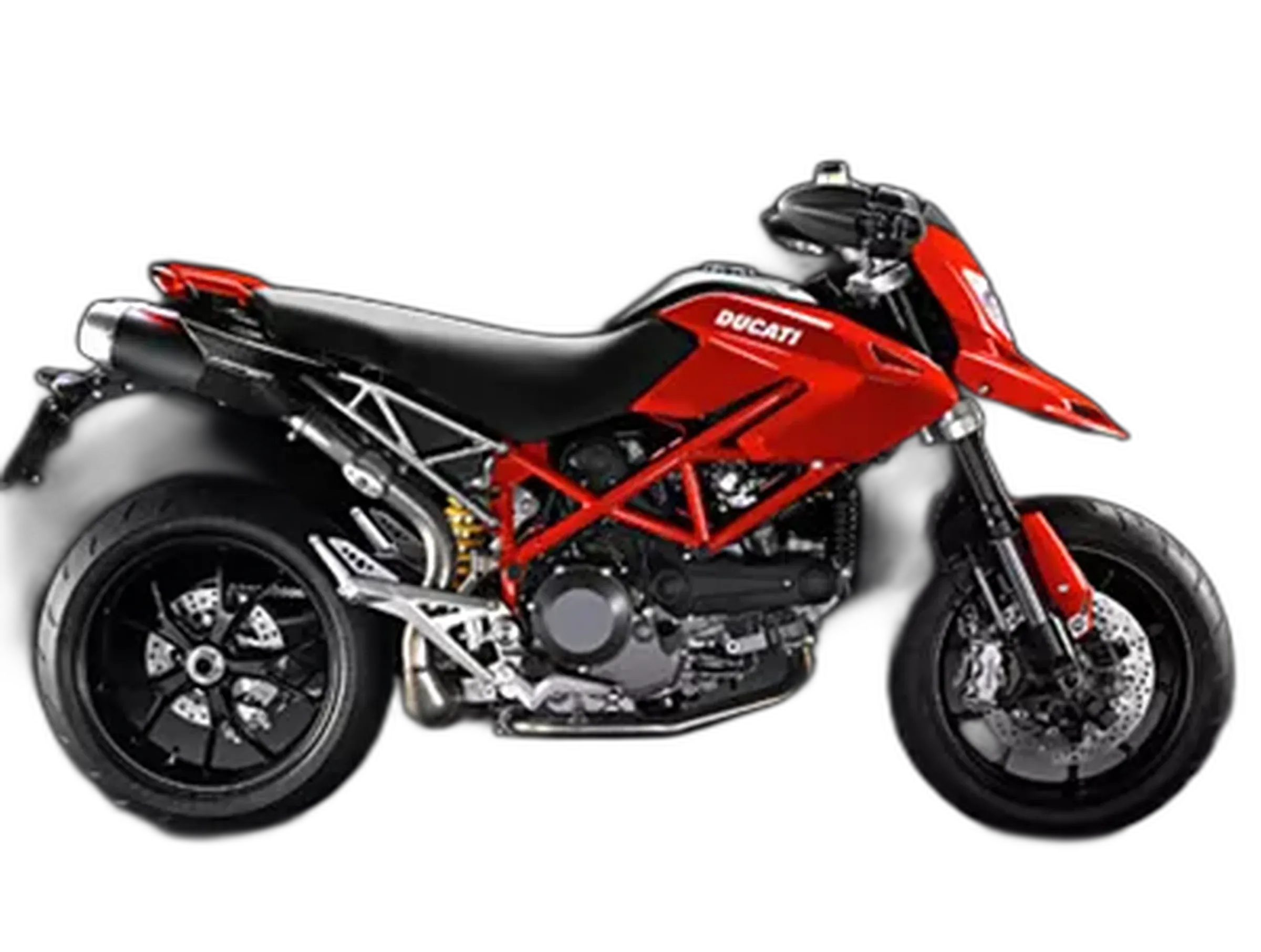
The Hypermotard 1100 is Ducati's big-bore reading of the supermoto idea, and it commits to it fully. The air-cooled 1078 cc L-twin makes 95 hp and 75 lb-ft at 5,750 rpm, which in a machine this narrow and this upright is a serious amount of engine. There is no traction control, no ride modes, no ABS. What you get instead is an adjustable fork and shock, a 305 mm front brake, 17-inch sport rubber, and a chassis meant to be steered with wide bars and body weight. It is a street bike shaped by motard thinking, not a dressed-up naked.

It rides the way it looks, and it ages the way an air-cooled Italian twin ages: mechanically honest, but it wants an owner who pays attention. This is a bike for riders who want a short, loud, memorable ride rather than a long one. The 3.3 gal tank and 32 mpg put you at a pump just past the 100-mile mark, the 33.3 in seat rules out a lot of shorter riders, and the 123 mph top speed is academic with zero wind protection. The honest caveat is mechanical: the starter sprag clutch is a known wear point here, and it is not a cheap afternoon of labor.

Hard Numbers

Spec sheets don't ride bikes, but they set the baseline.

Show full specs & equipment Hide specs & equipment
Key specifications
Power 95 hp (70 kW) @ 7,500 rpm
Torque 75 lb-ft (102 Nm) @ 5,750 rpm
Displacement 1078 cc
Engine L-twin
Cooling Air-cooled
Gearbox 6-speed
Final drive Chain
Fork Upside-down (USD)
Front brake 305 mm
Front tire 120/70-17
Rear tire 180/55-17
Front travel 6.5 in (165 mm)
Seat height 33.3 in (845 mm)
Fuel capacity 3.3 gal (12.4 L)
Top speed 123 mph (198 km/h)
Fuel economy 32 mpg (US)

Equipment check

Chassis

  • Front Suspension Adjustable Standard
  • Rear Suspension Adjustable Standard

The Voice of Experience

Portrait of NastyNils

The test ride

You notice the noise first. At idle the air-cooled twin clatters away underneath you, and that mechanical racket stays part of the experience for as long as you are on the bike. You sit tall and far forward over a wide bar, feet up, elbows out, closer to standing over the machine than sitting in it. There is vibration, the useful kind, and it keeps you informed about exactly what the motor is doing. Wind it out and the upper rev range hits hard enough that you catch yourself yelling inside the helmet. That is the trap. The power is controllable enough that your brain normalizes it within a few miles, and by then you are riding at a pace you never consciously chose. Around town it is light and unbothered. Everywhere else it talks you into things.

Rated point by point — where it earns its keep

My own 0–100 score for this bike against the class, area by area — the marker on each bar is the class average.

Everything worth having on this motor lives in the last third of the tach. I catch myself short-shifting out of habit, remember there's no reason to, and hang on instead. When the top end arrives it's loud, physical, slightly ridiculous, and it makes me loud with it. I have never wound this thing out and come away unmoved. That upper range is the whole argument for owning one.

Capability here is a moving target, because the bike keeps resetting what counts as ordinary. The power is clean enough to use straight away, and that's the trap: what ought to stay intimidating goes routine within a few miles of leaving home. By then I'm riding at a level I'd have called stupid back at the traffic light. Nothing about the bike pushes back, so the only limit in play is whatever restraint you brought with you.

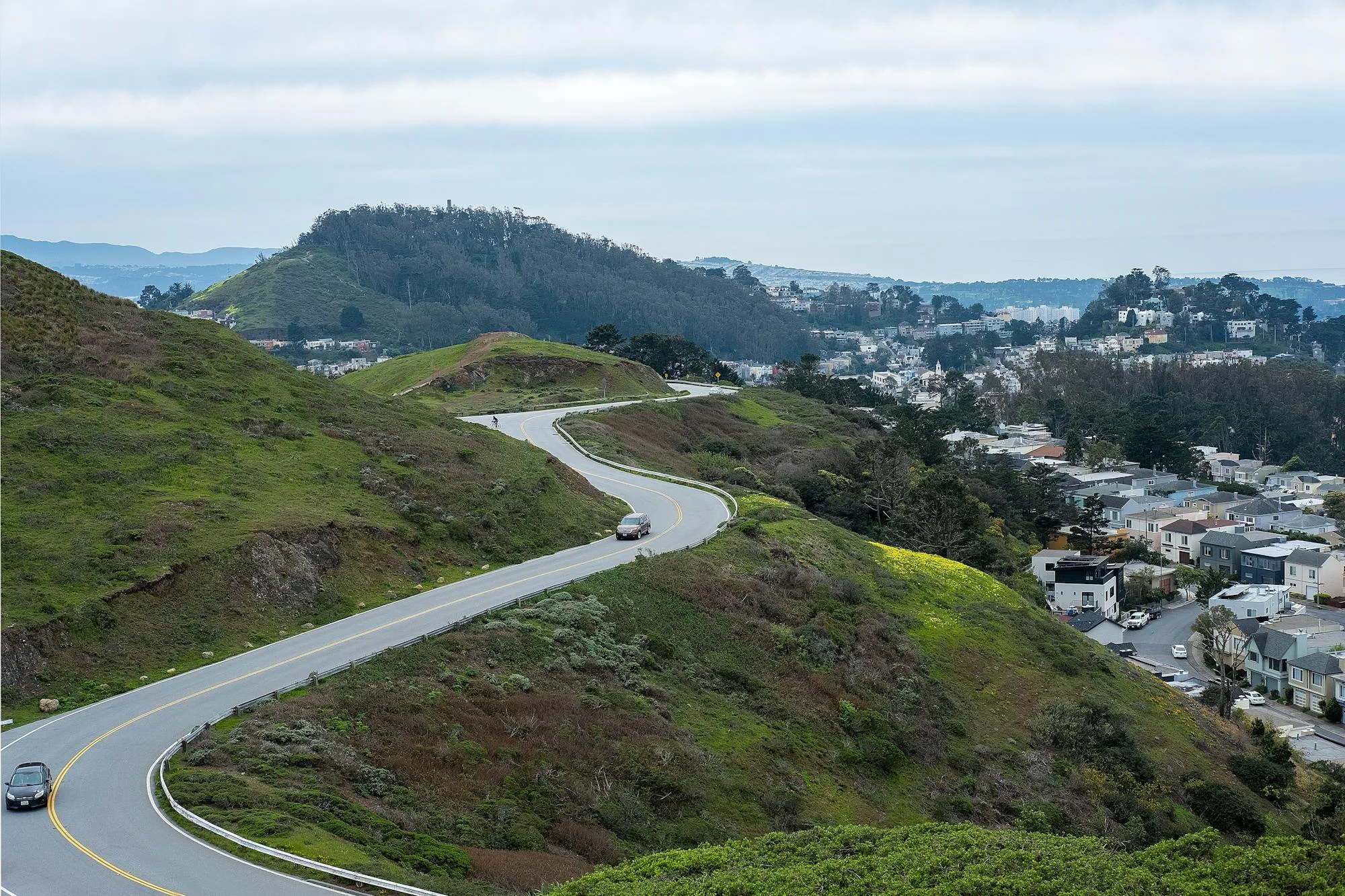
Aerial view of a winding asphalt road traversing rolling green hills in the Bay Area, likely Skyline Boulevard. The road curves through lush grassland with residential development visible in the distance.
David Mcelwee / Pexels

The Truth on the Trail

I've been hearing about this bike from its owners for years: in the paddock, over coffee on club nights, and in the messages riders send me once they've had a season on one. The pattern is clear. Owners love how it handles and how it pulls, and they are just as united about what it costs them in comfort and range.

The chassis and grunt owners rave about

The handling gets the most praise. Riders consistently describe a stiff frame and adjustable suspension that let them snap from one direction to the next and commit to deep lean angles without hesitating. Close behind is the torque from barely off idle, which owners say lifts the front wheel on corner exits. Many add that the dry clutch, the raw engine and the absence of rider aids make every outing feel like an occasion. The brakes also earn repeated credit for strong, immediate bite and good feel deep into a turn.

What it asks of you on long days

The complaints are just as steady. The tiny flyscreen leaves riders fully exposed, and owners describe highway stretches as tiring work. The thirsty twin and small tank keep fuel on their minds all the time. A few also mention the nose diving hard under a firm grab of the front brake, which unsettles the bike on bumpy corner entries.

Known issues

  • Starter sprag clutch failure

    engine common

    The starter sprag clutch can wear prematurely, producing a loud squeal or grinding noise when the starter is engaged, and eventually failing to spin the engine over. Replacement is labor-intensive because the clutch sits behind the alternator cover.

The Expert Benchmark

Where this Ducati Hypermotard 1100 pulls ahead of — or falls behind — its rivals on the numbers, and the typical bike in its class on character.

What kind of bike this is — character vs. the class

This bike Class average

Head-to-head: Ducati Hypermotard 1100 vs. its rivals

The 'Should I Buy It?' Score

Forget spec-sheet bragging. Here's who the Hypermotard 1100 is actually built for.

Aerial photograph of downtown Austin, Texas, showing modern high-rise buildings against a clear blue sky. Urban infrastructure, highways, and parking structures visible in the foreground.
Thomas Balabaud / Pexels

Best motorcycle for Angeles Crest?

Angeles Crest suits this bike completely. Quick steering, deep lean clearance and a twin that fires off corners make it a canyon weapon, provided you accept there is nothing electronic covering your mistakes.

Made for Angeles Crest Highway · Coronado Trail / US 191 · Highway 1 / Big Sur
Best motorcycle for Texas Hill Country?

Hill Country roads will love this thing. The 3.3 gal tank will not. Plan fuel around every hundred miles and buy it for the quality of the ride, not the distance between stops.

Made for Austin / Texas Hill Country · Twisted Sisters · Austin / Handbuilt Motorcycle Show

Best motorcycle for Tail of the Dragon?

The Dragon is exactly its habitat: wide bars, low-effort direction changes, and feedback you can actually read. Skill work is honest here because no electronics are smoothing anything over for you.

Made for Back of the Dragon · Blue Ridge Parkway · Cherohala Skyway

What's new versus the previous generation

If you're cross-shopping the older generation, here's what changed.

Ducati Hypermotard 1100 (MY2007)

Previous generation · 2007–2009

Ducati Hypermotard 1100 (MY2007)

Italian V-Twin Supermoto Chaos

Compare to the previous model →

Variants, Models & Special Editions

The Ducati Hypermotard 1100 also comes in these variants, models and special editions. Each has its own page covering only what differs from the standard Hypermotard 1100 — equipment, electronics, specs and used price.

Alternatives to the Ducati Hypermotard 1100

If this one isn't quite the fit, these are the bikes worth riding back-to-back against it.

Any price note compares both bikes at the same age — the youngest age both have on the used market — against this Ducati Hypermotard 1100. “cheaper/pricier” is what that bike costs second-hand, not how worn it is.