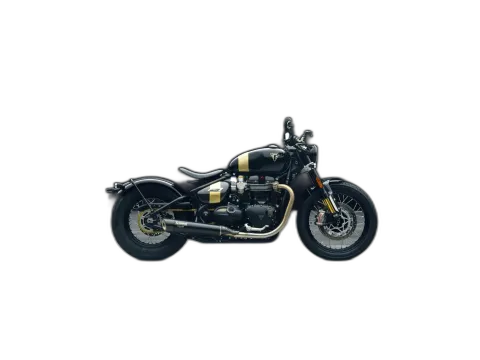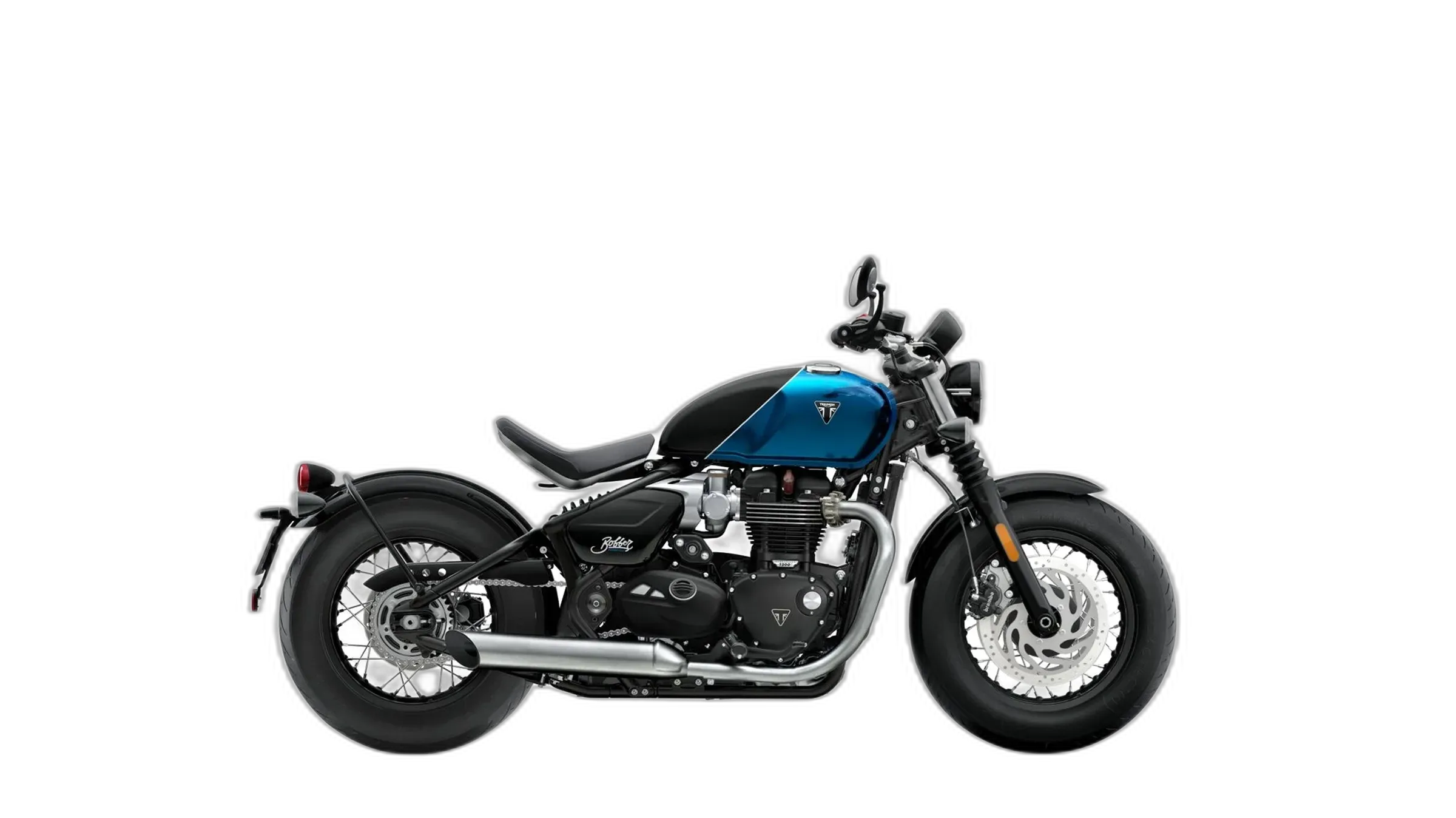

Triumph Bonneville Bobber (DX04) — Retro Classic
NastyNils / Triumph press archive

2021 · Retro Classic · Buyer's Guide

Bonneville Bobber (DX04)

Pure Style, Torque-Led Soul

The Machine's Character

The Bobber builds its whole identity around a 1200cc liquid-cooled parallel twin with a 270-degree crank, tuned for a lazy, muscular delivery rather than a chase to redline. You get 77 hp and a thick 78 lb-ft, hung in a twin-cradle steel frame with a fat 16-inch front wheel and that signature floating solo seat. Triumph hides the modern parts well: ABS, traction control, and ride modes all sit quietly in the background while the eye reads pure hardtail-look bobber. Purist styling is the entire point here, and this generation nails the stance.

On the road it pulls cleanly from low revs and settles into a planted, stable cruise once you're up to speed, which suits its long-and-low character. It ages well thanks to genuinely high build quality and a design that stays desirable, and the aftermarket for it runs deep if you like to personalize. This is a bike for the rider who buys with the eyes first and wants the feeling to be right. The honest caveat: it's a solo seat, the fork is fixed with no adjustment and the rear shock only gives you preload, and the 3.2-gallon (12 L) tank keeps your legs short between stops.

Hard Numbers

Spec sheets don't ride bikes, but they set the baseline.

Show full specs & equipment Hide specs & equipment
Key specifications
Power 77 hp (57 kW) @ 6,100 rpm
Torque 78 lb-ft (106 Nm)
Displacement 1200 cc
Engine Parallel twin
Cooling Liquid-cooled
Gearbox 6-speed
Final drive Chain
Fork Telescopic
Front tire 130/90-16
Rear tire 150/80-16
Seat height 27.2 in (690 mm)
Wet weight 553 lb (251 kg)
Fuel capacity 3.2 gal (12 L)

Equipment check

Chassis

  • Rear Suspension Adjustable Standard
  • Cruise Control Standard

Comfort

  • Heated Grips Optional

Drivetrain

  • Slipper Clutch Standard

Lighting

  • LED Headlight Standard

Safety

  • ABS Standard
  • Traction Control Standard
  • Ride Modes Standard

The Voice of Experience

Portrait of NastyNils

The test ride

Swing a leg over and the first thing that registers is how low and planted you sit at 27.2 inches, boots forward, wrists relaxed on wide bars. Fire it up and the twin has a deep, offbeat thump you feel as much as hear, a steady pulse coming up through the seat and pegs that never turns harsh. The fat 16-inch front gives the steering a slow, deliberate weight, so you lean the bike rather than flick it, and once rolling that 553-pound (251 kg) mass carries its momentum beautifully. The seat is firm and the rear has little travel, so sharp expansion joints reach your spine, but on smooth blacktop it flows. Everything you touch, from the switchgear to the tank finish, feels properly made. It rewards an unhurried pace and a bit of theater at the lights.

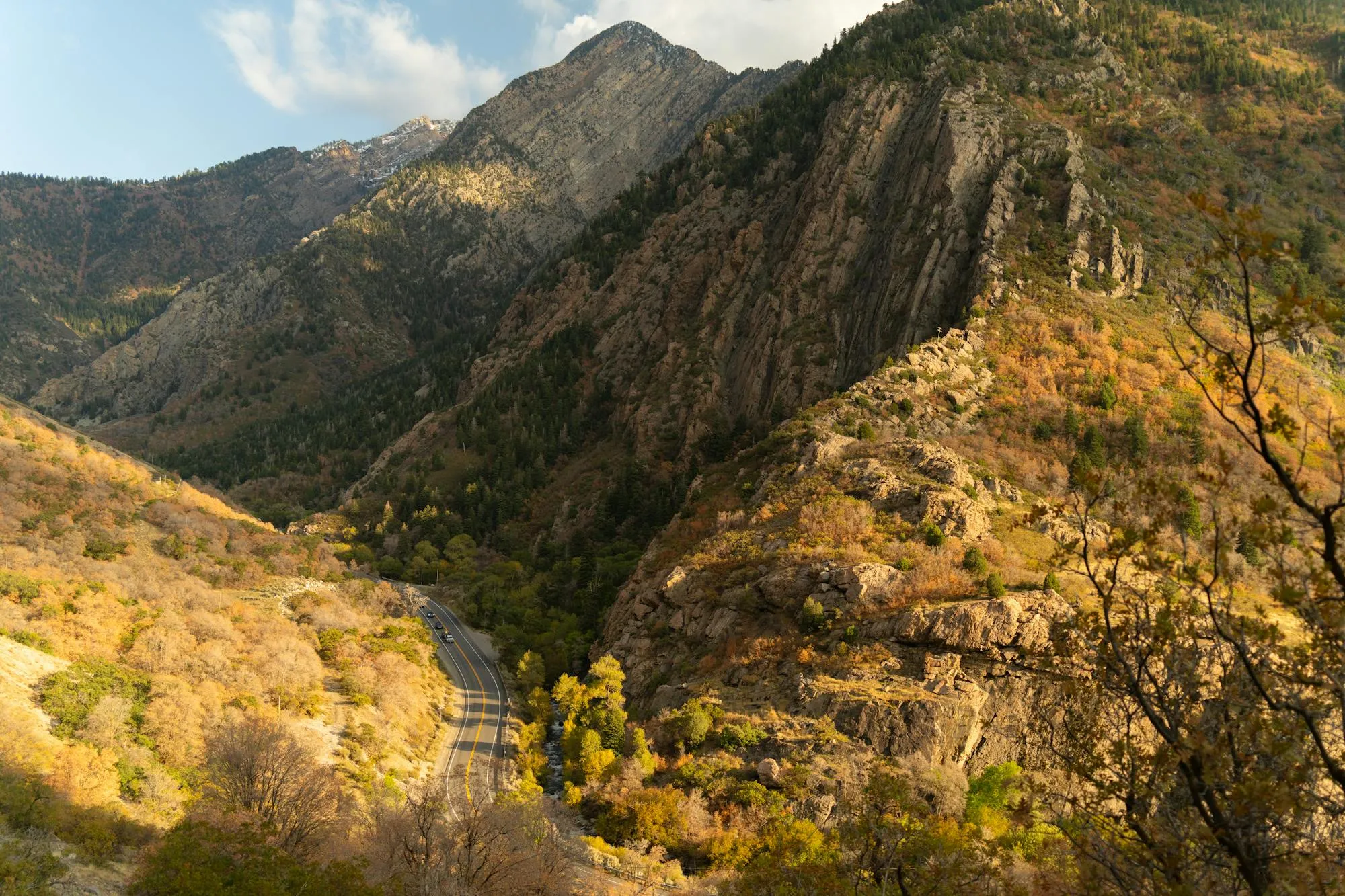
An elevated view of a deep autumn canyon, likely Big Cottonwood Canyon, Utah. Steep rocky cliff faces and forested mountain ridges frame a narrow valley where a winding two-lane road passes below. Deciduous trees display full autumn color — gold, orange, and amber — interspersed with green conifers on the steep slopes. A single dark vehicle is visible far below on the road. Snow-dusted mountain peaks rise in the background under a partly cloudy sky.
Alex Moliski / Pexels

The Truth on the Street

Over the years I've kept a running tally of what Bobber owners tell me: paddock conversations, the messages that land in my inbox, and long chats with riders who live with one. The pattern is consistent. They love the engine and the way it turns, and they'll admit it asks something of them once the road gets long.

Where the Bobber Wins Them Over

The engine draws the steadiest praise. Riders describe the parallel twin as full of character and eager down low, with easy muscle for everyday riding. Close behind is how it handles. Fat rubber and a long stance suggest a lazy cruiser, yet owners report it stays lively and sure-footed through corners, beyond what the class suggests. Two smaller notes recur: the floating seat slides to fit different bodies, and the finish earns compliments, paint and switchgear.

Where It Asks Something Back

The common gripe is distance. The slim solo seat and forward pegs start to ache after an hour, so riders keep those trips short. The suspension draws the next round of complaints; over sharp bumps, especially at the rear, it can hand you a real jolt. A smaller group adds that the modest tank has them hunting for fuel sooner than they'd like.

Known issues

  • Throttle hesitation on initial opening

    fuel system occasional

    Some owners report a stumble or hesitation when gently opening the throttle at low revs, possibly linked to lean fuel mapping or sensor issues.

  • Malfunctioning turn signals

    electrics rare

    Some owners have experienced intermittent or failed turn signals, often traced to relay or wiring issues.

  • Wheel harmonics vibration after tire change

    chassis rare

    A few owners noticed unusual vibrations or drone after changing to non‑OE tires, possibly due to tread pattern or balancing.

  • Oil leaks from engine / gearbox

    engine rare

    Several reports of mystery oil leaks, possibly from valve cover gaskets or base gaskets, requiring inspection and resealing.

The Expert Benchmark

Where this Triumph Bonneville Bobber pulls ahead of — or falls behind — its rivals on the numbers, and the typical bike in its class on character.

What kind of bike this is — character vs. the class

This bike Class average

Head-to-head: Triumph Bonneville Bobber vs. its rivals

The 'Should I Buy It?' Score

Forget spec-sheet bragging. Here's who the Bonneville Bobber is actually built for.

A scenic view of Angeles Crest Highway winding through rugged Southern California canyon terrain. Rocky mountainsides with golden earth tones frame the asphalt road with tight sweeping curves. Double yellow center line visible, sparse vegetation along the shoulders, clear blue sky with white clouds. Daylight, dry conditions. Iconic location for canyon-road enthusiasts.
Josh Sorenson / Pexels

Best retro motorcycle for road trips?

If quiet backroads and historic routes at an easy pace are your thing, the Bobber nails the look and lazy low-end feel you want. Just know it's a solo seat with a small tank, so plan shorter legs between stops.

Made for Acadia National Park · Austin / Handbuilt Motorcycle Show · Blue Ridge Parkway
Best cruiser for Sturgis?

For sound, ritual, and rolling into a rally with real presence, it delivers style and a proper thump. It leans purist rather than big-brand cruiser, so it's about attitude more than long two-up miles.

Made for A1A — Florida Atlantic Coast · Black Hills / Sturgis Rally Hub · Daytona Main Street / Bike Week

Best motorcycle for Texas Hill Country?

Weekend blasts through the Hill Country suit its stable, torquey cruise, and it looks the part at every BBQ stop. It's no sport bike, so enjoy it for the flow and character rather than chasing pace.

Made for Austin / Texas Hill Country · Twisted Sisters · Austin / Handbuilt Motorcycle Show

What's new versus the previous generation

If you're cross-shopping the older generation, here's what changed.

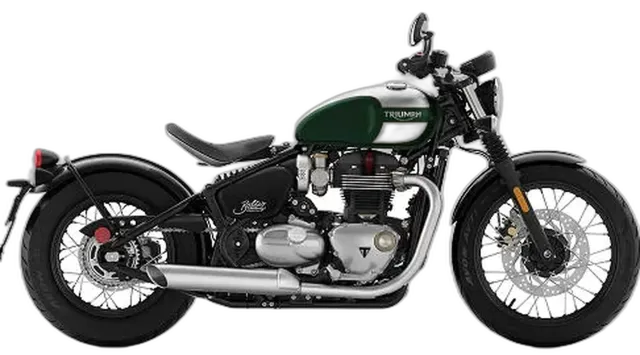
Triumph Bonneville Bobber (DV01A)

Previous generation · 2019–2020

Triumph Bonneville Bobber (DV01A)

Factory Custom, Built Right

Compare to the previous model →

Alternatives to the Triumph Bonneville Bobber

If this one isn't quite the fit, these are the bikes worth riding back-to-back against it.

Any price note compares both bikes at the same age — the youngest age both have on the used market — against this Triumph Bonneville Bobber. “cheaper/pricier” is what that bike costs second-hand, not how worn it is.