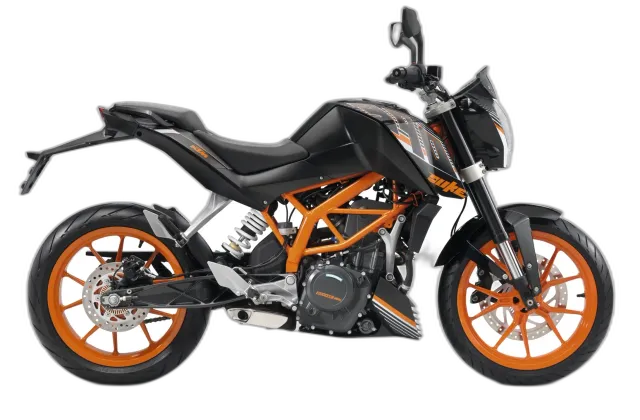
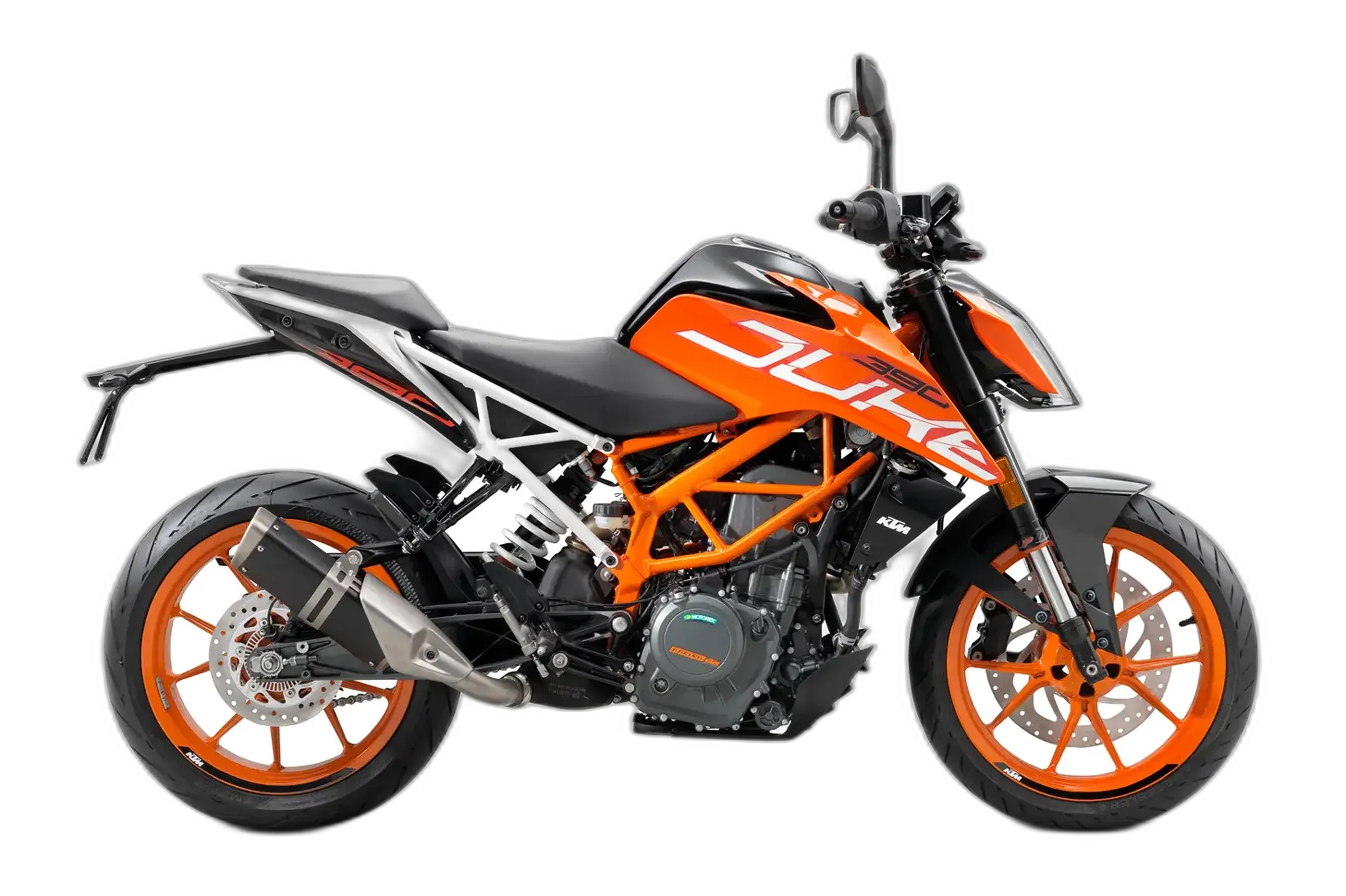
KTM 390 Duke (MY2017) — Naked Bike
NastyNils / KTM press archive

2017–2023 · Naked Bike · Buyer's Guide

390 Duke (MY2017)

Small Orange, Maximum Attack

The Machine's Character

The second-generation 390 Duke is built around one idea: make a small bike feel alive. The 373 cc single spins out 44 hp and 26 lb-ft, and a ride-by-wire throttle keeps the delivery clean as the revs climb. Wrapped in a steel trellis frame with an upside-down fork, lightweight wheels, and a short 53.4 in wheelbase, it turns in fast and holds a line with real precision. A 320 mm front disc on Bosch ABS, complete with a Supermoto mode that lets the rear step out, sets the tone. This is the premium pick among lightweight nakeds, and it rides like it.

It rewards a rider who stays busy. Flick it through a set of bends and it answers instantly, happiest when you keep it on the boil rather than lugging it. The TFT dash, LED lighting, and slipper clutch give it a grown-up feel, though the 32.7 in seat sits tall for shorter riders and running costs stay refreshingly low. Be honest about ownership before you buy. This generation has documented trouble spots: the electronic throttle body dislikes water intrusion, the head gasket can suffer under heat, and the TFT screen has been known to blank or reboot. Buy one with a clean service history and budget for diligent maintenance.

Hard Numbers

Spec sheets don't ride bikes, but they set the baseline.

Show full specs & equipment Hide specs & equipment
Key specifications
Power 44 hp (32 kW) @ 9,500 rpm
Torque 26 lb-ft (35 Nm) @ 7,000 rpm
Displacement 373 cc
Engine Single-cylinder
Bore × stroke 89 × 60 mm
Compression 12.6:1
Cooling Liquid-cooled
Fuel system EFI (throttle body)
Gearbox 6-speed
Final drive Chain
Frame Steel trellis
Fork Upside-down (USD)
Front brake 320 mm
Rear brake 230 mm
Front tire 110/70-17
Rear tire 150/60-17
Wheelbase 53.4 in (1357 mm)
Seat height 32.7 in (830 mm)
Fuel capacity 3.5 gal (13.4 L)
Top speed 106 mph (171 km/h)
Fuel economy 59 mpg (US)

Equipment check

Chassis

  • Rear Suspension Adjustable Standard

Connectivity

  • TFT Display Standard

Drivetrain

  • Slipper Clutch Standard

Lighting

  • LED Headlight Standard

Safety

  • ABS Standard

The Voice of Experience

Portrait of NastyNils

The test ride

Swing a leg over and the first thing you notice is how little there is to it. The bike feels narrow between your knees, the bars sit close, and the whole machine seems to weigh nothing when you lift it off the stand. Fire the single and a hard, mechanical thrum settles into the pegs and the seat, a vibration that builds with the revs and tells you exactly where you are without a glance at the tach. At a real road pace it feels eager and slightly restless, wanting you to lean on it. The riding triangle is upright and roomy enough for a tall rider, though the tall seat means stops and slow crawls ask for a deliberate foot. Heat radiates off the engine in stop-and-go traffic, a reminder that this is a compact, hard-working motor packed into a tight frame.

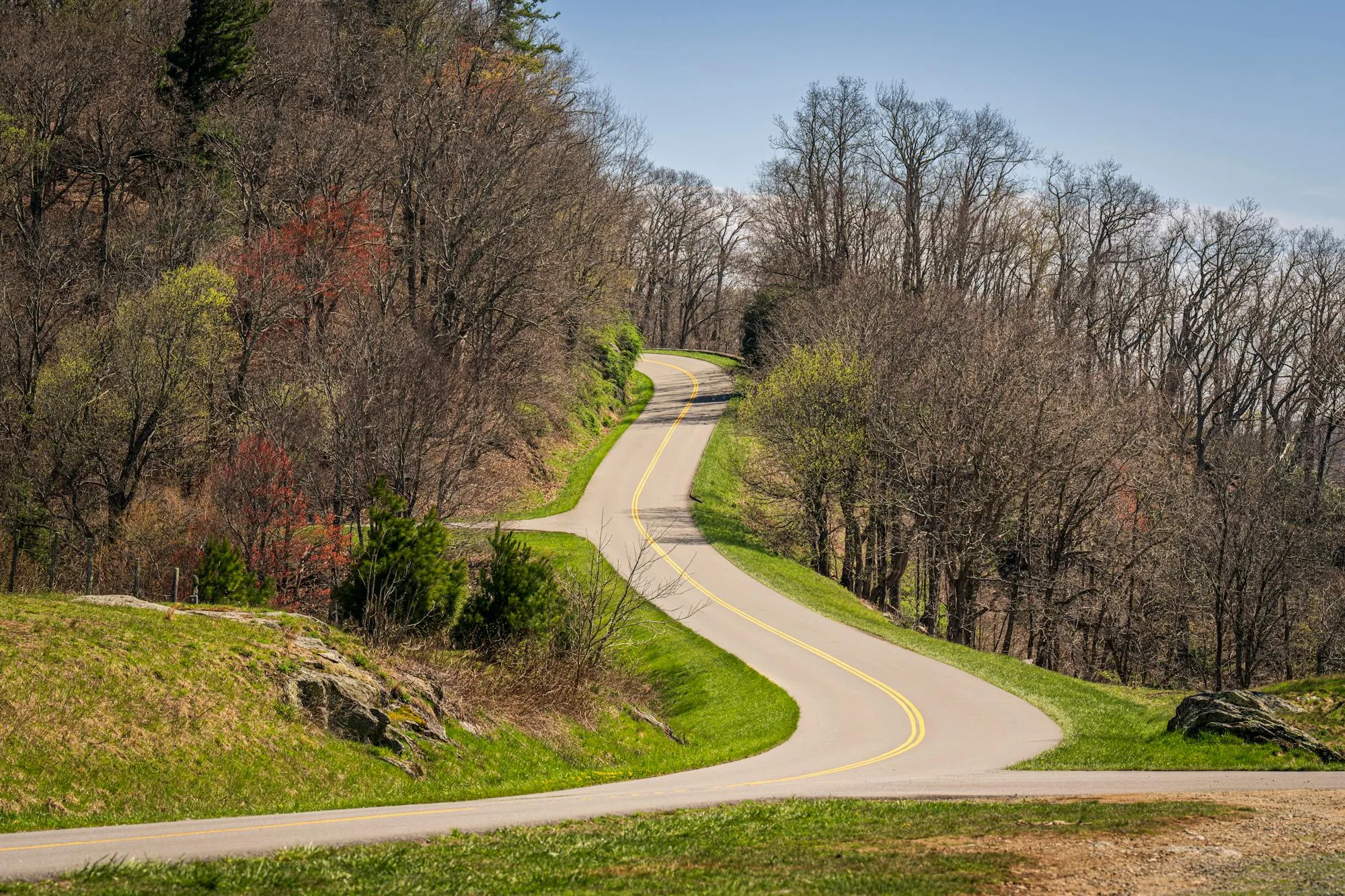
A winding asphalt road descending through the Appalachian Mountains, likely the famous Tail of the Dragon section in Tennessee and North Carolina. Multiple technical right-hand and left-hand curves are visible in this aerial perspective, surrounded by deciduous forest in spring foliage. Clear sunny conditions, well-maintained asphalt with yellow center lines marking the curves. No motorcycle or rider visible in the frame.
Mark Stebnicki / Pexels

The Truth on the Street

Most of what follows isn't from a single test ride. It's what I've pieced together over years of reading the YouTube comments, following the forum threads, talking with owners in the paddock, and answering the emails and messages riders send me directly. For the 390 Duke the chatter lands on a clear split. Riders love how the bike rides and how little it costs to live with, and they're just as candid about where the comfort and the finish let them down.

What riders keep coming back for

The engine takes most of the credit. Owners describe punchy acceleration and short gearing that makes the single feel responsive the moment you crack the throttle, and the word that comes up again and again is addictive. Just as consistently, riders praise how many jobs the bike will do: a daily commuter through the week, a canyon machine on the weekend, and a light touring partner when the mood takes them. The running costs back that up. People report around 59 mpg in mixed use and roughly 190 to 235 miles from a fill, cheap enough to ride every day without thinking much about it.

Where the comfort wears thin

The complaints cluster hard around comfort. The most common is low-speed manners. Riders report the engine juddering and stuttering in low gears at a constant crawl, which makes dense stop-and-go traffic the bike's least happy place. The suspension draws steady criticism too. The front forks offer no adjustment, and on broken or patchy roads owners find the ride firm to the point of harsh, with heavier riders saying the stock springs aren't up to the job. Over longer days two more gripes surface: the flat seat goes from fine to unsupportive after an hour or two, and with no wind protection the bike gets tiring once you're holding a steady highway pace.

The build-quality question

The other recurring theme is fit and finish. Owners point to budget fasteners that rust early and small components that show where the cost was saved, and the consensus is that the bike asks for more attention than its Japanese rivals. Reliability splits the room. Some riders log trouble-free miles for years while others run into real problems, and that inconsistency is what makes the reputation so polarizing in the community. Servicing is the last sore point. Even with the cheap fuel bills, owners say dealer work costs more than they'd expect for a bike this size, and the scheduled valve checks every 9,300 miles add to the tab.

Known issues

  • Electronic throttle body failure due to water intrusion

    fuel systemoccasional

    Moisture enters the electronic throttle control unit, eroding electrical connections on the PCB. The ECU detects conflicting voltage values and forces engine to idle speed. Sudden power loss while riding increases crash hazard. Root cause traced to inadequate conformal coating during PCB manufacturing by supplier Uno Minda Ltd. Redesigned throttle with improved sealing available from May 2024 production.

  • Cylinder head gasket failure under thermal stress

    engineoccasional

    Head gasket coating deteriorates under high thermal load, particularly near coolant pocket and head cover oil hole area. Allows coolant and oil to enter combustion chamber. Can result in catastrophic engine failure. Some new cylinder heads found out of specification due to manufacturing. A two-piece gasket set is available as remedy but requires cylinder head AND barrel removal with machine-shop resurfacing. More prevalent in early 2nd gen models (MY2017–2018); improved in later model years.

  • Faulty side stand sensor triggers engine cutoff while riding

    electricsoccasional

    The magnetic side stand sensor does not always register the kickstand as fully retracted. The magnetic bolt may not fold close enough to the sensor for firm activation. Vibration or bumps can cause the sensor to flick to „down" position, cutting the engine. Fix: install washer under magnetic bolt head to bring magnet closer to sensor. Dirty clutch switch contacts can compound the issue.

  • Radiator fan fuse (10A) blows — overheating in traffic

    coolingvery common

    The radiator fan circuit is protected by a 10A fuse widely considered under-rated by the community. When it blows, the fan stops and engine temperature rises rapidly in stop-and-go traffic. Symptoms: temperature gauge spiking, engine cutting out, hot air directed at rider's legs. The OEM fan is also known for intermittent operation and high-pitched noise. Many owners replace with aftermarket SPAL fan. In hot/tropical climates, heat radiated onto rider is a major comfort complaint even when system works correctly.

  • Water pump seal failure — coolant-oil contamination

    coolingcommon

    The water pump impeller seal leaks, allowing coolant to mix with engine oil. Symptoms: milky/creamy appearance in oil sight glass, elevated oil level, deformed oil filter element. OEM seals are single-lip rubber seals criticized as inadequate. KTM reportedly revised seals post-2018. Repair is possible without splitting engine cases. Many owners replace seals preventatively every 9,300–12,400 miles (15,000–20,000 km).

  • Exhaust valve clearance shrinks between service intervals

    enginecommon

    Valve clearance tends to shrink over time on the 373 cc single. Exhaust valves almost always tighten between adjustments — clearances can be 0.03–0.05 mm below minimum specification. No audible warning (ticking) may occur before damage. Must be checked at prescribed intervals (first at 620 miles / 1,000 km, then every 9,300 miles / 15,000 km). Neglecting valve checks can lead to burned valves and top-end failure. Shims available in 0.05 mm increments.

  • Front brake disc warping causing lever pulsation

    brakesoccasional

    The front brake disc is prone to warping after spirited riding or hard braking, causing lever pulsation and reduced braking confidence. In some cases linked to imprecise machining of disc mounting surfaces on the wheel hub. Even replacement discs can develop the same issue if the wheel hub is the root cause.

  • TFT instrument display goes blank, reboots spontaneously, or flickers

    electricscommon

    The TFT display randomly goes blank while riding and requires key cycle to restore. Also reboots without warning, resetting trip meter and fuel gauge. Issue linked to Bluetooth module firmware and loose connections (exacerbated by vibration). Firmware update (v41+) resolved most cases. KTM has replaced TFT units under warranty. MY2017 models particularly affected (also had TFT moisture ingress/leaks).

  • Higher-than-expected oil consumption

    engineoccasional

    Oil consumption notably higher than expected, especially on post-2019 models. Reports of 8.2–10.9 fl oz per 1,000 miles (150–200 ml/1,000 km), above the older specification of 3.3–3.8 fl oz per 1,000 miles (60–70 ml/1,000 km). Oil level drops between services and requires regular monitoring. Some degree of oil consumption is inherent to a single-cylinder engine, but reported levels exceed typical expectations.

  • Clutch cable loosens, requiring frequent adjustment

    drivetraincommon

    The clutch cable comes loose regularly, causing difficult gear shifts and difficulty finding neutral. Requires frequent readjustment and lubrication. Can lead to clutch slippage and grinding gears if neglected. Applicable to all 2017–2023 models (cable-actuated clutch; hydraulic clutch only on 3rd gen).

  • Engine stalling at idle and during cold starts

    enginecommon

    Engine stalls at traffic lights, during cold starts, and when running at constant low speed. Attributed to very lean factory fueling (emissions compliance) combined with the single-cylinder's narrow powerband at low RPM. Judders and stutters in low gears at low speeds. Some owners install aftermarket fuel controllers (PowerTronic, Power Commander) which add fuel and reduce stalling. A separate ECU recall (25V825) addresses this on the 3rd gen (2024–2025) models only — not formally recalled for 2nd gen.

  • OEM battery premature failure and charging system issues

    electricsoccasional

    OEM battery frequently fails prematurely or cannot hold charge. Some cases traced to faulty stator (burned coils generating only 12.4V instead of 14V+), others to regulator/rectifier failure. Stator bolt can come loose and cause internal damage. Many owners replace OEM battery early and/or use a battery tender for regular use.

  • Weak cranking, clicking sounds, intermittent no-start

    electricsoccasional

    Various starting issues: weak/lazy starter despite adequate battery voltage; clicking solenoid (especially when hot — won't restart immediately after shutdown); loose main power wire from battery to relay. Ground terminal corrosion is the most common root cause. Water infiltration into electrical connections exacerbates the problem.

  • Premature corrosion and rust on OEM bolts and fasteners

    bodyworkvery common

    Budget-quality OEM fasteners begin rusting within months of ownership, even on garage-stored bikes. Affected: engine cover bolts, rear axle bolt, various chassis fasteners, washers. Particularly bad in coastal or wet climates. Purely cosmetic but widespread and damaging to perceived build quality. Common fix: stainless steel bolt kit (A2/304 or A4/316 grade).

The Expert Benchmark

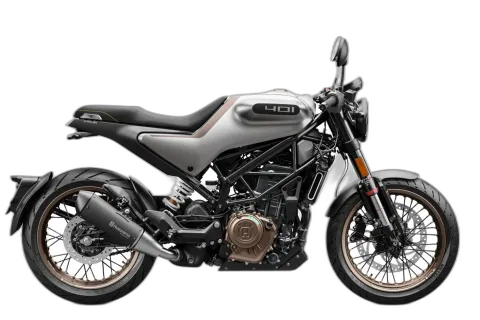
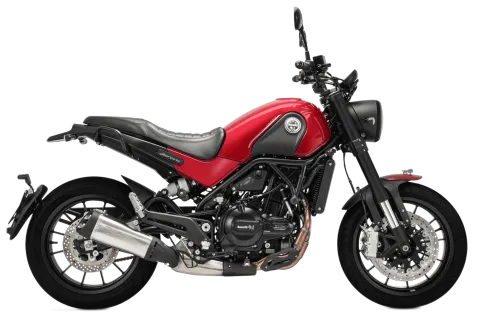
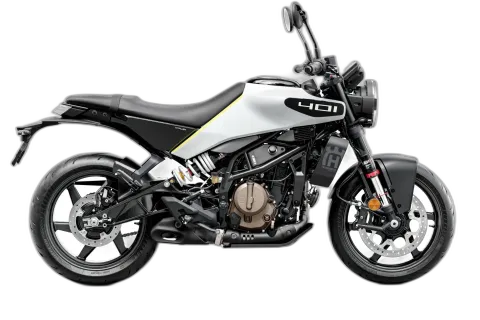
Where this KTM 390 Duke pulls ahead of — or falls behind — its rivals on the numbers, and the typical bike in its class on character.

What kind of bike this is — character vs. the class

This bike Class average

The shape of the KTM 390 Duke — numbers and character vs. the average Naked Bike

Head-to-head: KTM 390 Duke vs. its rivals

The 'Should I Buy It?' Score

Forget spec-sheet bragging. Here's who the 390 Duke is actually built for.

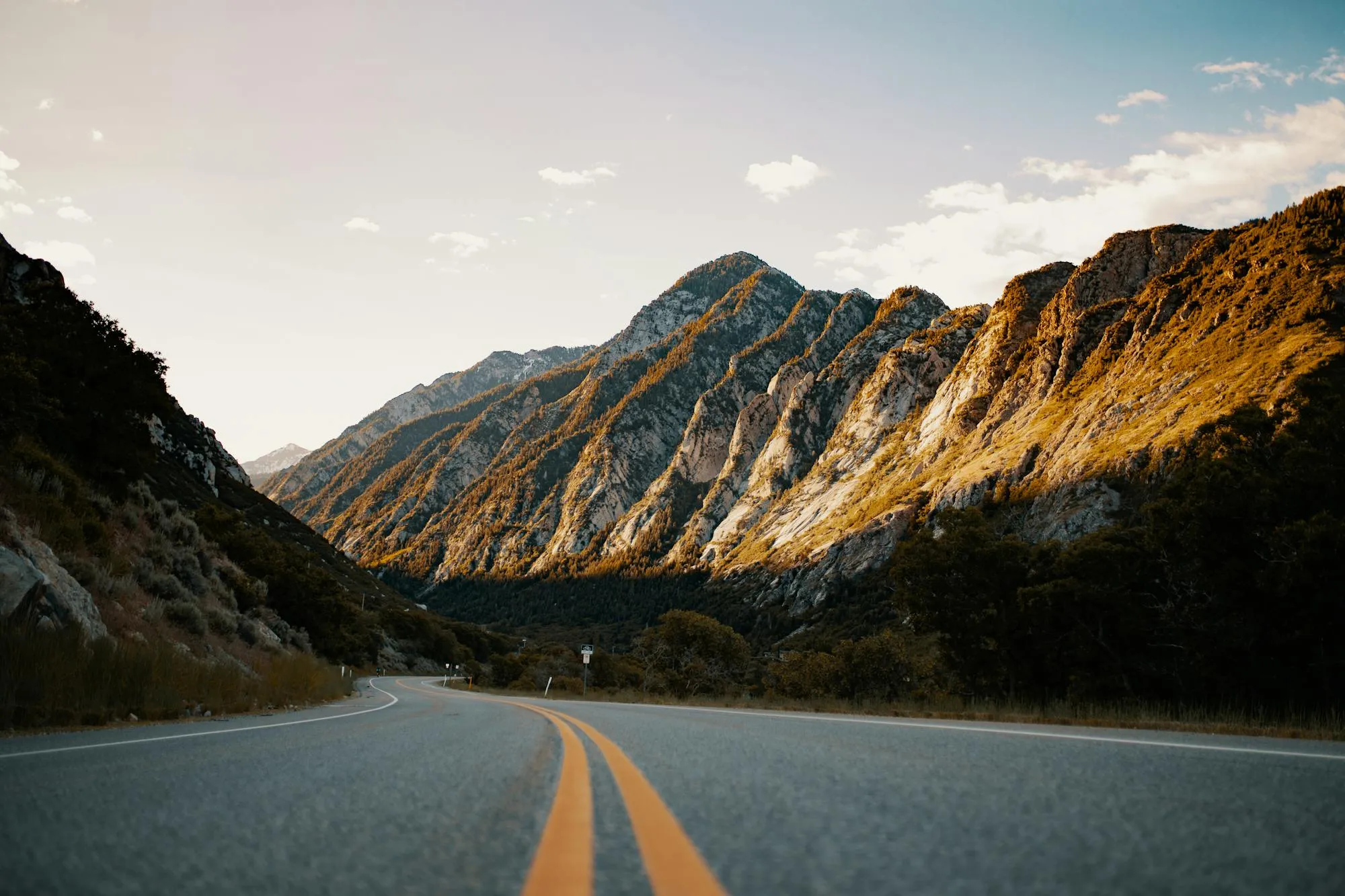
A scenic view of Angeles Crest Highway winding through rugged Southern California canyon terrain. Rocky mountainsides with golden earth tones frame the asphalt road with tight sweeping curves. Double yellow center line visible, sparse vegetation along the shoulders, clear blue sky with white clouds. Daylight, dry conditions. No motorcycle or rider visible. Iconic location for canyon-road enthusiasts.
Josh Sorenson / Pexels

Best motorcycle for Bay Area?

If your week is city commuting and your weekends are Skyline runs with friends, this bike fits cleanly. It looks modern enough for the parking-lot crowd and carves the ridge roads with ease, all on tiny fuel bills.

Made for Bay Area Ridge Roads · San Francisco / Bay Area · Skyline Boulevard / Alice's Restaurant

Best motorcycle for Angeles Crest?

You'll love how it turns in and how little it asks to ride fast, but be straight with yourself: 44 hp runs out of road on a long canyon straight. Perfect for honing precision, less so for chasing bigger machinery.

Made for Angeles Crest Highway · Coronado Trail / US 191 · Highway 1 / Big Sur

Best motorcycle for Tail of the Dragon?

Made for Back of the Dragon · Blue Ridge Parkway · Cherohala Skyway

Alternatives to the KTM 390 Duke

If this one isn't quite the fit, these are the bikes worth riding back-to-back against it.

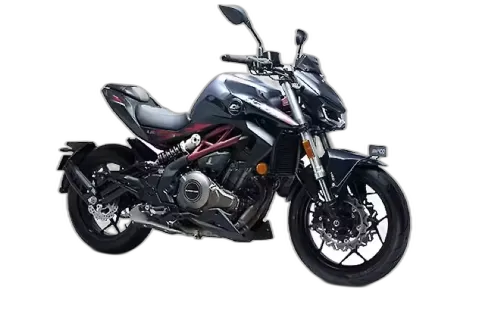
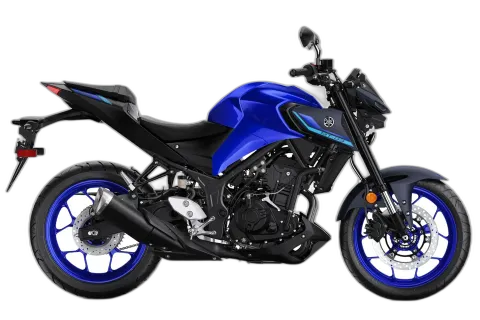
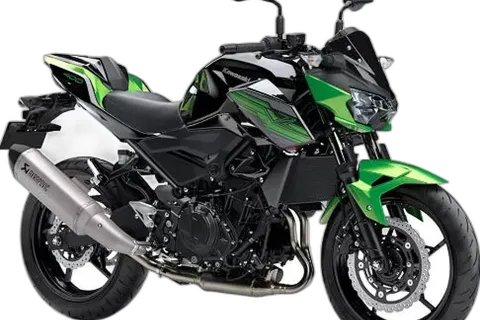
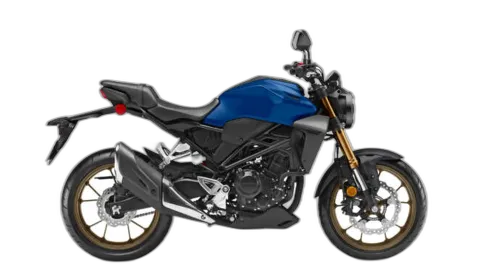
Any price note compares both bikes at the same age — the youngest age both have on the used market — against this KTM 390 Duke. “cheaper/pricier” is what that bike costs second-hand, not how worn it is.