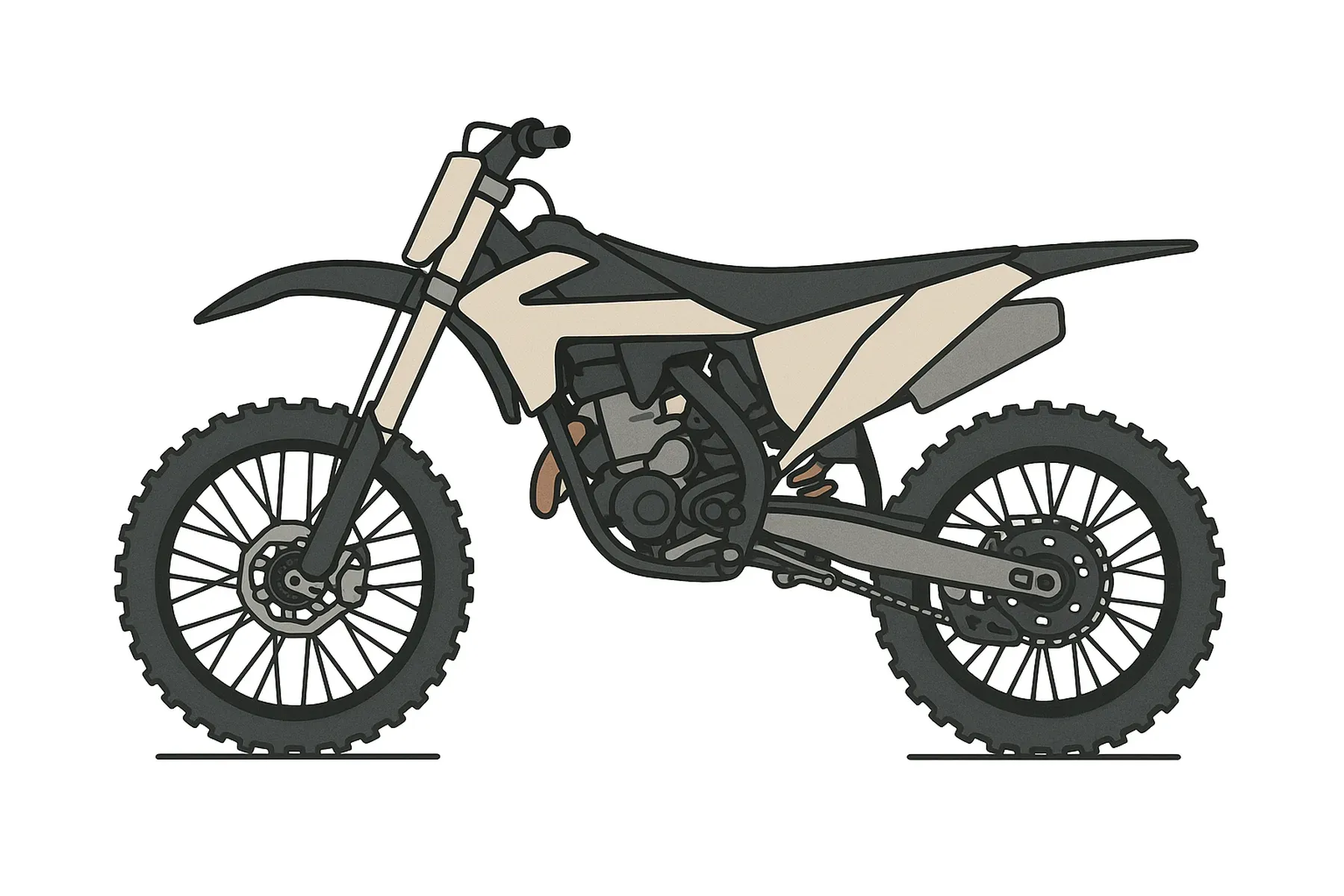


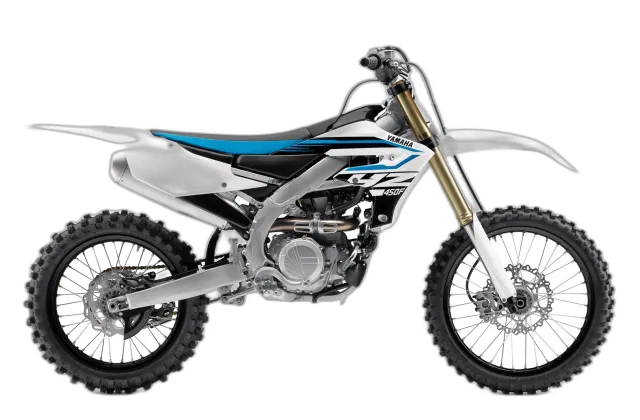
Yamaha YZ450F (MY2023) — Motocross

2023 · Motocross · Buyer's Guide

YZ450F (MY2023)

5 / 5 NastyNils Rating · against its class

The Trackside-Tunable Brawler

The Machine's Character

The YZ450F is Yamaha's premier motocross machine, and this generation is built slim. You sit in the bike rather than perched on top of it, and the connection to the chassis is immediate. The 450 cc engine keeps Yamaha's reverse-cylinder layout, making 60 hp at 9,500 rpm and 33 lb-ft at 7,500 rpm. Out of the crate the delivery is aggressive and the top end pulls hard. What really sets it apart is the Power Tuner smartphone app, which lets you reshape the engine character right at the track, backed by traction control, ride modes and launch control.

On the dirt it feels light for a 240 lb (109 kg) open-class bike. Fully adjustable suspension front and rear, with 12.2 in (310 mm) and 12.4 in (315 mm) of travel, gives you room to set it up for your weight and your track. This bike is for intermediate to advanced riders who can use a strong top-end rush. Novices will find the hit demanding, even with the app dialed back. How well it ages comes down to discipline. Keep the air filter clean, because a neglected one destroys the top end, and keep an eye on the valve seats, radiators and rear linkage bearings.

Hard Numbers

Spec sheets don't ride bikes, but they set the baseline.

Show full specs & equipment Hide specs & equipment
Key specifications
Power 60 hp (44 kW) @ 9,500 rpm
Torque 33 lb-ft (45 Nm) @ 7,500 rpm
Displacement 450 cc
Cooling Liquid-cooled
Gearbox 5-speed
Front brake 270 mm
Front tire 80/100-21
Rear tire 120/80-19
Front travel 12.2 in (310 mm)
Rear travel 12.4 in (315 mm)
Seat height 37.6 in (955 mm)
Wet weight 240 lb (109 kg)
Top speed 87 mph (140 km/h)
Fuel economy 28 mpg (US)

Equipment check

Chassis

  • Front Suspension Adjustable Standard
  • Rear Suspension Adjustable Standard

Safety

  • Traction Control Standard
  • Ride Modes Standard
  • Launch Control Standard

The Voice of Experience

Portrait of NastyNils

The test ride

The first thing that gets you is the sound. The YZ450F barks with real authority from the moment it fires, and it tells you straight away this is not a playbike. Getting on takes commitment, because the seat sits at 37.6 in (955 mm), and shorter riders will be on tiptoes in the pits. Once you're moving, your knees notice how slim the bodywork is. You can grip the bike properly, slide forward in the seat and move your weight around without fighting wide panels. Stand on the pegs and it feels narrow between your boots, and it answers to your lower body. At a steady pace it never feels like a heavy 450. Pick up the pace and it keeps you alert, and you have to ride it with respect. That is exactly what a racer wants.

Wide desert landscape at Ocotillo Wells, California, showing sandy arid terrain with sparse desert scrub in the foreground, a rocky hill to the left, and a distant mountain range along the horizon. Clear blue sky with a thin band of light clouds at mid-height.
Rdne Stock Project / Pexels

The Truth on the Trail

This part isn't my ride. It's what I've heard over the years from people who race and train on the 2023-on YZ450F: paddock talk, chats with owners at the truck, club-night conversation, and the messages riders send me directly. The picture is fairly clear. Owners like how the engine and gearbox behave and how settled the chassis stays. Their complaints center on the front end under power and on how much wrenching time the bike asks for.

Power that pulls, gears that stay put

When owners talk about the engine, they describe power that is strong yet smooth and controllable, and it pulls steadily out of turns. Riders also point to the extra over-rev and the reworked gearbox. Each gear carries so far that some say they barely need to touch the shifter over a lap. When they do shift, they report clean engagement with no missed shifts and no fighting to find a gear. Riders coming off the previous generation also mention the intake. The loud, distracting intake noise they were used to is largely gone.

Settled on the brakes, calm over bumps

Stability is the chassis trait owners bring up most. Riders describe the bike staying composed under late braking and on the straights, and they say that composure gives them confidence going into the turn. Some connect the handling to the rearward-slanted cylinder, which keeps the mass centralized and low. The suspension gets praise straight out of the crate. Owners say the rear shock absorbs harsh hits cleanly without kicking back, and the balance feels right from day one. Riders still rate the stock spring fork as the benchmark, and they like that the compression clickers now turn by hand.

Where the front end gets light

Most of the complaints are about what happens when the throttle opens. Owners say the strong bottom end, together with a rider position that sits toward the rear, makes the front wheel want to lift on the straights, and keeping it down takes active weight shifting. There's a related complaint too. Get on the gas hard while still leaned over, especially on slick dirt, and the chassis can get unsettled or twitchy. The fork riders praise also draws some criticism. Riders who charge hard into rough sections find the initial stroke a little soft and add compression to firm it up. Ownership has two sides. Riders describe a competition engine that needs service at very short intervals, with oil changes coming around often. On the other hand, owners report that a well-documented, properly serviced example holds its resale value better than a typical motocross bike.

Known issues

  • Worn valve seats causing hard starting

    engine occasional

    Worn valve seats cause hard starting.

  • Cracked or leaking radiators

    cooling occasional

    Radiators can crack or leak coolant.

  • Neglected air filter destroying top end

    engine occasional

    A neglected air filter leads to severe damage and destruction of the top end.

  • Worn rear linkage and swingarm bearings

    suspension occasional

    The needle bearings in the rear suspension linkage and swingarm pivot wear out and corrode, especially when the bike is ridden hard in mud, sand and water or pressure-washed often. Worn bearings leave play in the rear end and make the shock action stiff or notchy, and they can seize if they aren't cleaned and re-greased regularly.

The Expert Benchmark

Where this Yamaha YZ450F pulls ahead of — or falls behind — its rivals on the numbers, and the typical bike in its class on character.

What kind of bike this is — character vs. the class

This bike Class average

Head-to-head: Yamaha YZ450F vs. its rivals

The 'Should I Buy It?' Score

Forget spec-sheet bragging. Here's who the YZ450F is actually built for.

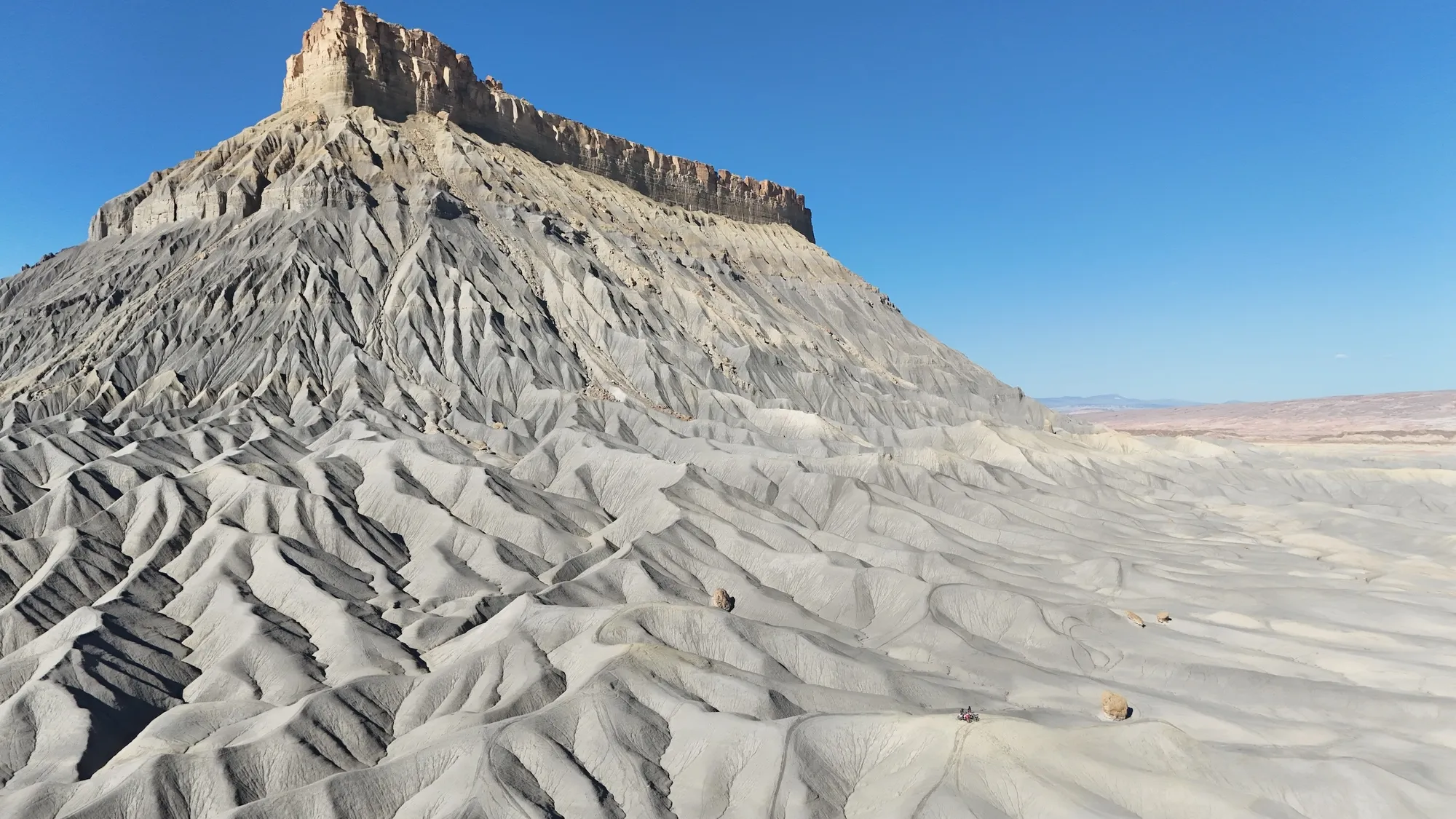
Factory Butte in Utah's high desert badlands, captured in daylight under clear blue sky. The formation's distinctive multi-colored strata and steep erosional gullies dominate the frame. Arid terrain with minimal vegetation stretches across the foreground and background. Typical American Southwest landscape.
NastyNils / Nastynils.com

Best motocross bike for Loretta Lynns?

This is your bike. It's a race-ready 450 from the crate, the suspension adjusts to your track, and the app tunes the hit between motos. Stay on top of maintenance and it can take you all the way to Loretta's.

Made for Carnegie State Vehicular Recreation Area · Fox Raceway at Pala · Glen Helen Raceway
Best motorcycle for Moab?

Straight answer: this is a closed-course motocrosser. It's light and capable, and the app can soften the hit on slickrock, but the tall seat and 5-speed MX gearbox make long technical desert days hard work.

Made for Bar M / Kane Creek · Imperial Sand Dunes · Johnson Valley OHV Area

What's new versus the previous generation

If you're cross-shopping the older generation, here's what changed.

Yamaha YZ450F (MY2018)

Previous generation · 2018–2022

Yamaha YZ450F (MY2018)

Compare to the previous model →