
KTM 1390 Super Duke R Evo (MY2024) — Hyper Naked
KTM press archive

2024 · Hyper Naked · Buyer's Guide

1390 Super Duke R Evo (MY2024)

Brutal Torque With A Brain

The Machine's Character

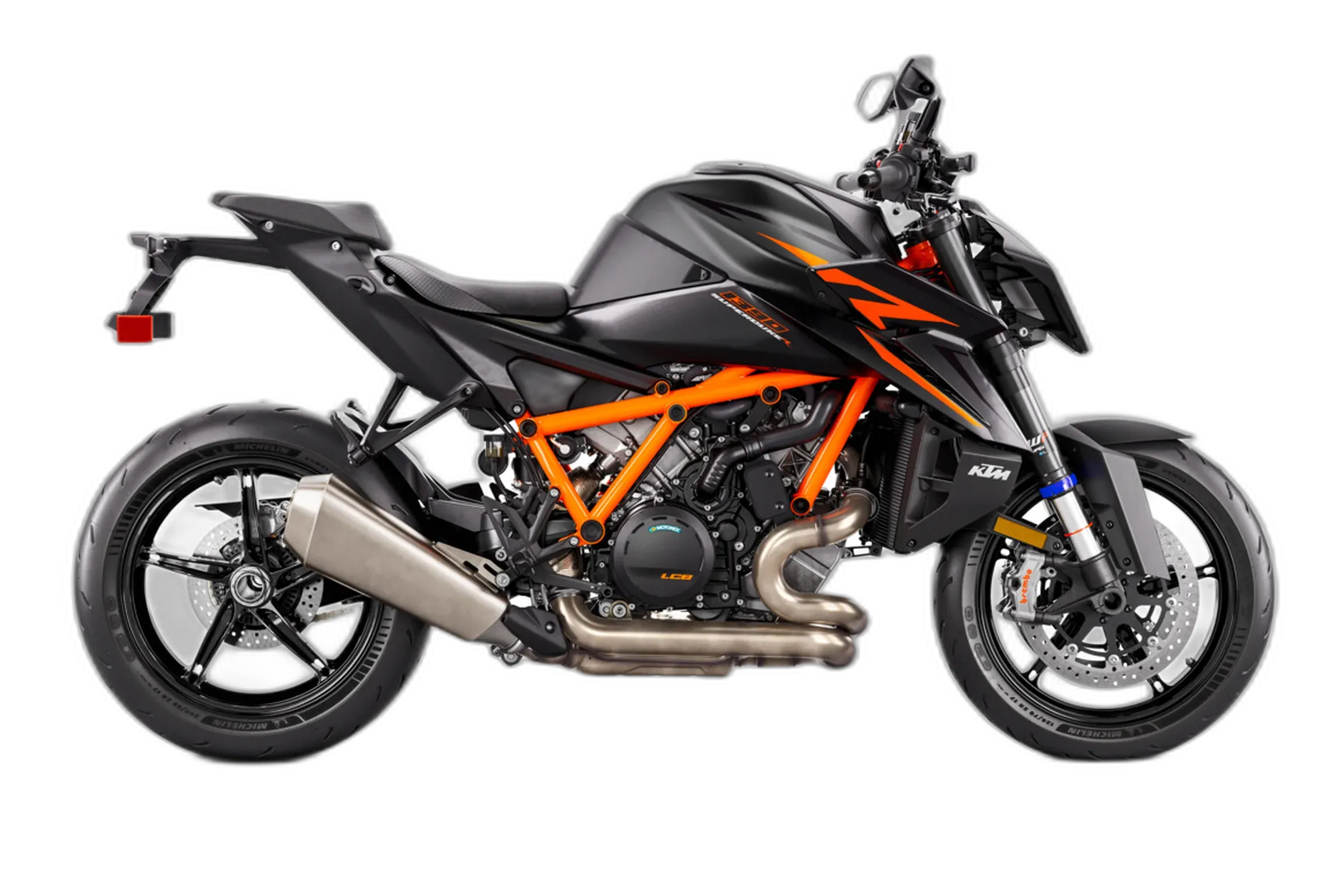
The 1390 Super Duke R Evo is what happens when a 1350 cc V-twin gets built for one purpose. The 75-degree engine makes 190 hp and 107 lb-ft, and the way it delivers that is the whole story: torque arrives early, stays thick through the middle, and keeps climbing to a 165 mph top end. Cam Shift valve timing broadens the meat of the powerband instead of chasing a peaky top-end number. Around it sits WP APEX Semi-Active Technology (SAT), 3rd Generation, adjusting damping on the fly, plus MTC, cornering ABS, ride modes and wheelie control. This is the sharp end of KTM's naked lineup.

It rides like the chassis was drawn first and the engine dropped in second. Lean clearance is generous, the 58.7-inch wheelbase keeps it stable when the front gets light, and the semi-active suspension covers everything from broken back roads to a smooth canyon sweeper without you touching a menu. It suits a rider who already knows what 190 hp means and wants it undiluted. The honest caveat: the electronics have bitten owners. Simultaneous dropouts of traction control, ABS, MTC, quickshifter and launch control under hard acceleration are reported, sometimes with dash errors and engine cut-outs. That is not a quirk you shrug off on a bike this fast.

Hard Numbers

Spec sheets don't ride bikes, but they set the baseline.

Show full specs & equipment Hide specs & equipment
Key specifications
Power 190 hp (140 kW) @ 10,000 rpm
Torque 107 lb-ft (145 Nm)
Displacement 1350 cc
Engine 75° V-twin
Cooling Liquid-cooled
Gearbox 6-speed
Final drive Chain
Front brake 320 mm
Front tire 120/70-17
Rear tire 200/55-17
Wheelbase 58.7 in (1491 mm)
Seat height 32.8 in (834 mm)
Fuel capacity 4.6 gal (17.5 L)
Top speed 165 mph (265 km/h)
Fuel economy 40 mpg (US)

Equipment check

Chassis

  • Electronic Suspension WP APEX Semi-Active Technology (SAT), 3rd Generation Realtime road adaptationAuto load leveling Standard
  • Front Suspension Adjustable Standard
  • Rear Suspension Adjustable Standard
  • Cruise Control Standard

Comfort

  • Heated Grips Optional

Connectivity

  • TFT Display Standard
  • Smartphone Connectivity KTM Connectivity Unit (KTMconnect) Integrated navigationHandsfree phone integration Optional
  • USB Charging Port Standard
  • Tire Pressure Monitoring (TPMS) Standard

Drivetrain

  • Quickshifter Optional
  • Slipper Clutch Standard

Lighting

  • LED Headlight Standard

Safety

  • ABS Standard
  • Cornering ABS Standard
  • Traction Control KTM Motorcycle Traction Control (MTC) Lean sensitive tractionSelectable ride modes Standard
  • Ride Modes KTM Ride-by-Wire (engine maps) Selectable ride modesRefined throttle response Standard
  • Wheelie Control Standard
  • Launch Control Optional

Signature Tech

The named systems that set this bike apart — and what each one does for you.

Lighting

  • KTM LED Cornering Lights Standard
    • Cornering light visibility

The Voice of Experience

Portrait of NastyNils

The test ride

First thing you notice standing over it: 32.8 inches of seat height and a riding position that pitches your weight forward onto your wrists. Not punishing, but never restful either. The V-twin idles with that lumpy, hard-edged bark that gets properly loud above 6,000 rpm, and the sound alone tells you what you signed up for. Vibration is part of the deal. You feel it through the pegs and the bars at a steady road pace, and it is the same vibration that works fasteners loose over the miles, so a torque wrench becomes part of ownership. Cold mornings need patience: the engine will stall on you at roundabouts and traffic lights before it warms through. At real road pace the bike feels compact and eager, wanting the next corner more than the next mile. Fuel range from the 4.6-gallon tank at 40 mpg is decent, though your right hand decides that.

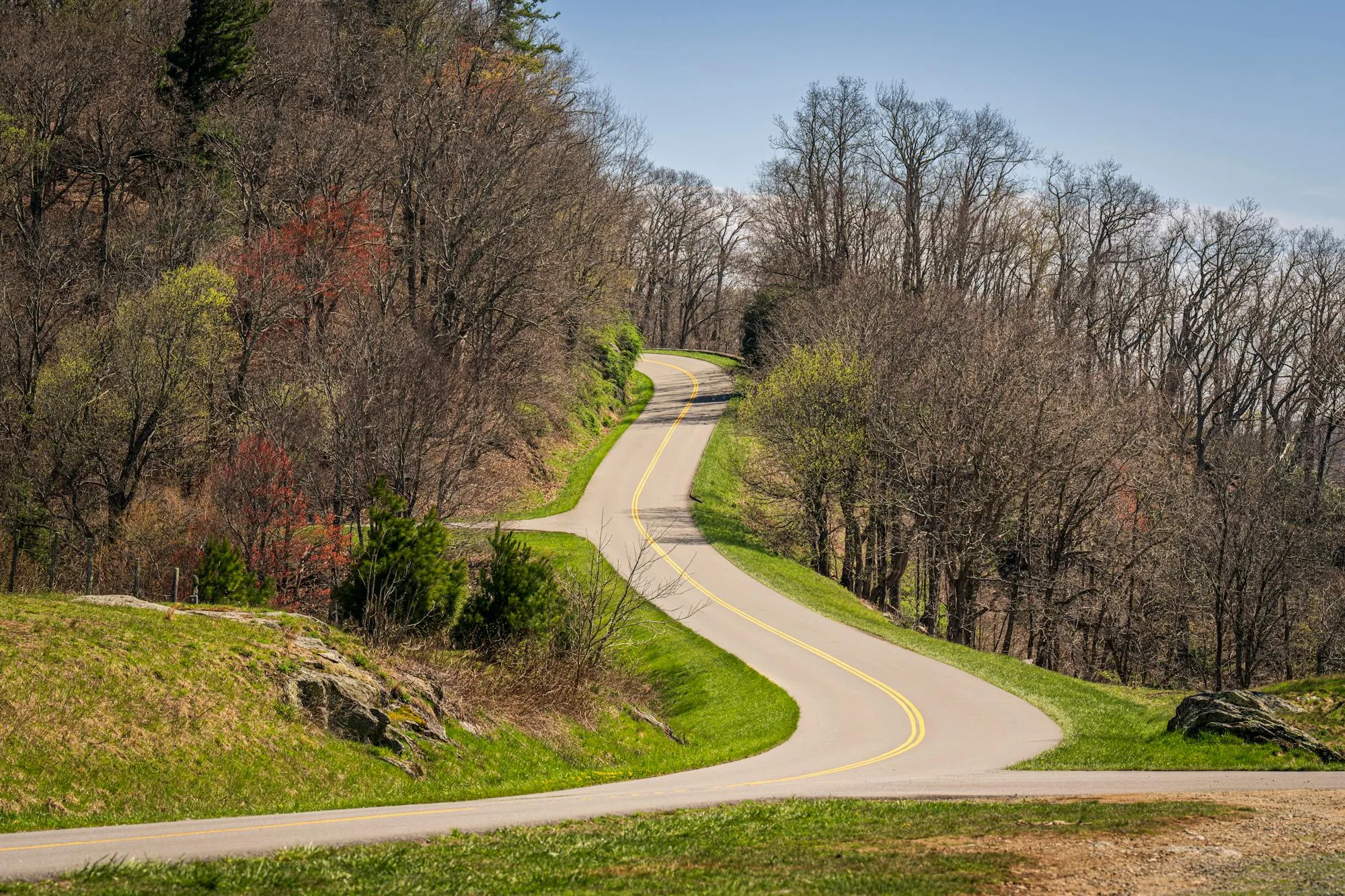
A winding asphalt road descending through the Appalachian Mountains, likely the famous Tail of the Dragon section in Tennessee and North Carolina. Multiple technical right-hand and left-hand curves are visible in this aerial perspective, surrounded by deciduous forest in spring foliage. Clear sunny conditions, well-maintained asphalt with yellow center lines marking the curves.
Mark Stebnicki / Pexels

The Truth on the Street

Everything here comes from riders rather than from a test log. It is drawn from paddock conversations, questions asked at track days and service counters, and the messages riders send me once they have real mileage behind them. On the 1390 the sentiment settles in two steady places: the brakes, which draw near-unanimous approval, and the maintenance schedule, which riders bring up without being asked.

Nobody argues with the brakes

The Stylema calipers and the radial master cylinder come up again and again, and the agreement is unusually flat for a component riders normally argue about. Strong bite, plenty held in reserve, nothing to think about at road pace. The single qualification that keeps returning comes from riders doing repeated hard laps: push the system through sustained track work and fade arrives. On the road nobody reports it. Riders moving over from the 1290 tend to fold the brakes into a broader impression of a machine that steers lighter and feels more finished without giving up the temperament they bought it for.

The service book stays quiet

The other subject riders raise on their own is the service book. The first valve check lands at roughly 37,000 miles (60,000 km), and owners who have kept big twins before mention that figure without prompting, reading it as competitive for the class rather than a burden. The self-bleeding hydraulic clutch gets counted the same way, one job fewer on the list. Routine servicing is one of the few corners of ownership where the reports stay uniformly calm.

Known issues

  • Electronics fault cascade (traction control, ABS, MTC, quickshifter, launch control simultaneous dropout)

    electrics occasional

    Multiple owners report simultaneous loss of traction control, ABS, MTC, quickshifter, and/or launch control during hard acceleration. Symptoms include dashboard error messages, occasional engine cut-out / limp mode, and in some cases no error code shown despite a visible fault. Power-cycling the bike clears the fault temporarily; the condition recurs. Two community theories on root cause: (a) a defective factory battery in the early MY2024–MY2025 build run causing voltage dips that cascade through the new electronics, (b) failure of the new VVT solenoid (cam-shift actuator). Some dealer fixes have replaced the actuator; others have swapped batteries.

  • V-twin vibration loosens fasteners and accessories over time

    chassis occasional

    V-twin engine vibration progressively loosens fasteners over miles. Substantial bolt re-torque has been required at the 9,000-mile service. The brake-fluid reservoir bracket has been known to snap on tour. Owner reports additionally mention reservoir vibration symptoms and cosmetic items such as KTM stickers peeling on radiator wings. Pattern is consistent with most big-bore V-twins; not unique to the 1390 but worth flagging because the 1390 is mechanically lighter and louder than the 1290.

  • Engine stalls at low speed when cold (roundabouts, traffic-light approach, slow maneuvers)

    engine occasional

    Engine cuts out at roundabouts, traffic light approaches, and slow maneuvers, predominantly when the engine is not yet at operating temperature. Some riders also report sluggish throttle response while cold. In some cases the symptom subsides once the engine has completed further break-in; in others it has been traced to a weak or aged battery.

  • Custom switchgear button conflicts and KTM Connect app reliability

    electrics occasional

    Custom switchgear buttons sometimes override dashboard functions; the KTM Connect app needs occasional reinstall to restore navigation; minor TFT dropouts are reported. None of these are safety-relevant on their own but together they signal the electronics suite needs polishing.

The Expert Benchmark

Where this KTM 1390 Super Duke R Evo pulls ahead of — or falls behind — its rivals on the numbers, and the typical bike in its class on character.

What kind of bike this is — character vs. the class

This bike Class average

The shape of the KTM 1390 Super Duke R Evo — numbers and character vs. the average Hyper Naked

Head-to-head: KTM 1390 Super Duke R Evo vs. its rivals

The Handshake Score

Forget spec-sheet bragging. Here's who the 1390 Super Duke R Evo is actually built for.

A scenic view of Angeles Crest Highway winding through rugged Southern California canyon terrain. Rocky mountainsides with golden earth tones frame the asphalt road with tight sweeping curves. Double yellow center line visible, sparse vegetation along the shoulders, clear blue sky with white clouds. Daylight, dry conditions. Iconic location for canyon-road enthusiasts.
Josh Sorenson / Pexels

Best motorcycle for Laguna Seca?

For your track days this delivers the power and the chassis composure you want, and the semi-active suspension gives you real setup range. Just sort the electronics reliability before you commit to a session.

Made for Barber Motorsports Park · WeatherTech Raceway Laguna Seca · Circuit of the Americas

Best motorcycle for Angeles Crest?

On Angeles Crest this is close to ideal: the mid-range means you rarely shift, and the suspension handles broken pavement without a fight. The cold-start stalling will annoy you in LA traffic.

Made for Angeles Crest Highway · Coronado Trail / US 191 · Highway 1 / Big Sur

Best motorcycle for Tail of the Dragon?

The Dragon rewards precision, and this bike gives you lean clearance and drive out of tight corners. It is more power than those roads need, which is the point or the problem depending on your day.

Made for Back of the Dragon · Blue Ridge Parkway · Cherohala Skyway