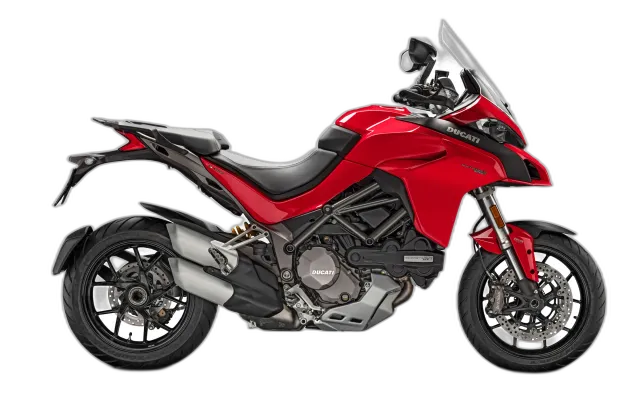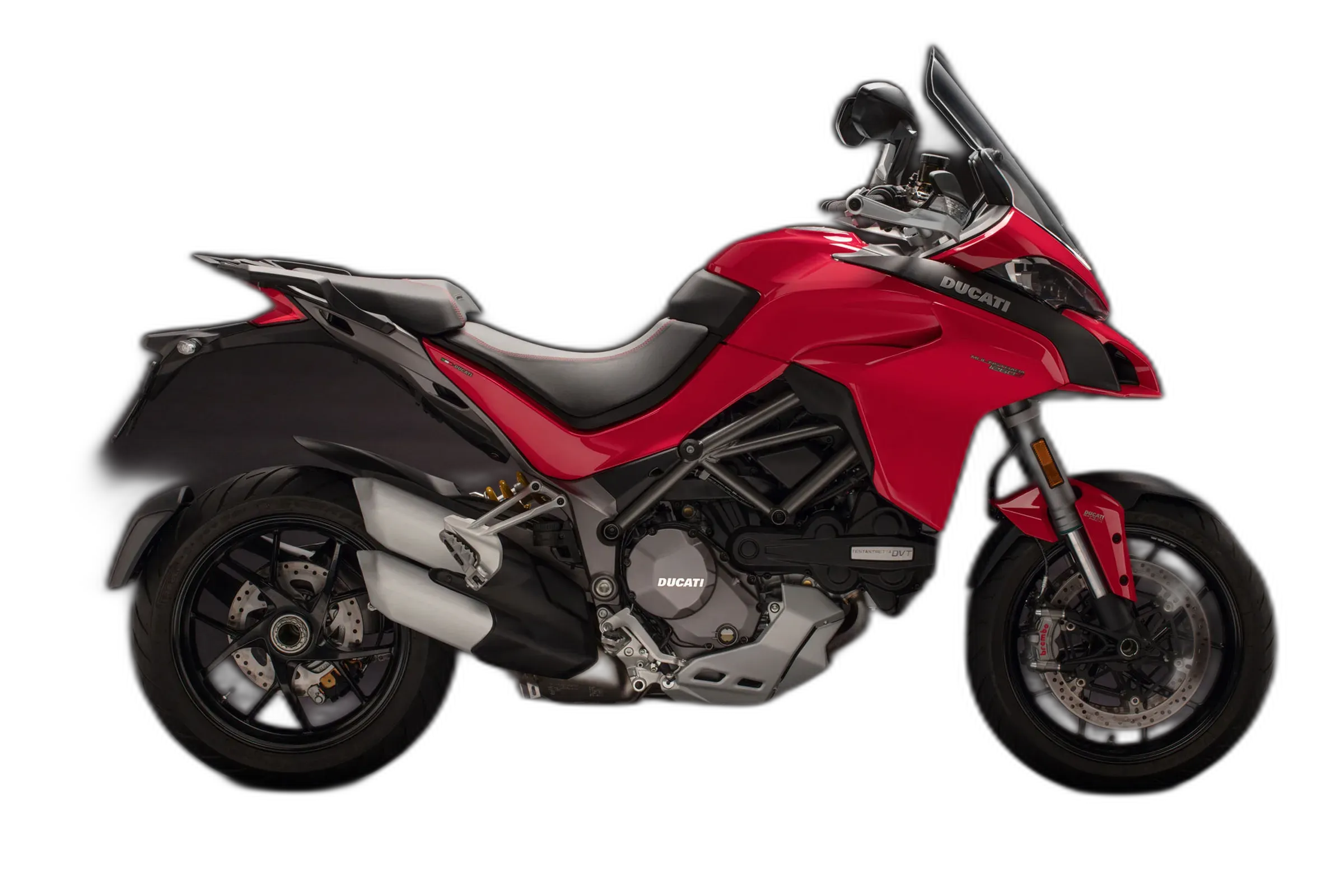

Ducati Multistrada 1260 (AC-S) — Adventure
Ducati Press

2018 · Adventure · A variant of the Multistrada 1260

Multistrada 1260 S (AC-S)

Differences between the standard Multistrada 1260 and the S

4.5 / 5 NastyNils Rating · against its class

Italian Soul, Sport-Touring Muscle

The Machine's Character

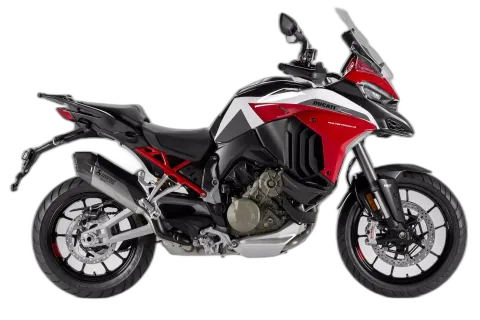
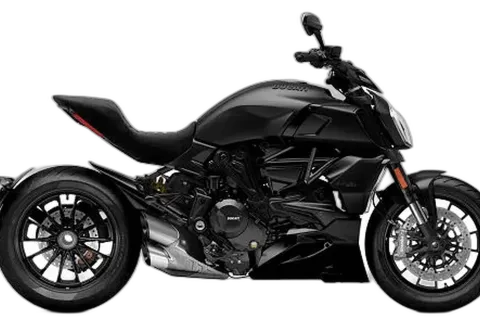
The Multistrada 1260 in this S trim is Ducati's big adventure bike with its priorities set on pavement. A 1262 cc liquid-cooled L-twin makes 158 hp at 9,500 rpm and 96 lb-ft at 7,500 rpm, carried in a steel trellis frame and driving through a six-speed gearbox and chain. The S trim builds on the standard bike's equipment with electronic suspension, an up-and-down quickshifter, a TFT display and smartphone connectivity. Cornering ABS, traction control, wheelie control and ride modes are standard as well. Wet weight is 518 lb (235 kg). Technically dense, typically Ducati.

Read the chassis numbers and the intent is clear: 17-inch wheels at both ends with 120/70 and 190/55 tires, and 6.7 in (170 mm) of travel front and rear. That's road hardware in an upright adventure shape, built for mountain passes, fast back roads and long highway days. A 5.3 gal (20 L) tank, an adjustable windscreen and an adjustable seat at 32.5 in (825 mm) point the same way. It suits you if you want sport-bike power with all-day posture, and if dirt means a gravel road rather than technical terrain. Know that before you buy!

Hard Numbers

Spec sheets don't ride bikes, but they set the baseline.

Show full specs & equipment Hide specs & equipment
Key specifications
Power 158 hp (116 kW) @ 9,500 rpm
Torque 96 lb-ft (130 Nm) @ 7,500 rpm
Displacement 1262 cc
Engine L-twin
Cooling Liquid-cooled
Gearbox 6-speed
Final drive Chain
Fork Upside-down (USD)
Front brake 330 mm
Front tire 120/70-17
Rear tire 190/55-17
Wheelbase 62.4 in (1585 mm)
Front travel 6.7 in (170 mm)
Rear travel 6.7 in (170 mm)
Seat height 32.5 in (825 mm)
Wet weight 518 lb (235 kg)
Fuel capacity 5.3 gal (20 L)

Equipment check

Chassis

  • Electronic Suspension Ducati Skyhook Suspension (DSS) Realtime road adaptationAcceleration stability Standard
  • Front Suspension Adjustable Standard
  • Rear Suspension Adjustable Standard
  • Cruise Control Standard

Comfort

  • Heated Grips Optional
  • Adjustable Windscreen Standard
  • Adjustable Seat Height Standard
  • Luggage System Optional

Connectivity

  • TFT Display Standard
  • Smartphone Connectivity Standard
  • Navigation Optional
  • Tire Pressure Monitoring (TPMS) Optional

Drivetrain

  • Quickshifter Ducati Quick Shift (DQS) Up/Down Clutchless ridingFull throttle upshift Standard
  • Slipper Clutch Standard

Lighting

  • LED Headlight Standard

Safety

  • ABS Standard
  • Cornering ABS Standard
  • Traction Control Standard
  • Ride Modes Ducati Ride-by-Wire Power Modes Selectable ride modesRefined throttle response Standard

What the Multistrada 1260 S Adds — Differences vs the Standard Multistrada 1260

The Multistrada 1260 S (AC-S) builds on the standard Multistrada 1260: the upgraded hardware, the key spec changes and where its character shifts. The full ride, specs, scoring and verdict are all right here on this page.

Equipment the S adds vs the standard Multistrada 1260

Added
Cruise Control
Now standard
Smartphone Connectivity

Premium hardware the S brings

  • Suspension Electronic Suspension Semi-active electronic suspension that adapts its damping on the move — the standard runs conventional, manually-set suspension.
  • Display TFT Display A full-colour TFT instrument display in place of the standard's simpler dash.
  • Transmission Quickshifter Down An up-and-down quickshifter for clutchless downshifts; the standard blips on upshifts only.
  • Transmission Quickshifter Up A quickshifter for clutchless upshifts the standard goes without.

Hard spec differences

SpecStandard Multistrada 1260SΔ
Front brake 320 mm 330 mm +0.4 in (+10 mm)
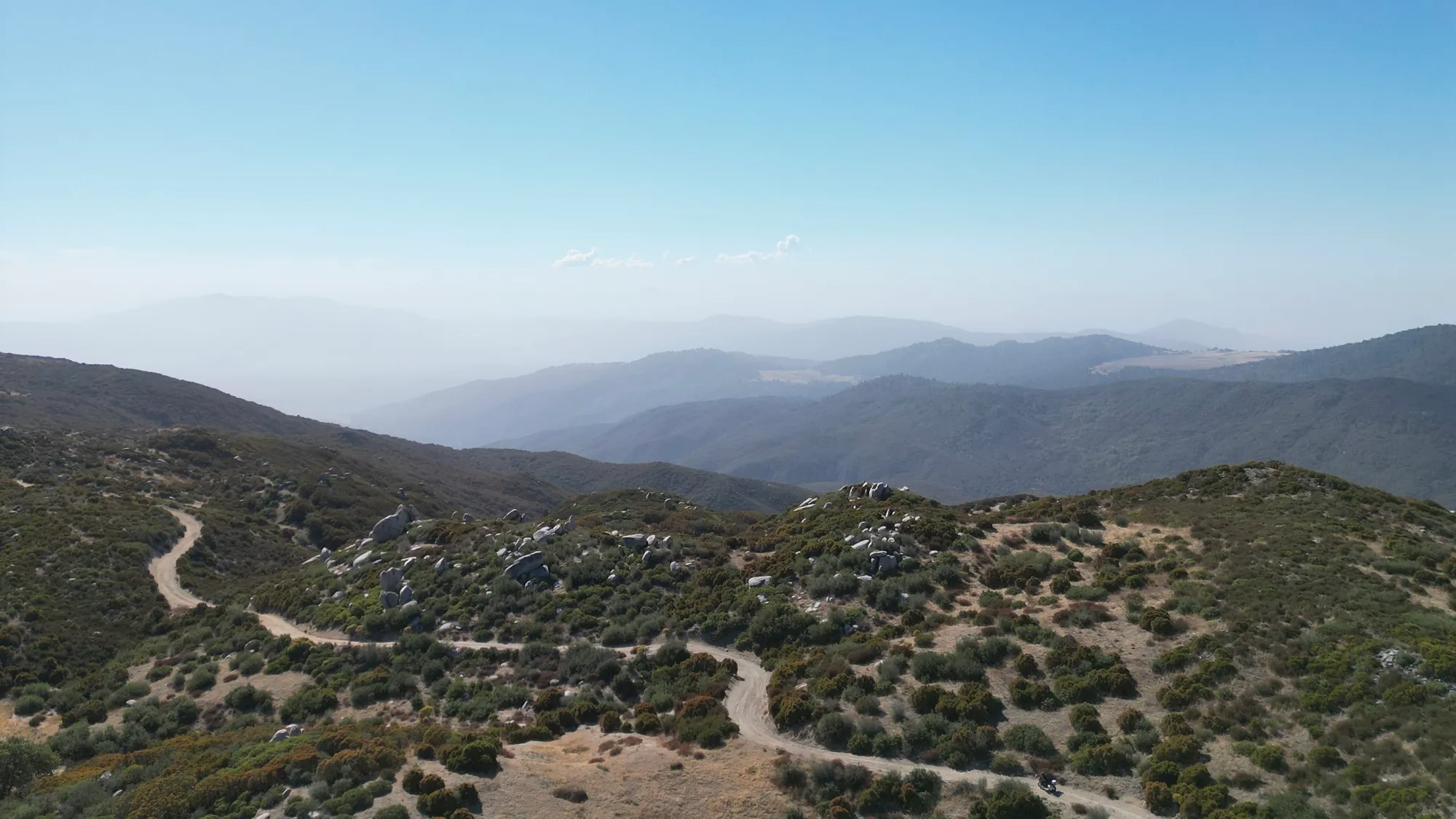
Aerial drone view of Palomar Divide Road winding through chaparral-covered mountain ridges in San Diego County. Multiple S-curve sections descend through sparse vegetation with distant valley views visible in the haze. Gravel and packed-earth surface.

The Truth on the Street

I've spent years listening to the people who own these bikes: in the paddock, on club nights, in owner chats, and in the emails and messages you send me directly. For the Multistrada 1260, the picture from all that talk is consistent. Riders praise the electronics, the engine and the range of riding it covers, and they complain about the clutch and gearbox, the menus, the costs and the seat.

Electronics that adapt with you

The praise I hear most often is for the electronics. Riders consistently say the Skyhook semi-active suspension and the rider aids adapt to changing conditions without drama, with cornering ABS, traction control and the ride modes named again and again. Owners also like how much they can adjust: wheelie control and the modes let you tailor the bike's behavior to the conditions, and many describe the package as a safety net. A few add that once the suspension is dialed in, the ride is plush and well damped, and the bike stays composed at speed and planted mid-corner. Set it up first.

Twisty roads and highway miles

Almost as common is talk about how much ground this bike covers. Riders describe it as equally comfortable on twisty roads and on long highway stretches, and they point to the cruise control and the adjustable windscreen. Heated grips come up often too, though those are an option on this bike. The engine gets the same kind of praise: owners talk about a broad spread of torque and a top end that builds with real urgency. Several call the power delivery linear and effortless, at home in lazy sweepers and in fast touring alike, and they credit the desmodromic valvetrain for a character they find addictive. For a bike this size, riders say, it's quick to steer and encourages spirited cornering. It does both jobs.

Heavy clutch, steep bills, sloping seat

The most repeated gripe is the clutch and gearbox. Riders report a hydraulic clutch that takes real effort and offers little feel, a gearbox that's clunky and notchy at low speeds, and a neutral that's often hard to find. In town, some call the constant shifting a chore. Next come the menus: owners find the nested TFT menus overwhelming, and they note that you can't fine-tune suspension settings while riding. Cost is a recurring theme too, with riders pointing to a steep purchase price and services that run expensive next to Japanese rivals. Some owners also report fasteners corroding early, which they say sours a premium ownership experience. Less often, I hear about the seat: it slopes forward, pushes you toward the tank and has you repositioning on longer rides, and taller riders mention a cramped leg position from the high pegs. A few describe heavy, clumsy steering at parking speeds and a vague feeling from the front end in tight turns. Neutral takes patience.

Known issues

  • Faulty side stand weld may fail

    chassis rare Recall

    A manufacturing defect in the side stand weld on certain 2018 Multistrada 1260 models could cause the stand to break, leading to a fall. Ducati issued safety recall SRV-RCL-19-004 to replace the stand.

  • Ignition coil failure at low mileage

    electrics rare

    Some owners have reported ignition coil failures within the first thousand miles, leading to breakdowns.

  • Premature paint wear on engine casings

    bodywork rare

    The silver finish on the engine casings has been known to rub off where the rider’s trousers make contact, even at low mileage.

The Expert Benchmark

Where this Ducati Multistrada 1260 pulls ahead of — or falls behind — its rivals on the numbers, and the typical bike in its class on character.

What kind of bike this is — character vs. the class

This bike Class average

The shape of the Ducati Multistrada 1260 — numbers and character vs. the average Adventure

Head-to-head: Ducati Multistrada 1260 vs. its rivals

The Long-Haul Verdict

Forget spec-sheet bragging. Here's who the Multistrada 1260 is actually built for.

Aerial view of a winding asphalt road cutting through volcanic terrain on La Gomera, Canary Islands. The road curves through sparse green vegetation with rocky volcanic peaks visible in the background and a settled valley to the left. Clear lane markings, dry climate, partly cloudy sky.

Best motorcycle for Moab?

Straight talk: on paper this is a road bike in adventure shape. A 17-inch front wheel, 6.7 in (170 mm) of travel and 518 lb (235 kg) point to pavement, not slickrock and sand.

Made for Moab · Bar M / Kane Creek · Imperial Sand Dunes
Best motorcycle for Highway 1?

The hardware lines up well with your days: 158 hp, road tire sizes, electronic suspension and cruise control for 200 to 400 mi (320 to 640 km) of curves and scenery. A strong match.

Made for Highway 1 / Big Sur · Black Hills · Blue Ridge Parkway

Best touring motorcycle for long distance?

Cruise control, a 5.3 gal (20 L) tank and an adjustable windscreen suit long hauls. Luggage and heated grips are options, so budget for them if you travel two-up and fully loaded.

Made for Beartooth Highway · Blue Ridge Parkway · Going-to-the-Sun Road

What's new versus the previous generation

If you're cross-shopping the older generation, here's what changed.

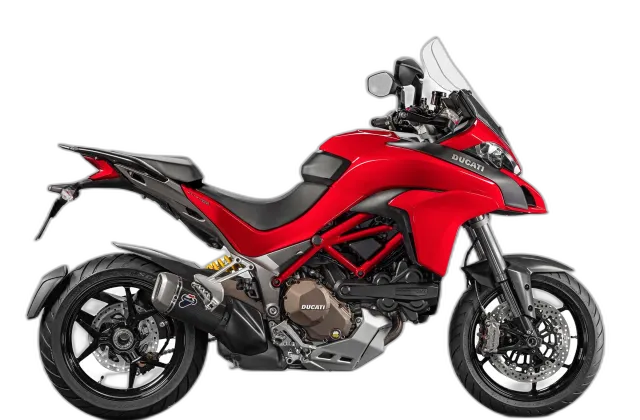
Ducati Multistrada 1200 (MY2015)

Previous generation · 2015–2017

Ducati Multistrada 1200 (MY2015)

Italian Muscle, Digital Brains

Compare to the previous model →