
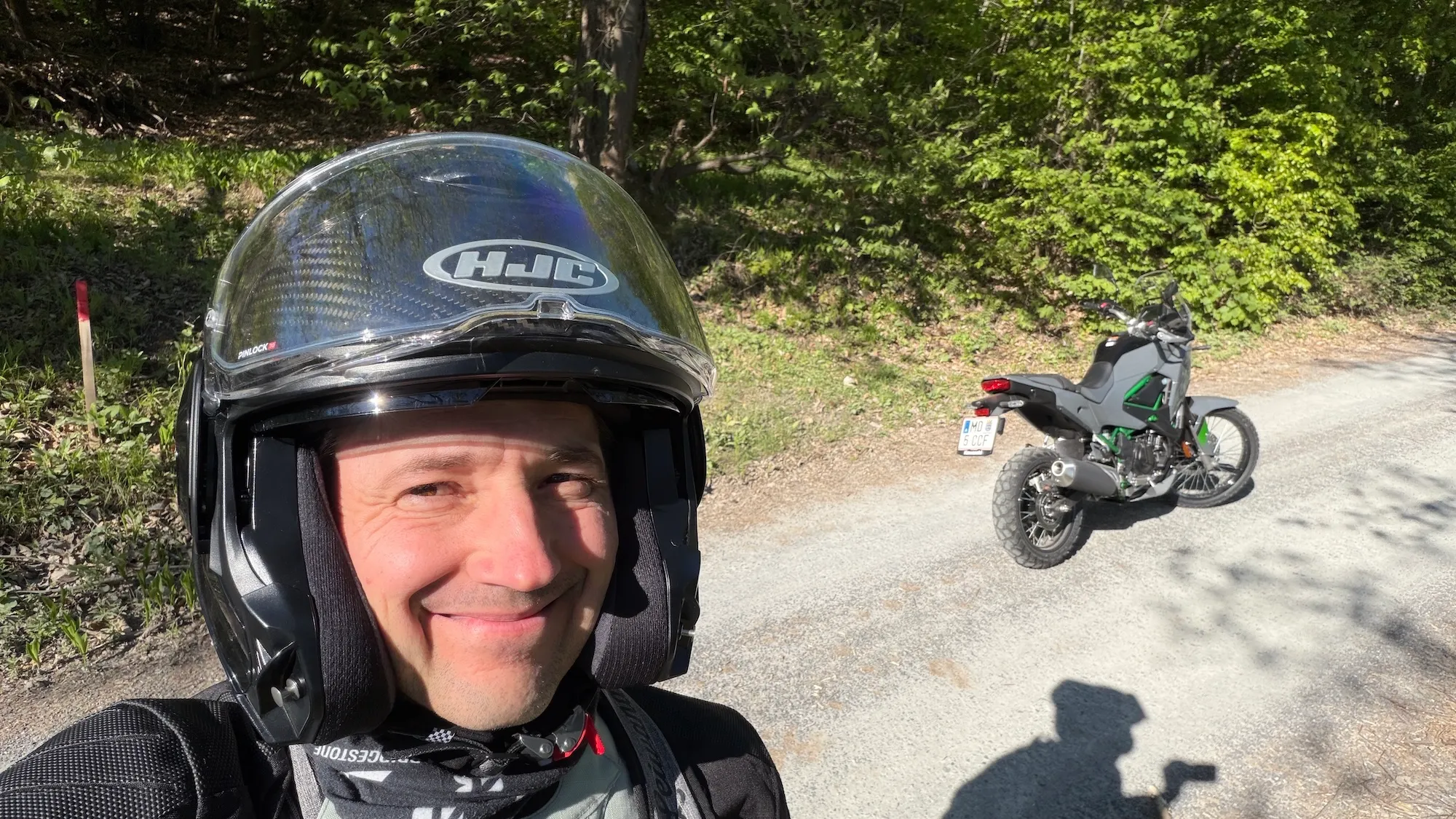
I had the Kawasaki KLE 500 filed away in my head long before I threw a leg over the new one. Street bike. Fun. Quick enough to keep pace through mountain roads. Those expectations came from watching a buddy ride his late-nineties KLE while I was hammering around on my KTM LC4. I never forgot that motorcycle.
Then I found knobby tires on the 2026 model.
Two days later I was detouring through gravel farm tracks on the way to work, grinning like an idiot at seven in the morning. Nearly three months after the review went up on YouTube, thousands of comments have come in across our channels. Here’s what I found on the bike, what the community thinks, and where those two pictures don’t quite match up.
What I Actually Expected vs. What Showed Up
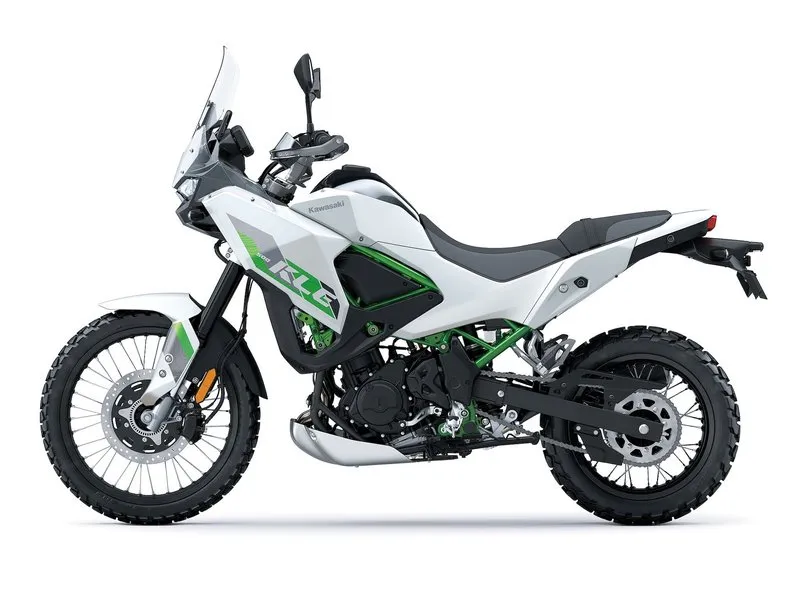
Here’s the thing about nostalgia: it’s almost always wrong. The old KLE lived in my memory as a mischievous street bike. The new one — honestly — is something else. It’s still compact, still light-feeling, still easy to point. But with those knobbies on and 8.3 inches of front fork travel, it’s asking different questions than the one I remembered. And the answers it gives on gravel farm roads in rural Lower Austria are actually quite good. It’s quick, it’s nimble, it’s honest. The wide handlebar makes it easy to direct, almost like a bicycle that happens to make a nice engine sound. The whole package is smaller and more proportionate than the spec sheet suggests.
The Engine: Forty-Five Horsepower, No Drama
The 451 cc parallel twin doesn’t pretend to be anything it isn’t. Throttle response is clean, power delivery is linear, and the whole thing’s beginner-friendly without making experienced riders bored — which is harder to pull off than it sounds. You can ride it lazy or you can ride it with some urgency. Either way, it doesn’t bite back.
One honest gripe: there are two vibration sources stacking on top of each other. The twin itself has a baseline buzz that the chunky bar-end weights don’t fully absorb, and the knobby tires add their own chatter on pavement. On short runs it’s nothing. On a long highway stint, sensitive hands are going to notice. That’s not a deal-breaker for what this bike is — it’s just the trade-off that comes with putting knobbies on a street-capable machine and expecting it to disappear at highway speeds.
The Chassis, the Brakes, and a Surprise
The suspension works well for what most people will actually do with this motorcycle. On gravel tracks and light forest roads in Austria, it felt composed and confidence-inspiring. Push it harder into rougher terrain and you start bumping up against the limits — the suspension and electronics aren’t set up for serious off-road abuse.
About the brakes: they’re well-sized, with a slightly soft initial feel but solid bite once you’re into the lever. Easy for beginners to modulate, capable enough for genuine emergency stops. The ABS, though, can’t be switched off specifically at the rear — if you want more control in gravel braking zones, you’re working around the system rather than with it.
The thing that actually surprised me: the standing riding position. It works. You can cover real ground standing up without getting cramped or uncomfortable. That’s rarer than it should be in this class.
What Our Channels Heard Back
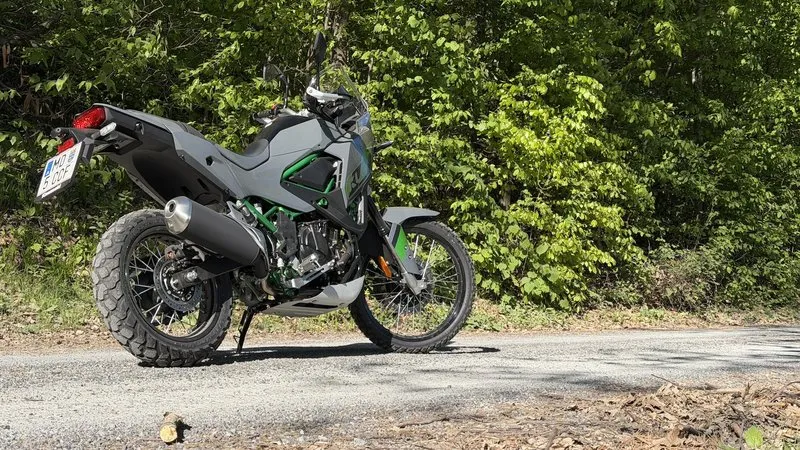
Nearly three months of comments is a useful thing. We went through the responses across our international channels — German, English, Spanish, and Arabic — and the picture that came back was consistent: mixed, with a clear fault line.
The most-debated technical detail is the rear tire. A 140/70-17 on a tube-type spoke wheel is an unusual choice, and a significant portion of the community sees it as a conceptual mistake — limited brand selection, harder to deal with a flat in the field. Running parallel to that criticism is a pragmatic camp with a solid counterargument: for what most riders actually do — paved roads, light gravel, city commuting — the KLE is completely sufficient. That group gets plenty of likes too. The CFMOTO 450MT and Royal Enfield Himalayan 450 show up repeatedly in the comments as comparison points, usually as benchmarks the KLE is measured against.
Where the Test and the Comments Land on the Same Page
A few things showed up on both sides independently. The accessibility and daily-use ability of the KLE are recognized in both the test and the community feedback — the bike does what it says it’ll do in regular use. The tire dimension question came up in the test too, after I went and looked at what online reaction was saying. The basic electronics package — no rear-ABS kill switch, limited customization — both perspectives treat as a logical constraint of the price point, not a shocking omission. And the CFMOTO 450MT gets flagged by both as the right call if you want more off-road capability. Two independent sources, same conclusion. That’s worth something.
What Three Months of Owner Comments Revealed
Look, I came out of the test more positive on this bike than a lot of the comments did. I actually reach for it in our fleet when faster, more expensive motorcycles are sitting right next to it. That tells you something about the ride.
The community, though, is harsher on the value equation. No luggage carrier, no USB port, no modern display — for a price north of $8,000 — gets called out when Chinese and Indian competitors are offering more for less. The 34-inch seat height also draws criticism: both the Himalayan and the CFMOTO sit lower, and that matters for accessibility. Owners living with the bike long-term also flag fuel consumption and the tube-type wheel in ways that a few hours of press testing don’t fully surface.
The Five Things the Community Keeps Coming Back To
- Tube-type rear wheel with non-standard tire size as top complaint
- Ground clearance too low for the aggressive enduro-adjacent styling
- Missing basics (USB, luggage rack) for an adventure-positioned price tag
- Chinese competition — CFMOTO 450MT and Himalayan 450 — cited as stronger all-round value
- Pragmatic camp defending the KLE as genuinely capable for realistic daily use
What I’d Tell a Buddy Who’s Thinking About Buying One
Here’s the honest version: the KLE 500 is a good motorcycle wrapped in confusing marketing. “Life is a Rally” as a tagline for a tube-type spoke wheel with 7.3 inches of ground clearance is a mismatch that the community rightfully called out. If Kawasaki had positioned this as exactly what it is — a light, reliable, fun street enduro with genuine gravel capability — nobody would’ve been disappointed. Instead they aimed the design language at the adventure crowd and the spec sheet at the budget commuter, and the internet noticed.
None of that changes what the motorcycle actually does. And what it does, it does well. It’s honest, it’s accessible, it pulls clean off the bottom, and it makes you want to take the long way home. For a rider who wants a simple, dependable machine that doesn’t overthink itself, the KLE 500 is genuinely worth considering. Just go into it knowing what it is — and not what the slogan says it is.