
Quickshifter !
- The roll phase — coasting through a hairpin with the throttle closed — creates an unstable, undefined chassis state that makes precise lines nearly impossible.
- Maintenance Throttle (what European schools call Stützgas) means applying the smallest usable amount of throttle while leaned over to shift weight rearward, stabilize the driveline, and transform a wobbly arc into a controlled one.
- The rear brake is the antagonist that keeps the whole system in balance. Used simultaneously with light throttle, it turns even the most reactive motorcycle into something you can actually steer.
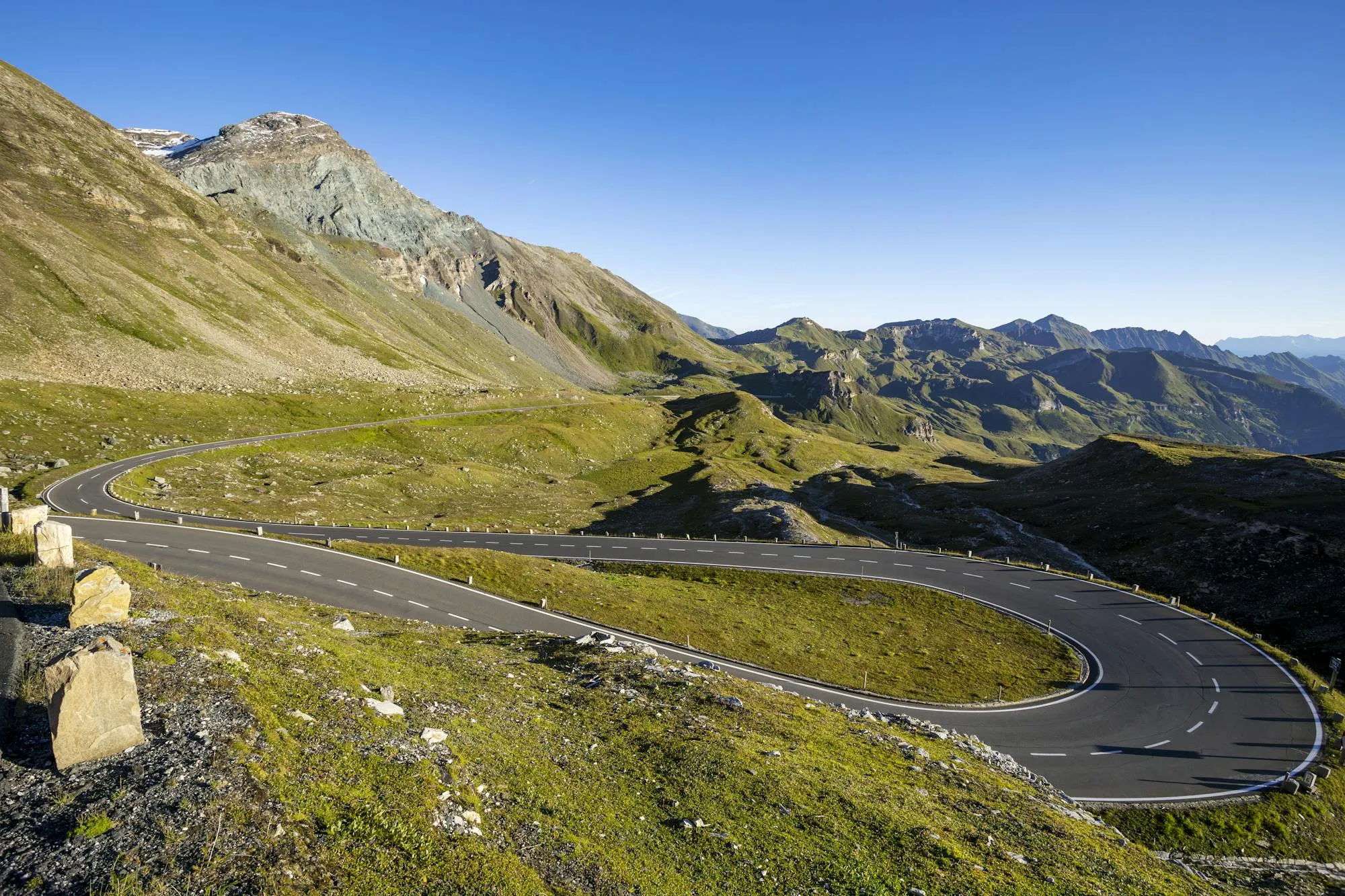
Hairpins look terrifying. They are not, once you understand what is actually happening mechanically. The problem most riders have in tight Alpine switchbacks is not the radius. It is not the lean angle. It is not the camber of the road or the gravel at the apex. The problem is a moment called the roll phase — and the roll phase is entirely self-inflicted.
Here is what the roll phase looks like from the outside: you brake too late, rush the entry, carry the wrong speed, and then close the throttle to bleed velocity as you tip in. The bike is now coasting. Mechanically, this is a state of pure ambiguity. The driveline is slack. The engine braking is coming in and going out unpredictably depending on whether the clutch has fully let go. The weight distribution is bouncing forward and rearward with no clear signal from the rider about what the machine is supposed to do next.
Then you hit the apex slightly wrong. Then you open the throttle too aggressively to correct the speed. The rear squats hard. The front lightens. The line moves three feet in the wrong direction. You tighten up.
Sound familiar?
The Danger of the Roll Phase
A rolling motorcycle — one in true neutral drive, neither accelerating nor decelerating, clutch fully in or simply coasting — is in its most mechanically underdefined state. Weight distribution is indeterminate. Suspension cannot settle. The tires are receiving no clear instruction from the powertrain.
On a straight road at speed, this is manageable. In the middle of a tight hairpin, leaned over, at low speed with unstable gyroscopic forces, it is the source of most of the ugly, jerky, line-corrupting behavior that ruins switchback corners.
Modern motorcycles without slipper clutches make this worse. A conventional clutch, let out quickly at the wrong moment, produces a jolt of engine braking that the rear tire has to absorb. The tire skips. The chassis loads up unevenly. The rider tightens both hands on the bars and braces.
None of that is riding. All of it comes from the roll phase.
The fix is not about being smoother, or more relaxed, or trusting the process. Those instructions are correct but useless without a physical technique to execute. The technique is called Maintenance Throttle.
Trusting Engine Braking
Before getting to Maintenance Throttle, it is worth addressing what many riders do instead: they pull the clutch in through corners to avoid engine braking entirely.
Clutch in through a hairpin feels safe. No engine braking surprises. No jerk. Pure rolling resistance from the tires.
The problem is that this removes the final stabilizing influence the powertrain can offer. Engine braking, when properly managed, is not an enemy. It is a tool. It loads the rear tire, keeps the driveline taut, and gives the chassis a clear direction of force.
Modern motorcycles with slipper clutches and electronically managed engine braking have made this far more accessible. The slipper clutch prevents the classic rear-wheel skip from a grabbed downshift. The electronically controlled engine braking maps keep the deceleration linear and controllable through gear changes. On a current generation motorcycle with these features, trusting engine braking in a hairpin is genuinely reasonable. The system is designed for it.
On older bikes without these features, engine braking requires more careful clutch modulation — but the principle holds. A taut driveline is more predictable than a slack one.
Step-by-Step: The Maintenance Throttle Method
This is not a new technique. It is taught at virtually every professional canyon and mountain riding school — from the California Superbike School (CSS) and YCRS in the US to the Alpine schools in central Europe. The reason it is underused is that the name sounds gentle and the results are dramatic — and riders are suspicious of things that sound like they might conflict.
Here is the sequence for a tight left-hand hairpin on a mountain road:
1. Brake. Brake earlier than feels necessary. Shed the speed before the turn-in point, not during it. You want to arrive at the apex with too little speed, not too much. The braking phase is where you deal with excess velocity. The corner is not.
2. Look ahead. This sounds obvious. It is not practiced. In a tight hairpin, fix your eyes on the road surface after the corner — the exit, the next straight section, whatever comes after the apex. Your instinct is to stare at the apex itself. That instinct steals your visual information at exactly the wrong moment. Override it deliberately.
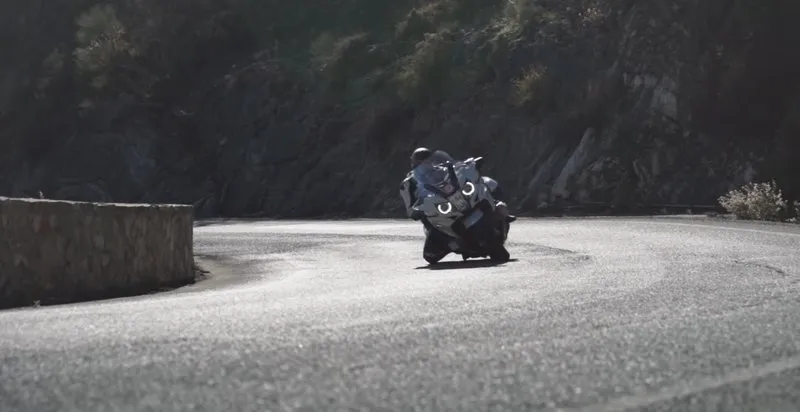
3. Apply Maintenance Throttle. At the moment you begin to lean in — not at the apex, not halfway through, but as soon as you are committed to the lean — crack the throttle open just far enough to eliminate the roll phase. The engine should be driving, not coasting. You are not accelerating out of the corner. You are applying the minimum throttle required to load the rear tire and stabilize the driveline. In practice, this is a subtle opening. More subtle than most riders expect.
The result: the chassis settles. Weight shifts rearward slightly. The rear tire gains traction and grip. The front feels lighter and more responsive to steering input. The whole motorcycle becomes more predictable.
4. Drag the rear brake. Simultaneously with the Maintenance Throttle, apply light rear brake pressure. This is the counterbalancing move. Light throttle forward, light rear brake holding. The result is a motorcycle suspended in a controlled, balanced drive state — neither accelerating meaningfully nor decelerating meaningfully, but taut and defined. The rear is planted. The driveline is loaded. The line follows your eyes precisely.
This combination — throttle and rear brake simultaneously — is the technique the BMW R nineT practically demands in tight corners. That motorcycle has a notably reactive engine character. Without Maintenance Throttle and rear brake, it can feel agricultural through switchbacks. With them, it transforms. The same technique applies to any motorcycle with strong engine character, older designs without slipper clutches, or any bike that produces driveline snatch on corner entry.
The Parking Lot Exercise
This sequence can be practiced completely without risk on any empty parking lot. Set up a slow figure-eight pattern — wide enough to require genuine lean angle, tight enough that low speed instability becomes obvious. First, ride through with no throttle input through the turns. Feel the wobble. The chassis uncertainty. The tendency to run wide or tighten up. Then add the smallest useful amount of throttle at lean, with rear brake as a counterweight. The change is immediate. This one exercise, done in a parking lot in twenty minutes, has more practical impact on switchback performance than any amount of reading about it.
Putting It Together on a Real Mountain Pass
In practice, the complete hairpin sequence looks like this: approach on the brakes, shedding speed, eyes already moving to the exit. Turn-in at a controlled pace. The moment the motorcycle leans, the right hand cracks open slightly and the right foot applies gentle rear brake. The chassis settles into the lean. The line follows the eyes. The motorcycle does not try to stand up or run wide. At the exit — when the road opens and forward vision improves — the rear brake releases, throttle increases naturally, and the next section begins cleanly.
The worst hairpin on any pass in the Alps becomes manageable with this sequence. Not spectacular, not for Instagram. Manageable and precise and repeatable.
Which is what riding is supposed to be.
Two-Finger or Four-Finger Braking?
There is a genuine debate about front brake technique, and it is worth addressing directly because the hairpin approach phase relies on effective braking.
The two-finger school argues that gripping the brake lever with only the index and middle fingers limits the clench reflex in panic situations. If your fingers are already committed to the throttle grip, a sudden scare cannot close your fist with full lever throw. The thinking: modulation beats maximum grip.
The four-finger school points out that some riders, particularly those with smaller hands or on motorcycles with older, softer brake systems, simply cannot generate maximum deceleration with two fingers. Partial grip means partial power. In an emergency, you may need all four.
The practical answer depends on your motorcycle and your hands.
On any modern motorcycle with properly maintained brakes and a correctly adjusted lever, two-finger technique is almost certainly sufficient to hit maximum brake pressure. If you cannot do this, the brake lever needs adjustment or the system needs service — not a grip technique change.
On older motorcycles with progressive, softer brake systems, four fingers may be necessary to reach maximum deceleration. In that case, ensure your remaining fingers are clear of the lever path during a full application.
One rule applies regardless: whichever technique you choose, the lever adjustment must match it. If you brake with two fingers, the lever must be set close enough that a full-force two-finger pull does not contact the throttle grip. There is no use arguing about technique while riding with a lever adjusted for the opposite approach.