
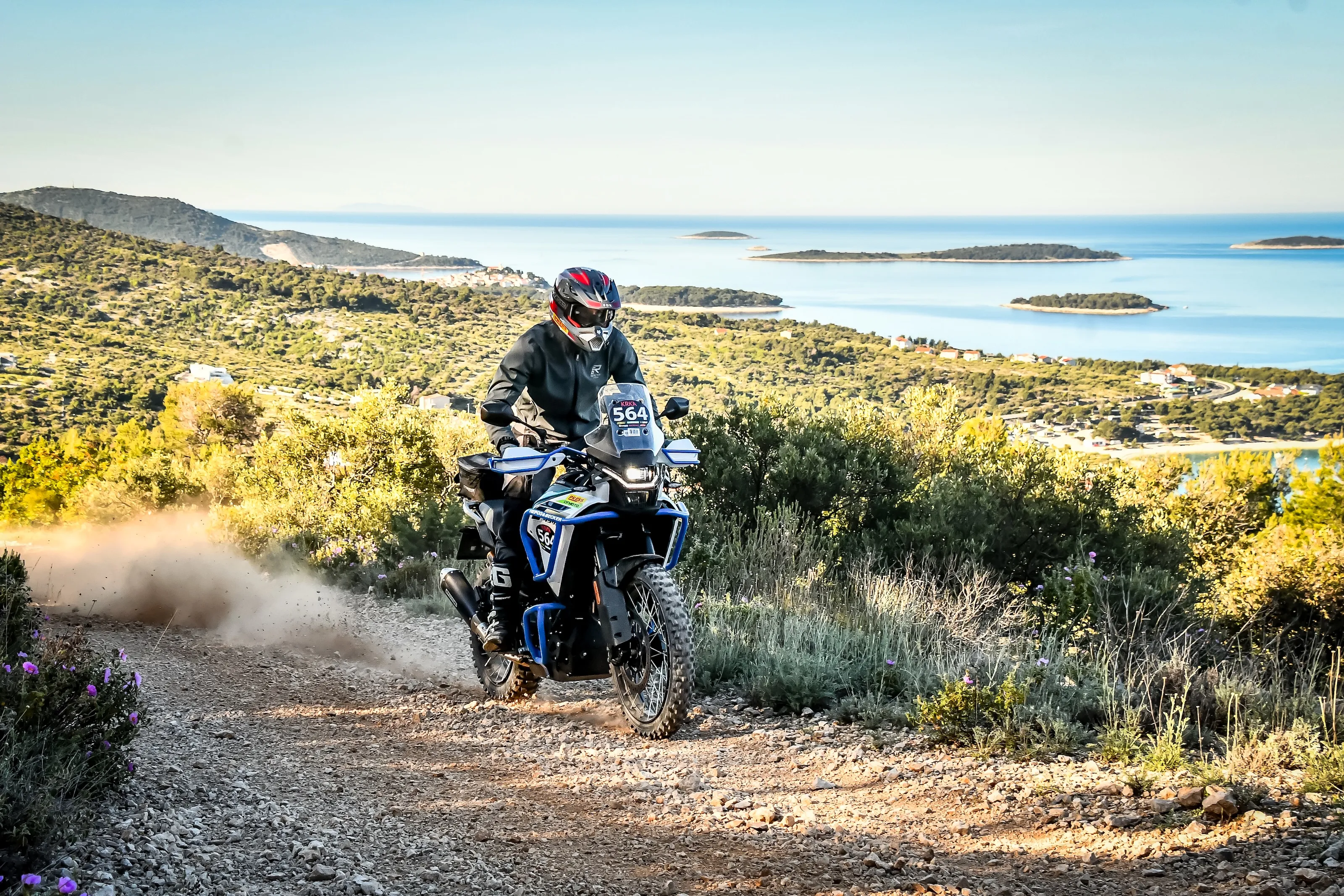
This bike costs roughly half of what a serious adventure machine runs. I wanted to know what’s actually inside the CFMOTO 450MT — not on a press launch, not on smooth gravel, but under real punishment. So we threw a suspension upgrade at it and lined up at Krka Enduro 2026 in Croatia.
End of April 2026, instead of taking the 450MT to a sanitized test loop, I rode the entire Krka Enduro in Primosten on it. The whole event. If you want to know how tough an entry-level twin-cylinder ADV really is, you don’t pamper it on forest roads — you send it into a real race. That was the plan. The takeaways genuinely surprised me.
The Twin’s a Different Animal Than a Single
Coming from singles, this engine messes with your reflexes at first. The twin doesn’t have the brutal punch you use to flick the front wheel over a root or a rock. What it does have is a clean, even pull and a smoothness that — once your right hand recalibrates — means you ride with way less clutch input. The 2025 model is dialed in much better than the first batches off the boat: it doesn’t stall on you anymore, it just hooks up clean off idle. 449.5 cc, 42 HP @ 8,500 rpm, 31 lb-ft @ 6,500 rpm. In real enduro terrain, you start riding with rhythm instead of fighting the throttle.
One Bike, Three Riders
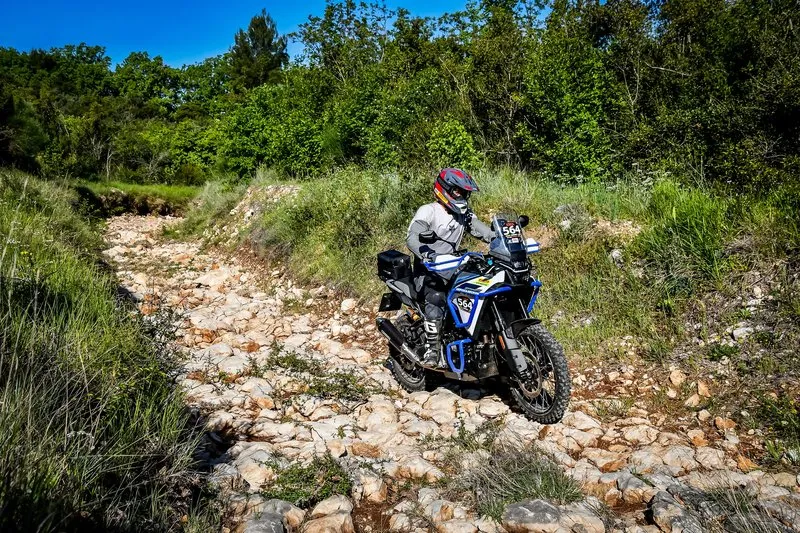
It’s wild how comfortable you get just chucking this thing into the dirt. Adventure bike makers struggle with their target audience like nobody else. Some buyers commute on these — upright seating, errands, school drop-off, grocery runs. Others, like me, line them up at an enduro race. Same machine, both jobs. That kind of range is what separates a real ADV from a one-trick hard enduro or a pure road tourer, and CFMOTO got the middle of that spread mostly right.
Where the Riding Position Lands
The cockpit grabbed me right away. But the longer the race went, the clearer it got: at 6 ft 1, I’d want the seat a touch taller for more movement room out of the saddle. For everything we had planned with this bike, though, the compromise lands well — sporty enough when you’re attacking, comfortable enough on the connecting transfers. Standing up, sitting down, you feel like you’re on a bike from a company that’s been doing this a while. Smaller riders are going to love how integrated the seating is. Taller riders deal with a slightly tight knee angle.
Croatia Didn’t Faze It
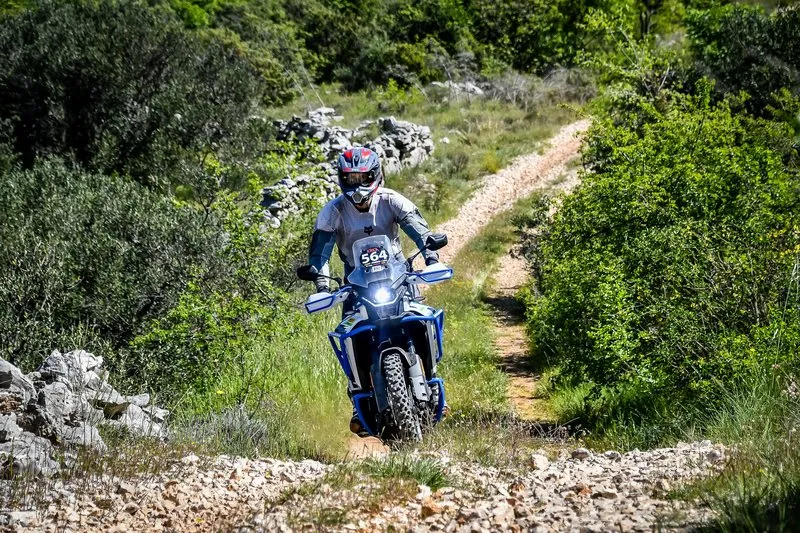
Big surprise on a budget machine in this kind of event: durability. Anyone who’s ridden Krka knows the deal — every meter of trail hammers the bike. Hits, vibrations, sharp rocks, dust, washboard. We had dry conditions the whole time, so I can’t speak to water crossings or hard rain. But everything else? The dust, the impacts, the constant pounding — the 450MT shrugged it all off. It came out the other side of multiple race days with no battle scars and zero issues.
The Brakes Are Fine
The J.Juan stoppers are sized right for the dirt. On street rubber and aggressive road riding, they’d probably feel a little soft compared to what you get on a $20K ADV. Run knobbies, though, and the tire becomes the limit anyway — not the brakes. In real off-road use, this is a non-issue. On Krka I always had enough stopping power on tap, and the modulation was excellent: squeeze it however hard you want, it gives you exactly what you ask for.
Light Where It Counts
The whole thing comes down to a simple combo: easy to ride, playful in your hands, and feels smaller and lighter than the competition. 432 lbs fully fueled (we weighed it at 1000PS), which puts it anywhere from 22 to 110 lbs under the rest of the rugged-ADV class depending on what you’re cross-shopping. You feel it loading the bike, picking it up after a tip-over, dragging it around a tight campground. You feel it riding too — less rotating mass, less inertia to fight. And yet you still get a wind-protective fairing, a big tank, real range, and the seat-of-the-pants feel of a full-grown adventure bike. That balance is hard, and CFMOTO got it right.
The Two Things Worth Upgrading
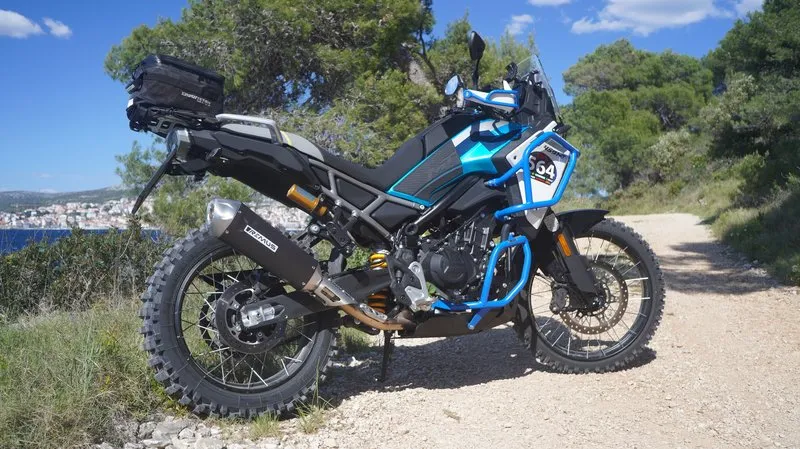
We didn’t run the bike stock at the rally. CFMOTO builds compromise into this machine on purpose — they’re chasing a wide buyer, and that’s fair. But if you want to attack real terrain, swap the chain-and-sprocket kit. That’s a known weak spot. And if you’ve got plans involving jumps, deep holes, or fast sandy sections like the beach race in Croatia, you’re going to find the limits of the stock suspension’s adjustment range pretty quickly. The base is solid — it just needs targeted spend in the right places. Which is exactly what we did to make it race-ready.
What We Did to the Suspension
The rear got an Öhlins shock — clear upgrade, dead simple to dial preload. Up front we left the fork stock outside, but rebuilt the shim stack to widen the usable adjustment range. Two changes, big personality shift. Fast sections feel controlled instead of hairy. Jumps land soft instead of harsh. If you’re going to push this bike anywhere near how I pushed it at Krka, suspension upgrades aren’t optional — the OEM bits just don’t have the bandwidth.
The Clutch Held Up
You read horror stories online about the clutch giving up in extreme enduro work. I didn’t see it. Mine held up fine — but with a caveat: I adjusted to the twin fast and rode it the way you should ride a twin. If you came up on singles and you’re stabbing the clutch every two seconds to keep the front wheel light, you’re going to cook it. That’s not what this bike is for. Real hard-enduro work where you’re loft-and-burst-ing over every obstacle? The clutch is going to call uncle, and probably should. Krka throws long demanding climbs at you, but they’re rideable smooth — I only used the clutch in spots, the bike never overheated, never complained. It came out the other side completely unimpressed by what I’d done to it.
Why Krka Works
Krka Enduro is one of the most-loved events of the year for the Austrians, Germans, and Italians who make the trek down. It’s a beautiful chaos: motorcycle festival, party, beach holiday, sunshine, good fish, and yeah — actual enduro racing. You can send it on the special tests if that’s your thing. You can also take the chill route. The paddock is a great mix: maybe a third of riders are racing for time, two-thirds are there for the experience. A lot of guys bring partners, which is rare at events like this and gives the whole thing a different vibe.
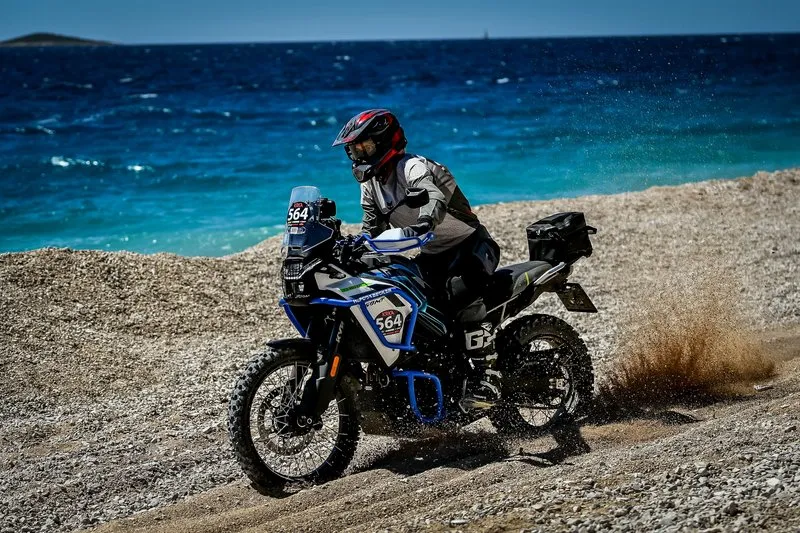
The moments that stuck were the obvious ones. First morning, first ride after a long Austrian winter, ocean view, gravel climbing up and dropping back down — that pure feeling of being free. With an enduro you always end up close to the things that matter — close to the water, close to whatever’s actually going on. The beach race hit just as hard: no chance to practice on deep sand, kind of panicked at the start, sent it and didn’t crash. In one rocky section I tried to take the hard-enduro line and got high-centered on the linkage and bash plate. Doable line, fun line — but the 450MT’s ground clearance is good for serious terrain and tight for very serious terrain, mostly because the engine guard wings make it wide at the bottom. After some sweating and shoving I got out. Bike and rider both still had heat-management to spare. Even that abuse, it took without complaint.
Two Loose Screws Over the Whole Rally
The whole event, two screws vibrated loose. Naturally, both of them were the ones we’d installed ourselves — on an aftermarket headlight grille — without thread-locker. Past that, zero maintenance. Nothing. That’s a real testament to factory build quality on a bike this cheap, holding up day after day in proper rally conditions. Oh, and I finished 5th in the twin-cylinder class.
Built for BDRs
Honestly, this bike’s a great fit for Backcountry Discovery Routes — UTBDR, COBDR, AZBDR, the whole network. You want a light, easy-to-pick-up, comfortable, multi-day-capable ADV that doesn’t murder your wallet? You want the seat time on slickrock and gravel without spending $20K to find out you don’t actually like ADV riding? Start here. The base bike is genuinely good. Load it heavy and ride it hard, the rear shock is your first upgrade. Commute on it, day-trip on it, explore fire roads, do the easier sections of any BDR — the stock setup will make you happy.
The 450MT is a real bike, not a starter-bike-with-an-asterisk. We upgraded what needed upgrading; the rest stayed factory and just worked. After a week of Croatian punishment, I trust this thing more than I expected to. That’s not a sentence I write often about budget machinery — and that’s exactly why it’s worth telling you about.
Quick Specs — CFMOTO 450MT (MY 2025)
Parallel twin, 4-stroke, 449.5 cc. 42 HP @ 8,500 rpm, 31 lb-ft @ 6,500 rpm. Wet weight 432 lbs. Length 87.0 in, width 34.3 in, height 55.1 in. Brakes by J.Juan. Test bike upgrades: Öhlins rear shock and modified fork shim stack; everything else factory.